Burrell A, Foy C, Burns M
Molecular and Cell Biology, LGC, Queens Road, Teddington, Middlesex TW11 0LY, UK.
Biotechnol Res Int. 2011 Mar 6;2011:838232. doi: 10.4061/2011/838232.
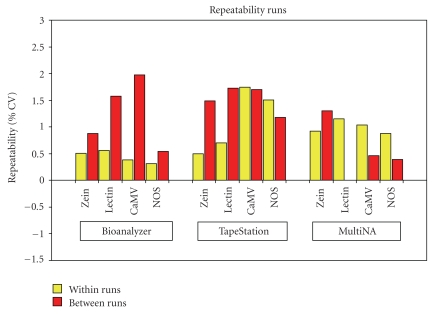
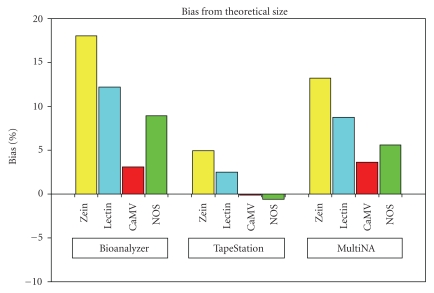
Ensuring foods are correctly labelled for ingredients derived from genetically modified organisms (GMOs) is an issue facing manufacturers, retailers, and enforcement agencies. DNA approaches for the determination of food authenticitys often use the polymerase chain reaction (PCR), and PCR products can be detected using capillary or gel electrophoresis. This study examines the fitness for purpose of the application of three laboratory electrophoresis instruments (Agilent Bioanalyzer 2100, Lab901 TapeStation, and Shimadzu MCE-202 MultiNA) for the detection of GMOs using PCR based on a previously validated protocol. Whilst minor differences in the performance characteristics of bias and precision were observed, all three instruments demonstrated their applicability in using this protocol for screening of GMO ingredients.
确保食品正确标注转基因生物(GMO)衍生成分是制造商、零售商和执法机构面临的一个问题。用于确定食品真实性的DNA方法通常使用聚合酶链反应(PCR),并且可以使用毛细管电泳或凝胶电泳检测PCR产物。本研究基于先前验证的方案,考察了三种实验室电泳仪器(安捷伦生物分析仪2100、Lab901 TapeStation和岛津MCE-202 MultiNA)应用于基于PCR检测转基因生物的适用性。虽然在偏差和精密度的性能特征上观察到微小差异,但所有三种仪器都证明了它们适用于使用该方案筛选转基因成分。