Li Liang, Zhang Xiujie, Wan Yusong, Jin Wujun
Biotechnology Research Institute, Chinese Agricultural Academy of Sciences, No. 12 Zhongguancun South Street, Haidian District, Beijing 100081, China.
Biomed Res Int. 2013;2013:134675. doi: 10.1155/2013/134675. Epub 2013 Nov 13.
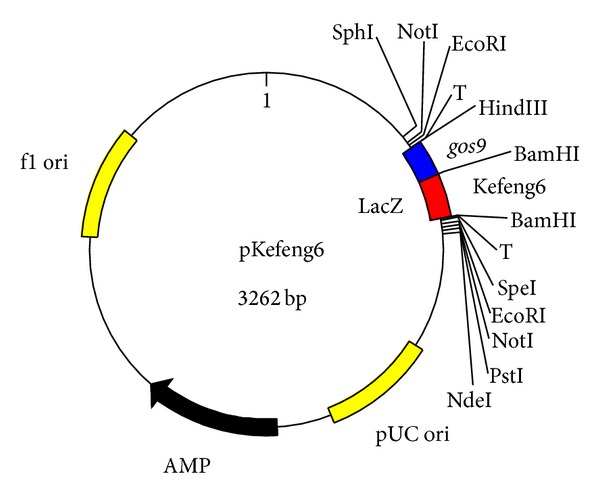
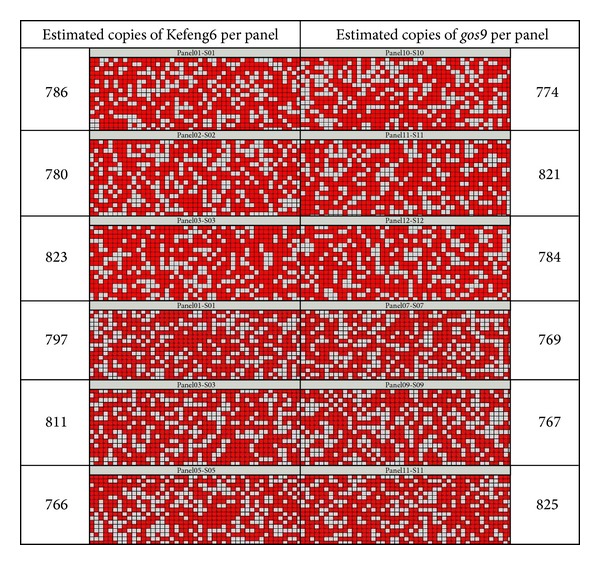
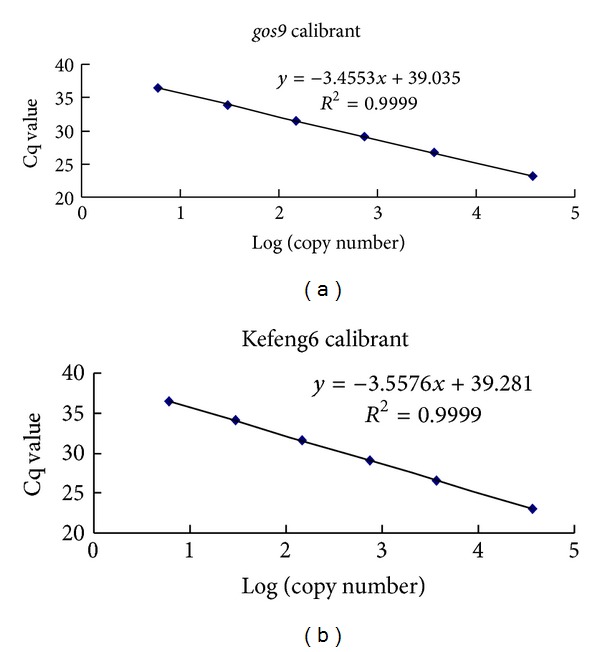
Reference plasmids are an essential tool for the quantification of genetically modified (GM) events. Quantitative real-time PCR (qPCR) is the most commonly used method to characterize and quantify reference plasmids. However, the precision of this method is often limited by calibration curves, and qPCR data can be affected by matrix differences between the standards and samples. Here, we describe a digital PCR (dPCR) approach that can be used to accurately measure the novel reference plasmid pKefeng6 and quantify the unauthorized variety of GM rice Kefeng6, eliminating the issues associated with matrix effects in calibration curves. The pKefeng6 plasmid was used as a calibrant for the quantification of Kefeng6 rice by determining the copy numbers of event- (77 bp) and taxon-specific (68 bp) fragments, their ratios, and their concentrations. The plasmid was diluted to five different concentrations. The third sample (S3) was optimized for the quantification range of dPCR according to previous reports. The ratio between the two fragments was 1.005, which closely approximated the value certified by sequencing, and the concentration was found to be 792 copies/μL. This method was precise, with an RSD of ~3%. These findings demonstrate the advantages of using the dPCR method to characterize reference materials.
参比质粒是定量检测转基因事件的重要工具。实时定量聚合酶链反应(qPCR)是表征和定量参比质粒最常用的方法。然而,该方法的精度常受校准曲线的限制,且qPCR数据会受到标准品和样品之间基质差异的影响。在此,我们描述了一种数字PCR(dPCR)方法,可用于准确测量新型参比质粒pKefeng6并定量未经授权的转基因水稻品种科丰6号,消除了校准曲线中与基质效应相关的问题。通过测定事件特异性(77bp)和分类群特异性(68bp)片段的拷贝数、它们的比率及其浓度,将pKefeng6质粒用作科丰6号水稻定量的校准物。将该质粒稀释至五种不同浓度。根据先前报道,对第三个样品(S3)进行了优化,以确定dPCR的定量范围。两个片段之间的比率为1.005,与测序验证的值非常接近,浓度为792拷贝/μL。该方法具有较高的精密度,相对标准偏差约为3%。这些结果证明了使用dPCR方法表征参比物质的优势。