Department of Surgery, Duke University Medical Center, Durham, North Carolina 27705, USA.
Cancer Res. 2011 Jun 15;71(12):4172-82. doi: 10.1158/0008-5472.CAN-10-3978. Epub 2011 Apr 29.
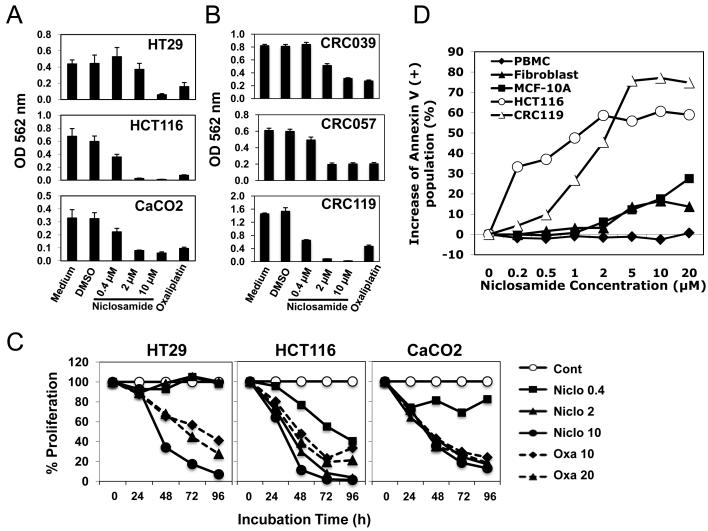
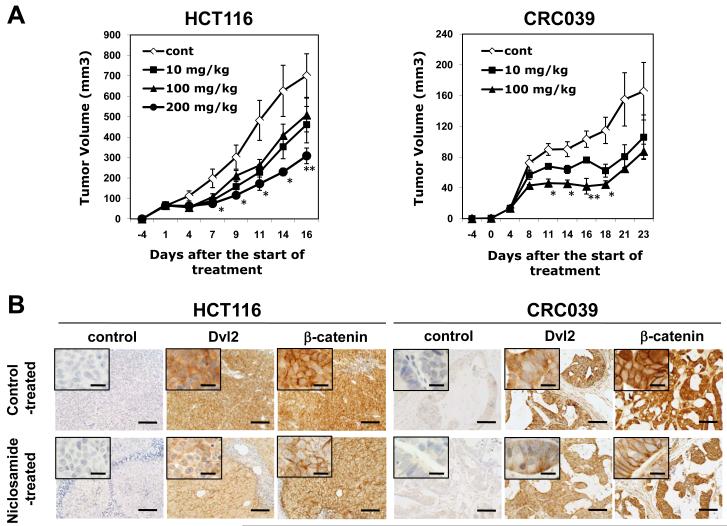
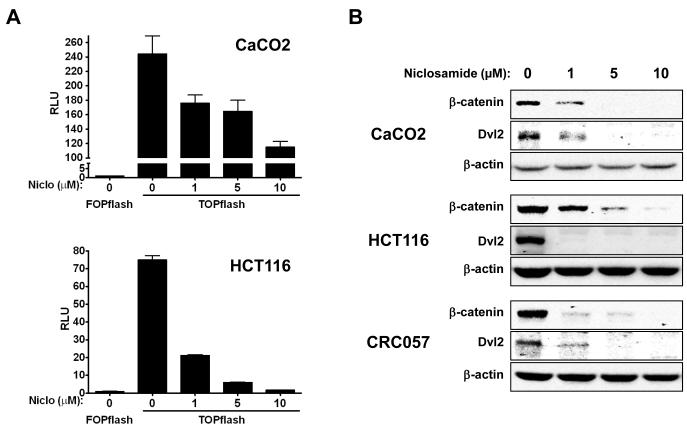
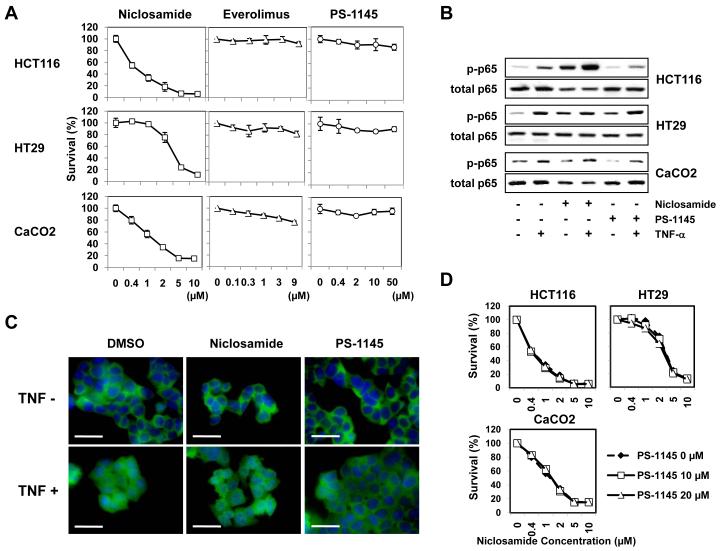
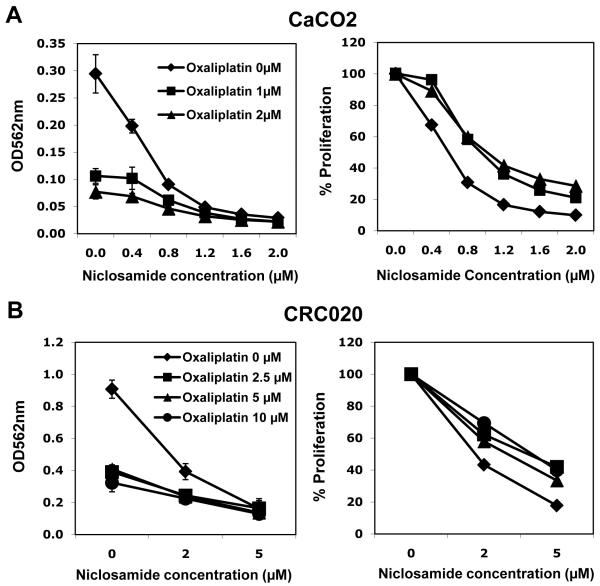
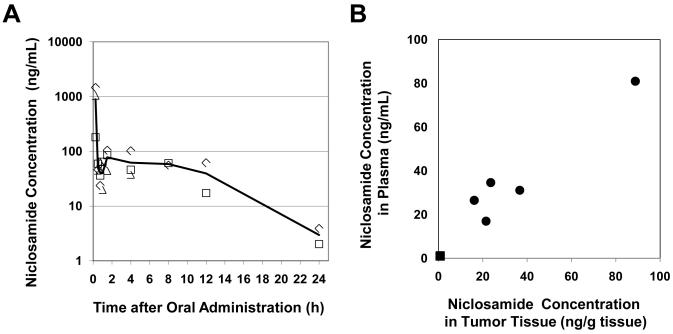
Wnt/β-catenin pathway activation caused by adenomatous polyposis coli (APC) mutations occurs in approximately 80% of sporadic colorectal cancers (CRC). The antihelminth compound niclosamide downregulates components of the Wnt pathway, specifically Dishevelled-2 (Dvl2) expression, resulting in diminished downstream β-catenin signaling. In this study, we determined whether niclosamide could inhibit the Wnt/β-catenin pathway in human CRCs and whether its inhibition might elicit antitumor effects in the presence of APC mutations. We found that niclosamide inhibited Wnt/β-catenin pathway activation, downregulated Dvl2, decreased downstream β-catenin signaling, and exerted antiproliferative effects in human colon cancer cell lines and CRC cells isolated by surgical resection of metastatic disease, regardless of mutations in APC. In contrast, inhibition of NF-κB or mTOR did not exert similar antiproliferative effects in these CRC model systems. In mice implanted with human CRC xenografts, orally administered niclosamide was well tolerated, achieved plasma and tumor levels associated with biologic activity, and led to tumor control. Our findings support clinical explorations to reposition niclosamide for the treatment of CRC.
Wnt/β-catenin 通路的激活是由腺瘤性结肠息肉病(APC)突变引起的,大约发生在 80%的散发性结直肠癌(CRC)中。抗蠕虫化合物尼氯硝唑下调 Wnt 通路的组成部分,特别是 Dvl2 的表达,导致下游 β-catenin 信号减少。在这项研究中,我们确定了尼氯硝唑是否可以抑制人类 CRC 中的 Wnt/β-catenin 通路,以及在 APC 突变存在的情况下,其抑制作用是否会产生抗肿瘤作用。我们发现,尼氯硝唑抑制 Wnt/β-catenin 通路的激活,下调 Dvl2,减少下游 β-catenin 信号,并在人结肠癌细胞系和通过手术切除转移性疾病分离的 CRC 细胞中发挥抗增殖作用,而与 APC 突变无关。相比之下,抑制 NF-κB 或 mTOR 在这些 CRC 模型系统中不会产生类似的抗增殖作用。在植入人 CRC 异种移植物的小鼠中,口服给予尼氯硝唑耐受性良好,达到与生物学活性相关的血浆和肿瘤水平,并导致肿瘤控制。我们的研究结果支持对尼氯硝唑进行临床探索,以重新定位其治疗 CRC。