Human Pharmacology and Neurosciences Unit, Institut de Recerca Hospital del Mar-IMIM, Parc de Salut Mar, Barcelona, Spain.
PLoS One. 2011 Apr 21;6(4):e18440. doi: 10.1371/journal.pone.0018440.
The aim of this study was to describe the patterns of cannabis use and the associated benefits reported by patients with fibromyalgia (FM) who were consumers of this drug. In addition, the quality of life of FM patients who consumed cannabis was compared with FM subjects who were not cannabis users.
Information on medicinal cannabis use was recorded on a specific questionnaire as well as perceived benefits of cannabis on a range of symptoms using standard 100-mm visual analogue scales (VAS). Cannabis users and non-users completed the Fibromyalgia Impact Questionnaire (FIQ), the Pittsburgh Sleep Quality Index (PSQI) and the Short Form 36 Health Survey (SF-36).
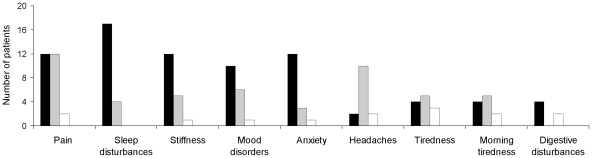
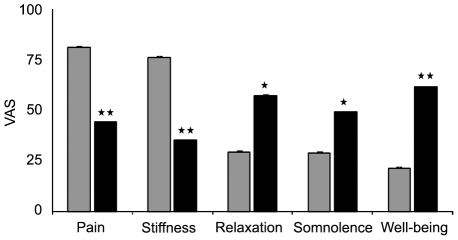
Twenty-eight FM patients who were cannabis users and 28 non-users were included in the study. Demographics and clinical variables were similar in both groups. Cannabis users referred different duration of drug consumption; the route of administration was smoking (54%), oral (46%) and combined (43%). The amount and frequency of cannabis use were also different among patients. After 2 hours of cannabis use, VAS scores showed a statistically significant (p<0.001) reduction of pain and stiffness, enhancement of relaxation, and an increase in somnolence and feeling of well being. The mental health component summary score of the SF-36 was significantly higher (p<0.05) in cannabis users than in non-users. No significant differences were found in the other SF-36 domains, in the FIQ and the PSQI.
The use of cannabis was associated with beneficial effects on some FM symptoms. Further studies on the usefulness of cannabinoids in FM patients as well as cannabinoid system involvement in the pathophysiology of this condition are warranted.
本研究旨在描述纤维肌痛 (FM) 患者使用大麻的模式以及他们报告的相关获益。此外,还比较了使用大麻的 FM 患者与非大麻使用者的生活质量。
在专门的问卷上记录了医用大麻的使用信息,以及大麻对一系列症状的益处,使用了标准的 100 毫米视觉模拟量表 (VAS)。大麻使用者和非使用者填写了纤维肌痛影响问卷 (FIQ)、匹兹堡睡眠质量指数 (PSQI) 和健康调查简表 36 (SF-36)。
本研究纳入了 28 名大麻使用者和 28 名非使用者。两组患者的人口统计学和临床变量相似。大麻使用者的用药时间不同;给药途径为吸烟 (54%)、口服 (46%) 和联合 (43%)。患者的大麻使用量和频率也不同。使用大麻后 2 小时,VAS 评分显示疼痛和僵硬程度明显降低 (p<0.001),放松感增强,嗜睡感和幸福感增加。SF-36 的心理健康成分总分在大麻使用者中显著更高 (p<0.05)。SF-36 的其他领域、FIQ 和 PSQI 没有显著差异。
大麻的使用与一些 FM 症状的有益效果相关。有必要进一步研究大麻素在 FM 患者中的有效性,以及大麻素系统在这种疾病病理生理学中的参与。