Cell Regulation Department, Paterson Institute for Cancer Research, University of Manchester, Manchester, United Kingdom.
PLoS One. 2011 Apr 21;6(4):e19090. doi: 10.1371/journal.pone.0019090.
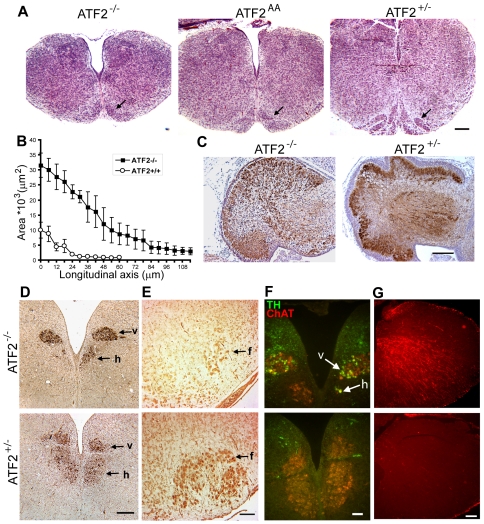
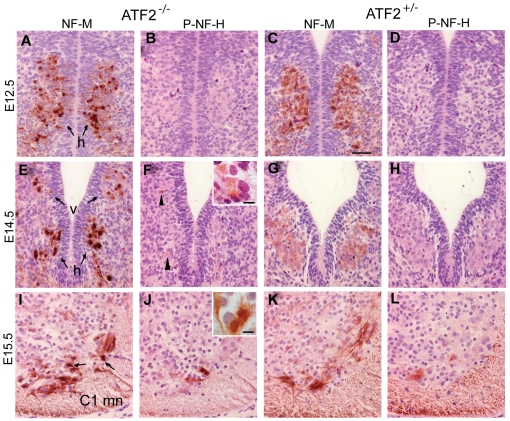
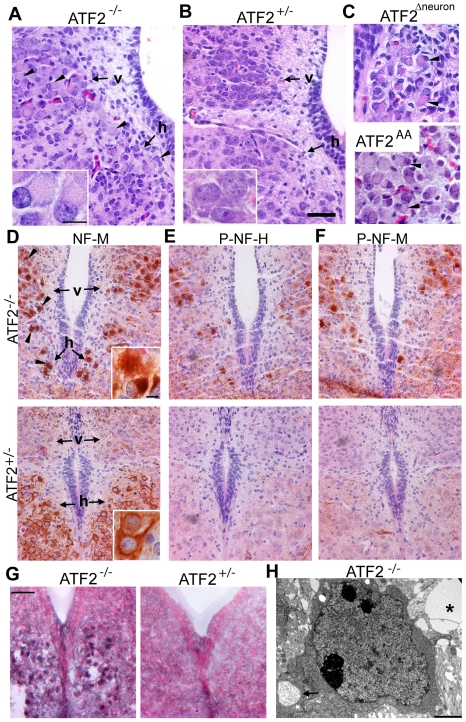
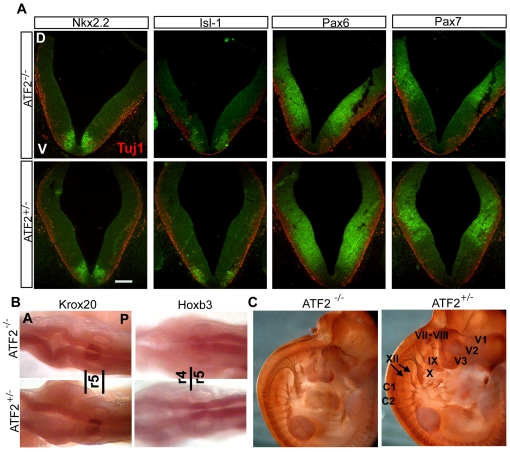
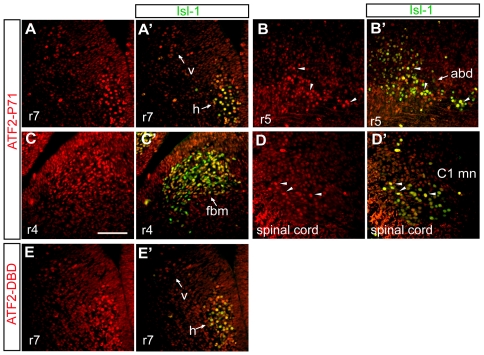
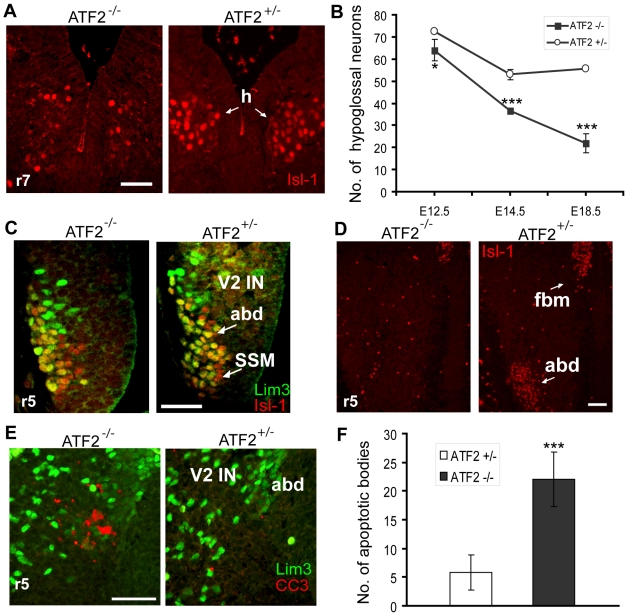
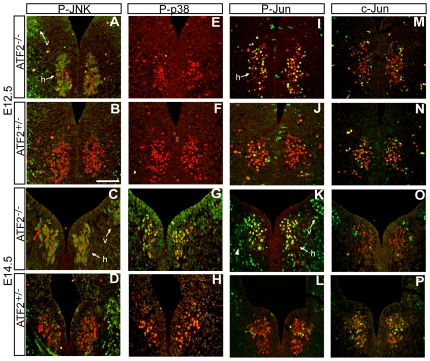
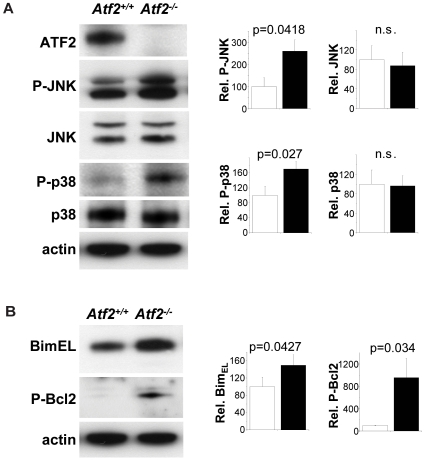
The AP-1 family transcription factor ATF2 is essential for development and tissue maintenance in mammals. In particular, ATF2 is highly expressed and activated in the brain and previous studies using mouse knockouts have confirmed its requirement in the cerebellum as well as in vestibular sense organs. Here we present the analysis of the requirement for ATF2 in CNS development in mouse embryos, specifically in the brainstem. We discovered that neuron-specific inactivation of ATF2 leads to significant loss of motoneurons of the hypoglossal, abducens and facial nuclei. While the generation of ATF2 mutant motoneurons appears normal during early development, they undergo caspase-dependent and independent cell death during later embryonic and foetal stages. The loss of these motoneurons correlates with increased levels of stress activated MAP kinases, JNK and p38, as well as aberrant accumulation of phosphorylated neurofilament proteins, NF-H and NF-M, known substrates for these kinases. This, together with other neuropathological phenotypes, including aberrant vacuolisation and lipid accumulation, indicates that deficiency in ATF2 leads to neurodegeneration of subsets of somatic and visceral motoneurons of the brainstem. It also confirms that ATF2 has a critical role in limiting the activities of stress kinases JNK and p38 which are potent inducers of cell death in the CNS.
AP-1 家族转录因子 ATF2 对于哺乳动物的发育和组织维持至关重要。特别是,ATF2 在大脑中高度表达和激活,先前使用小鼠基因敲除的研究证实了它在小脑以及前庭感觉器官中的必要性。在这里,我们分析了 ATF2 在小鼠胚胎中枢神经系统发育中的必要性,特别是在脑干中。我们发现,神经元特异性的 ATF2 失活会导致舌下神经核、展神经核和面神经核的运动神经元明显丢失。虽然 ATF2 突变运动神经元在早期发育过程中似乎正常产生,但它们在后期胚胎和胎儿阶段会经历半胱天冬酶依赖性和非依赖性细胞死亡。这些运动神经元的丢失与应激激活的 MAP 激酶 JNK 和 p38 的水平升高以及磷酸化神经丝蛋白 NF-H 和 NF-M 的异常积累相关,这些蛋白是这些激酶的已知底物。这与其他神经病理学表型一起,包括异常空泡化和脂质积累,表明 ATF2 的缺乏会导致脑干的躯体和内脏运动神经元亚群发生神经退行性变。它还证实 ATF2 在限制 CNS 中细胞死亡的强诱导剂应激激酶 JNK 和 p38 的活性方面具有关键作用。