Department of Genetic Engineering and Biotechnology, University of Dhaka, Dhaka, Bangladesh.
Current Affiliation: Department of Molecular Biology, Max Planck Institute for Biophysical Chemistry, Göttingen, Germany.
Hum Genomics. 2020 Sep 29;14(1):34. doi: 10.1186/s40246-020-00285-1.
MicroRNAs are ~ 22-nucleotide-long biological modifiers that act as the post-transcriptional modulator of gene expression. Some of them are identified to be embedded within the introns of protein-coding genes, these miRNAs are called the intronic miRNAs. Previous findings state that these intronic miRNAs are co-expressed with their host genes. This co-expression is necessary to maintain the robustness of the biological system. Till to date, only a few experiments are performed discretely to elucidate the functional relationship between few co-expressed intronic miRNAs and their associated host genes.
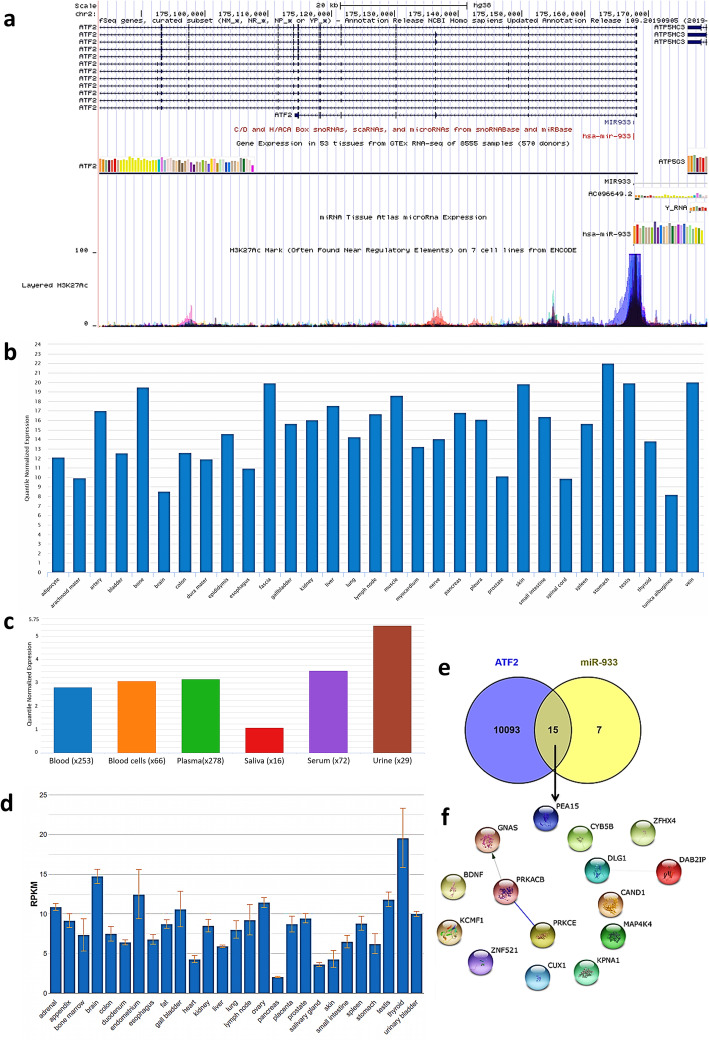
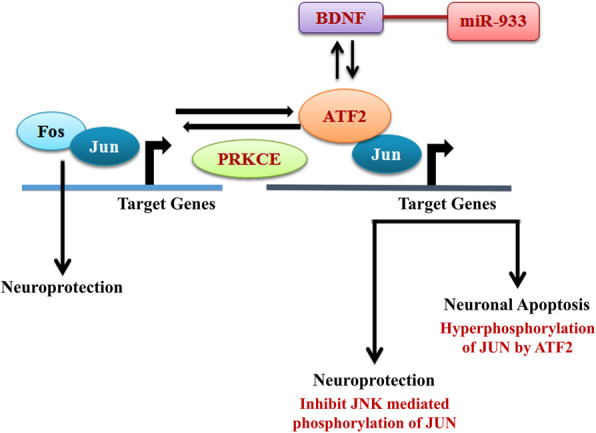
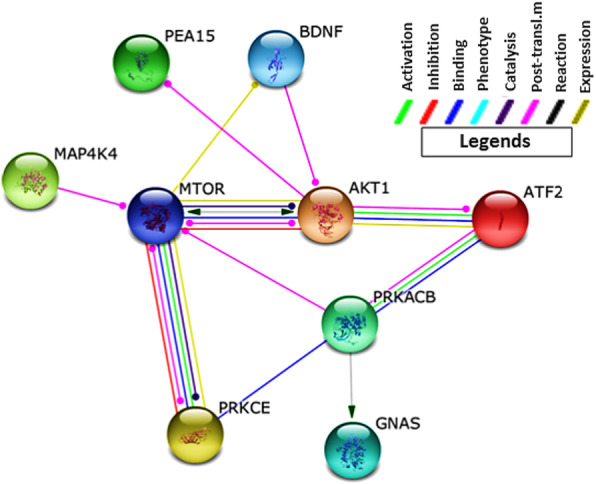
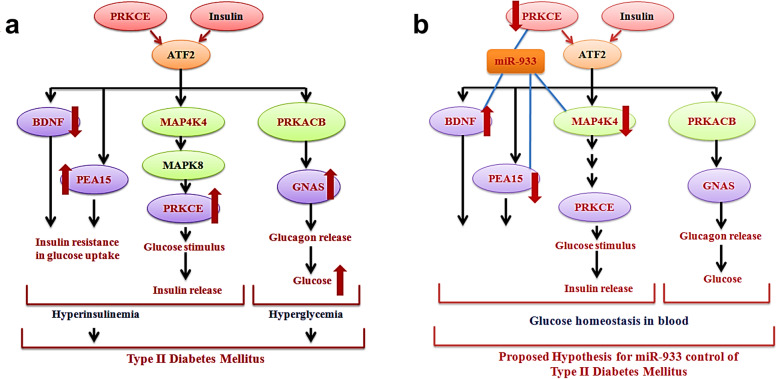
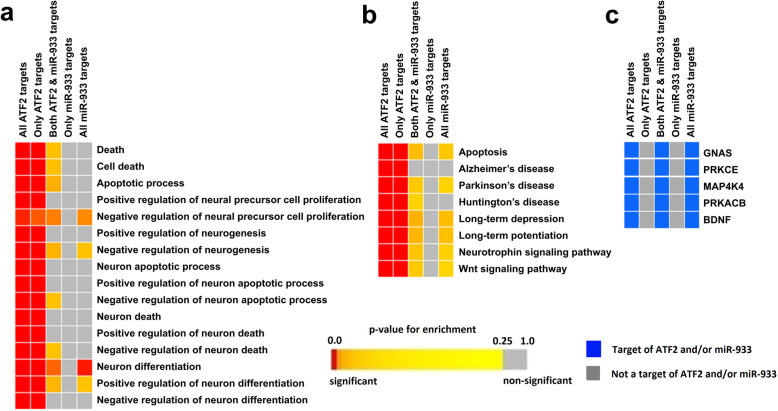
In this study, we have interpreted the underlying modulatory mechanisms of intronic miRNA hsa-miR-933 on its target host gene ATF2 and found that aberration can lead to several disease conditions. A protein-protein interaction network-based approach was adopted, and functional enrichment analysis was performed to elucidate the significantly over-represented biological functions and pathways of the common targets. Our approach delineated that hsa-miR-933 might control the hyperglycemic condition and hyperinsulinism by regulating ATF2 target genes MAP4K4, PRKCE, PEA15, BDNF, PRKACB, and GNAS which can otherwise lead to the development of type II diabetes mellitus. Moreover, we showed that hsa-miR-933 can regulate a target of ATF2, brain-derived neurotrophic factor (BDNF), to modulate the optimal expression of ATF2 in neuron cells to render neuroprotection for the inhibition of neurodegenerative diseases.
Our in silico model provides interesting resources for experimentations in a model organism or cell line for further validation. These findings may extend the common perception of gene expression analysis with new regulatory functionality.
microRNAs 是约 22 个核苷酸长的生物调节剂,作为基因表达的转录后调节剂。其中一些被鉴定为嵌入在蛋白质编码基因的内含子中,这些 miRNA 被称为内含子 miRNA。以前的研究表明,这些内含子 miRNA 与它们的宿主基因共表达。这种共表达对于维持生物系统的稳健性是必要的。到目前为止,只有少数实验是离散地进行的,以阐明少数共表达的内含子 miRNA 与其相关的宿主基因之间的功能关系。
在这项研究中,我们解释了内含子 miRNA hsa-miR-933 对其靶宿主基因 ATF2 的潜在调节机制,并发现异常可能导致几种疾病状况。采用基于蛋白质-蛋白质相互作用网络的方法,并进行功能富集分析,以阐明共同靶标的显著过表达的生物学功能和途径。我们的方法描绘了 hsa-miR-933 可能通过调节 ATF2 靶基因 MAP4K4、PRKCE、PEA15、BDNF、PRKACB 和 GNAS 来控制高血糖和高胰岛素血症,否则这些基因会导致 II 型糖尿病的发展。此外,我们表明 hsa-miR-933 可以调节 ATF2 的一个靶标,脑源性神经营养因子 (BDNF),以调节神经元细胞中 ATF2 的最佳表达,从而为抑制神经退行性疾病提供神经保护。
我们的计算机模型为在模型生物或细胞系中进行实验提供了有趣的资源,以进一步验证。这些发现可能会扩展对基因表达分析的普遍认识,增加新的调节功能。