Cancer Research Institute and Department of Chemistry and Biochemistry, Arizona State University, P.O. Box 871604, Tempe, Arizona 85287-1604, United States.
J Nat Prod. 2011 May 27;74(5):962-8. doi: 10.1021/np1007334. Epub 2011 May 2.
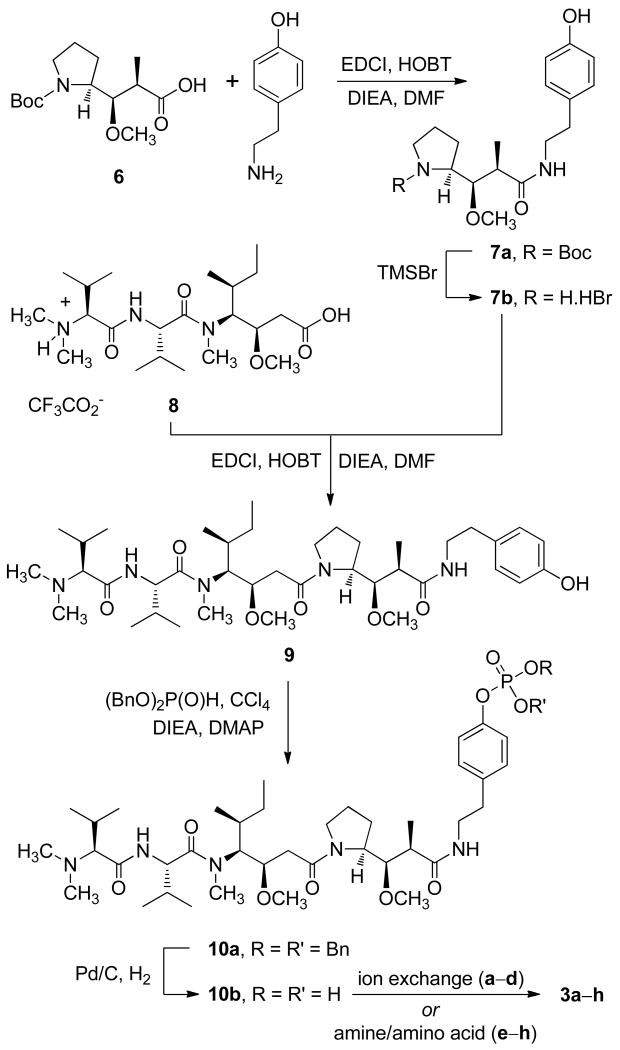
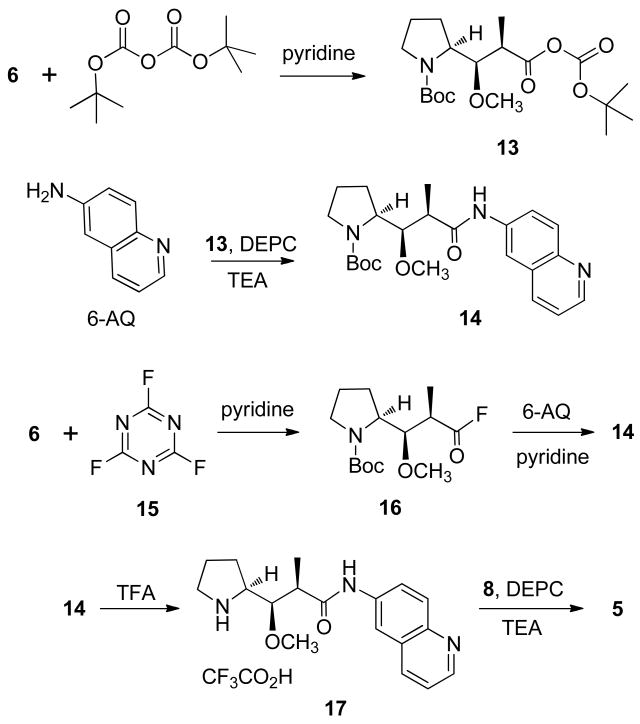
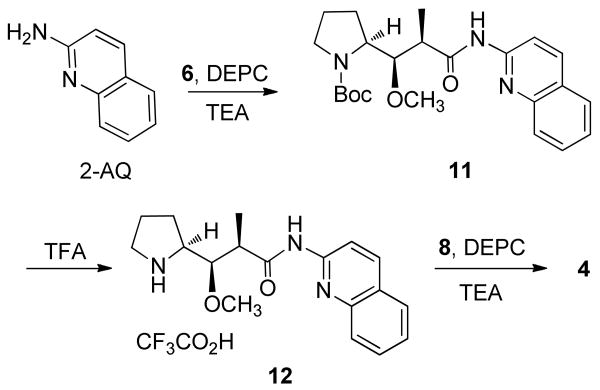
The dolastatin series of unique peptides, originally discovered as constituents of the sea hare Dolabella auricularia, is of increasing importance in providing biological leads, especially to new and useful anticancer drugs. Dolastatin 10 and three analogues, minor structural modifications designated auristatins, are currently in human cancer clinical trials. The present study was undertaken to explore delivery to the cancer sites by way of phosphate or quinoline modifications. The initial objectives, auristatin TP as sodium phosphate 3b (GI50 10(-2)-10(-4) μg/mL), auristatin 2-AQ (4, GI50 10(-2)-10(-3) μg/mL), and auristatin 6-AQ (5, GI50 10(-4) μg/mL), exhibited superior cancer cell growth inhibitory properties.
道拉菌素系列独特的肽,最初作为海兔 Dolabella auricularia 的成分被发现,在提供生物线索方面越来越重要,特别是在新型和有用的抗癌药物方面。道拉菌素 10 和三种类似物,被称为小结构修饰的奥瑞他汀,目前正在进行人类癌症临床试验。本研究旨在通过磷酸酯或喹啉修饰来探索向癌症部位的传递。最初的目标是磷酸酯 3b(GI50 为 10(-2)-10(-4)μg/mL)、奥瑞他汀 2-AQ(GI50 为 10(-2)-10(-3)μg/mL)和奥瑞他汀 6-AQ(GI50 为 10(-4)μg/mL),表现出优越的癌细胞生长抑制特性。