Department of Cell Biology and Molecular Genetics, University of Maryland, College Park, MD 20742, USA.
J Exp Med. 2011 May 9;208(5):909-21. doi: 10.1084/jem.20102518. Epub 2011 May 2.
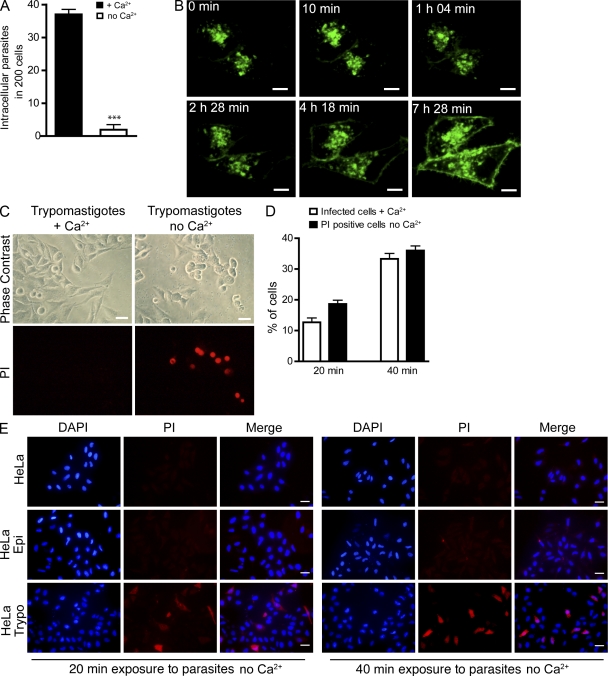
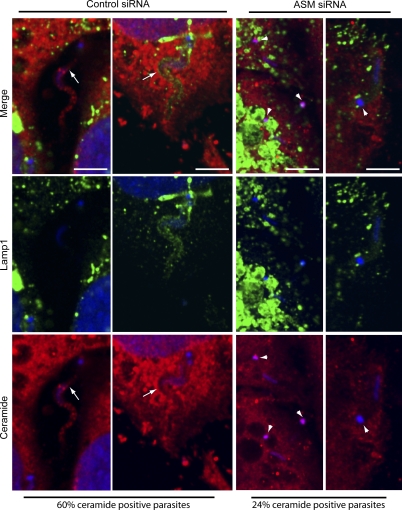
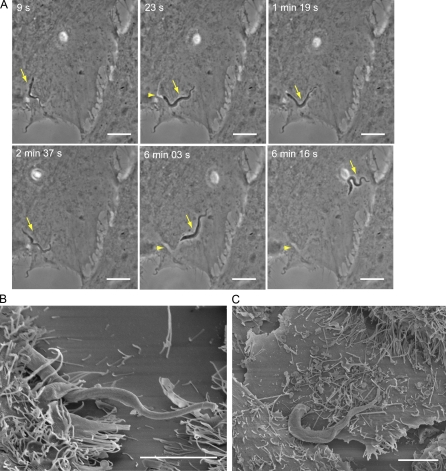
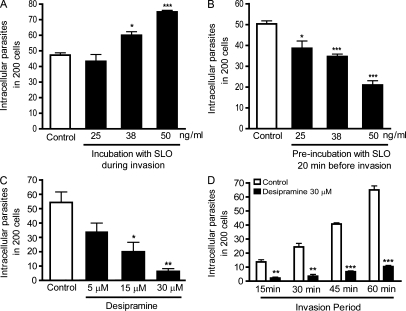
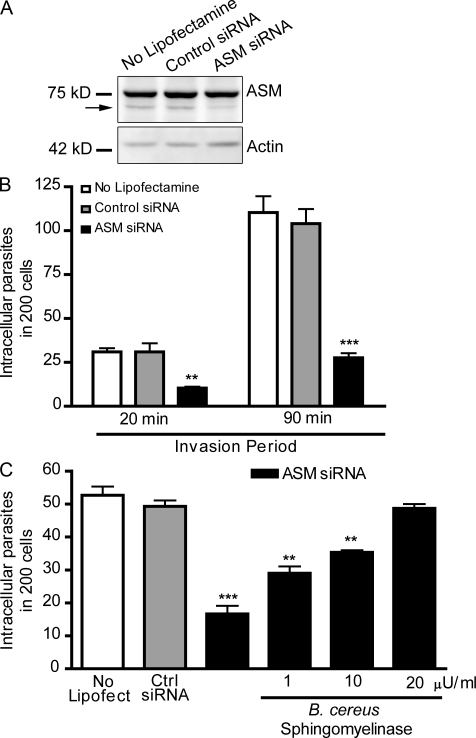
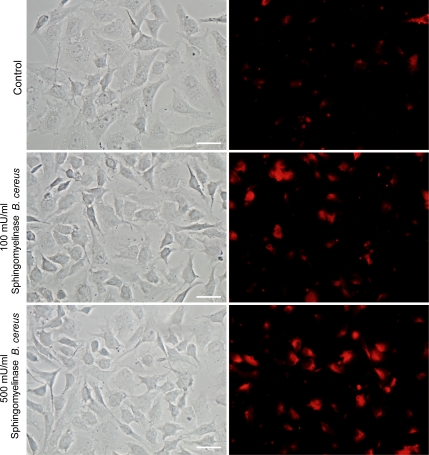
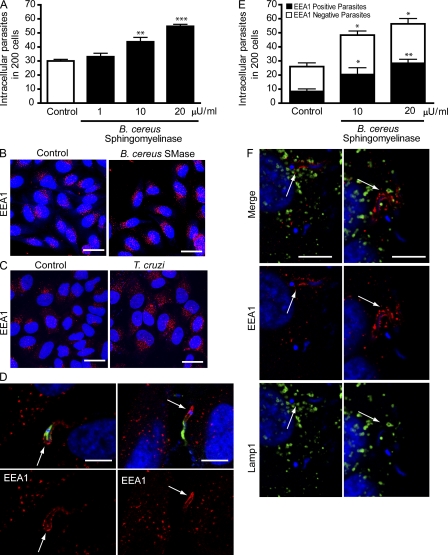
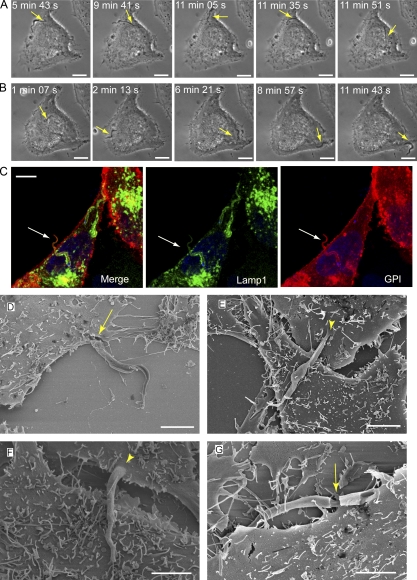
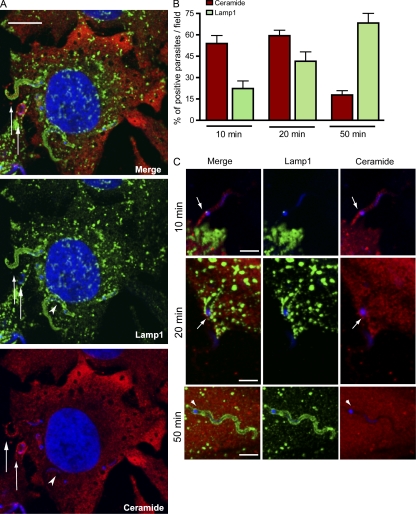
Upon host cell contact, the protozoan parasite Trypanosoma cruzi triggers cytosolic Ca(2+) transients that induce exocytosis of lysosomes, a process required for cell invasion. However, the exact mechanism by which lysosomal exocytosis mediates T. cruzi internalization remains unclear. We show that host cell entry by T. cruzi mimics a process of plasma membrane injury and repair that involves Ca(2+)-dependent exocytosis of lysosomes, delivery of acid sphingomyelinase (ASM) to the outer leaflet of the plasma membrane, and a rapid form of endocytosis that internalizes membrane lesions. Host cells incubated with T. cruzi trypomastigotes are transiently wounded, show increased levels of endocytosis, and become more susceptible to infection when injured with pore-forming toxins. Inhibition or depletion of lysosomal ASM, which blocks plasma membrane repair, markedly reduces the susceptibility of host cells to T. cruzi invasion. Notably, extracellular addition of sphingomyelinase stimulates host cell endocytosis, enhances T. cruzi invasion, and restores normal invasion levels in ASM-depleted cells. Ceramide, the product of sphingomyelin hydrolysis, is detected in newly formed parasitophorous vacuoles containing trypomastigotes but not in the few parasite-containing vacuoles formed in ASM-depleted cells. Thus, T. cruzi subverts the ASM-dependent ceramide-enriched endosomes that function in plasma membrane repair to infect host cells.
当原生动物寄生虫克氏锥虫接触宿主细胞时,会引发细胞质 Ca(2+) 瞬变,从而诱导溶酶体的胞吐作用,这是细胞入侵所必需的过程。然而,溶酶体胞吐作用介导克氏锥虫内化的确切机制仍不清楚。我们表明,克氏锥虫对宿主细胞的入侵模拟了质膜损伤和修复的过程,涉及 Ca(2+) 依赖性溶酶体胞吐作用、酸性鞘磷脂酶 (ASM) 向质膜外叶的转运,以及快速的内吞作用,将膜损伤内化。与克氏锥虫的动基体培养的宿主细胞短暂受伤,显示出更高水平的内吞作用,并且在用形成孔的毒素损伤时更容易感染。溶酶体 ASM 的抑制或耗尽会显著降低宿主细胞对克氏锥虫入侵的易感性,因为它会阻止质膜修复。值得注意的是,细胞外添加鞘磷脂酶可刺激宿主细胞的内吞作用,增强克氏锥虫的入侵,并恢复 ASM 耗尽细胞中的正常入侵水平。神经酰胺,即鞘磷脂水解的产物,在含有动基体的新形成的滋养空泡中被检测到,但在 ASM 耗尽细胞中形成的少数含寄生虫的空泡中未被检测到。因此,克氏锥虫颠覆了 ASM 依赖性富含神经酰胺的内体,这些内体在质膜修复中发挥作用,从而感染宿主细胞。