Nordic Bioscience, Herlev Hovedgade 207, DK-2730 Herlev, Denmark.
Arthritis Res Ther. 2011 Apr 28;13(2):215. doi: 10.1186/ar3280.
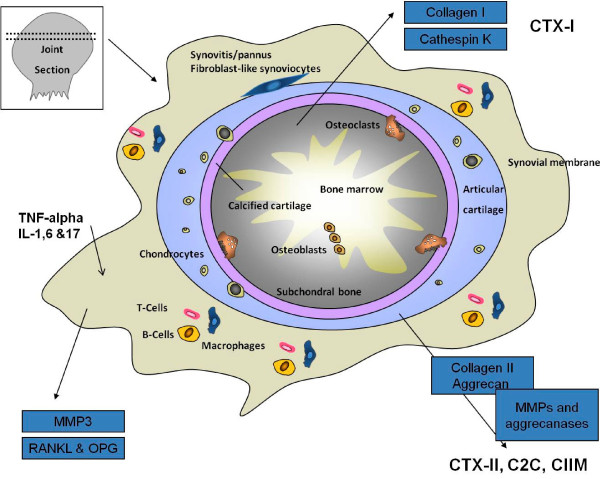
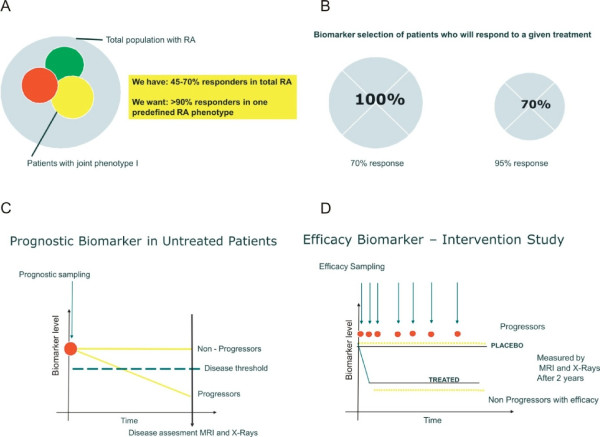
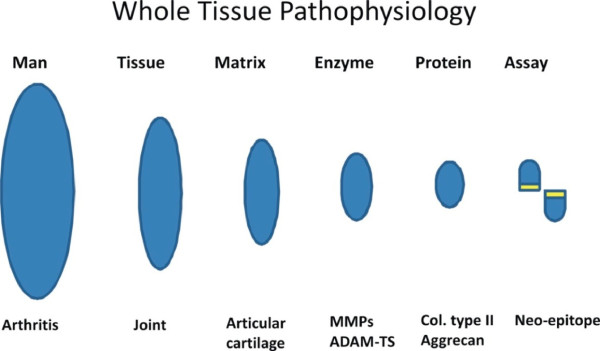
Rheumatoid arthritis (RA) is a chronic systemic autoimmune disease associated with potentially debilitating joint inflammation, as well as altered skeletal bone metabolism and co-morbid conditions. Early diagnosis and aggressive treatment to control disease activity offers the highest likelihood of preserving function and preventing disability. Joint inflammation is characterized by synovitis, osteitis, and/or peri-articular osteopenia, often accompanied by development of subchondral bone erosions, as well as progressive joint space narrowing. Biochemical markers of joint cartilage and bone degradation may enable timely detection and assessment of ongoing joint damage, and their use in facilitating treatment strategies is under investigation. Early detection of joint damage may be assisted by the characterization of biochemical markers that identify patients whose joint damage is progressing rapidly and who are thus most in need of aggressive treatment, and that, alone or in combination, identify those individuals who are likely to respond best to a potential treatment, both in terms of limiting joint damage and relieving symptoms. The aims of this review are to describe currently available biochemical markers of joint metabolism in relation to the pathobiology of joint damage and systemic bone loss in RA; to assess the limitations of, and need for additional, novel biochemical markers in RA and other rheumatic diseases, and the strategies used for assay development; and to examine the feasibility of advancement of personalized health care using biochemical markers to select therapeutic agents to which a patient is most likely to respond.
类风湿关节炎(RA)是一种慢性系统性自身免疫性疾病,与潜在的使人衰弱的关节炎症、骨骼代谢改变以及合并症有关。早期诊断和积极治疗以控制疾病活动度,是最大程度保留功能和预防残疾的关键。关节炎症的特征是滑膜炎、骨炎和/或关节周围骨质疏松症,常伴有软骨下骨侵蚀的发展,以及关节间隙的进行性狭窄。关节软骨和骨降解的生化标志物可实现对持续关节损伤的及时检测和评估,其在治疗策略中的应用正在研究中。通过对识别关节损伤进展迅速的患者的生化标志物的特征化,可能有助于早期发现关节损伤,这些患者最需要积极治疗,单独或联合使用这些标志物可以识别出那些对潜在治疗最有可能有良好反应的个体,既可以限制关节损伤,又可以缓解症状。本综述的目的是描述目前可用于评估 RA 中关节代谢以及关节损伤和全身骨质流失的生化标志物;评估 RA 和其他风湿性疾病中现有和新的生化标志物的局限性和需求,以及用于检测方法开发的策略;并探讨使用生化标志物选择患者最可能有反应的治疗药物来推进个性化医疗的可行性。