Department of Pharmacology, Faculty of Medicine, University of Malaya, Kuala Lumpur, Malaysia.
PLoS One. 2011 Apr 26;6(4):e18915. doi: 10.1371/journal.pone.0018915.
Alpha-tomatine (α-tomatine) is the major saponin in tomato (Lycopersicon esculentum). This study investigates the chemopreventive potential of α-tomatine on androgen-independent human prostatic adenocarcinoma PC-3 cells.
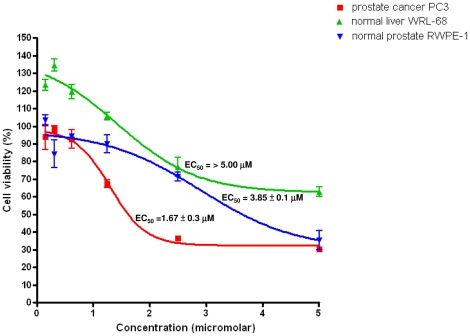
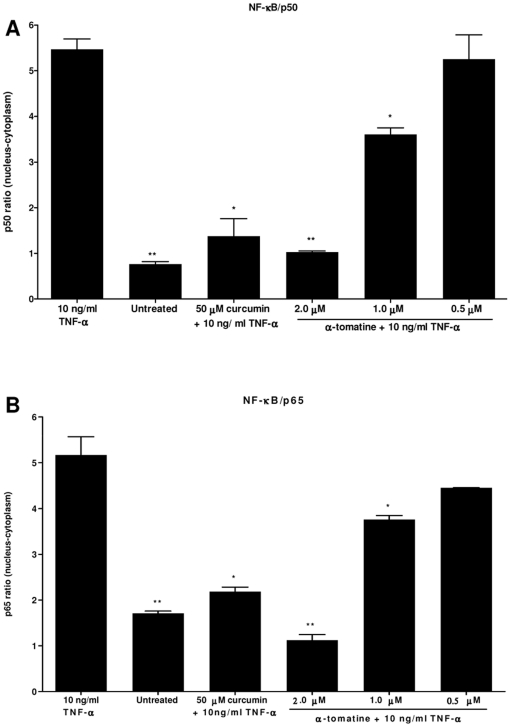
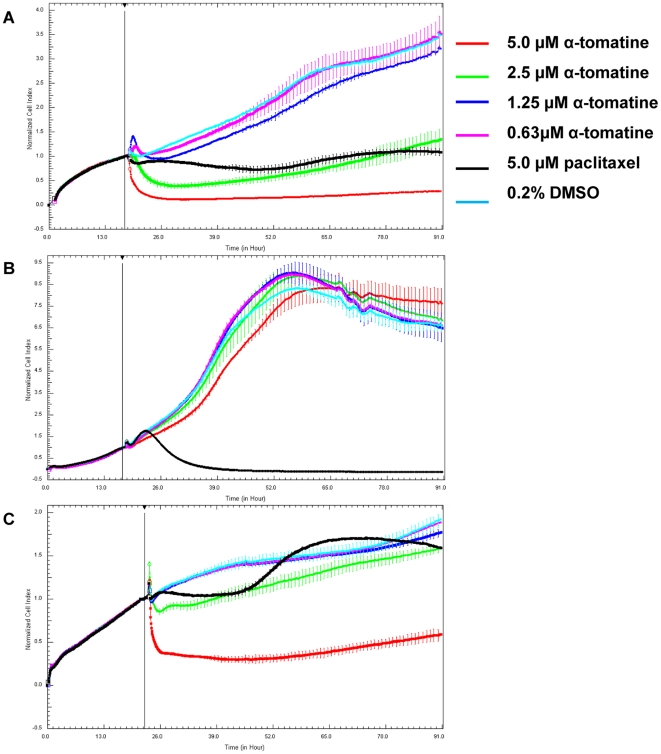
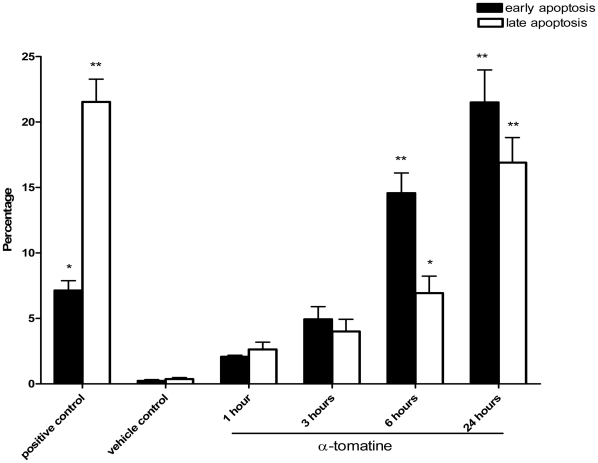
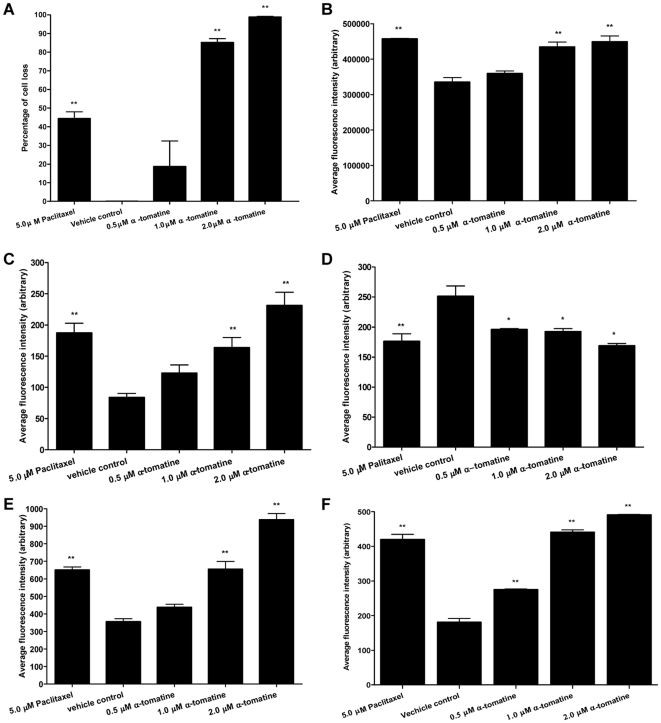
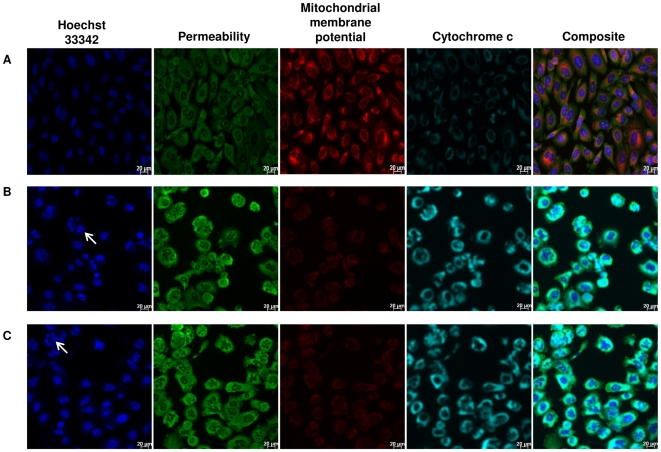
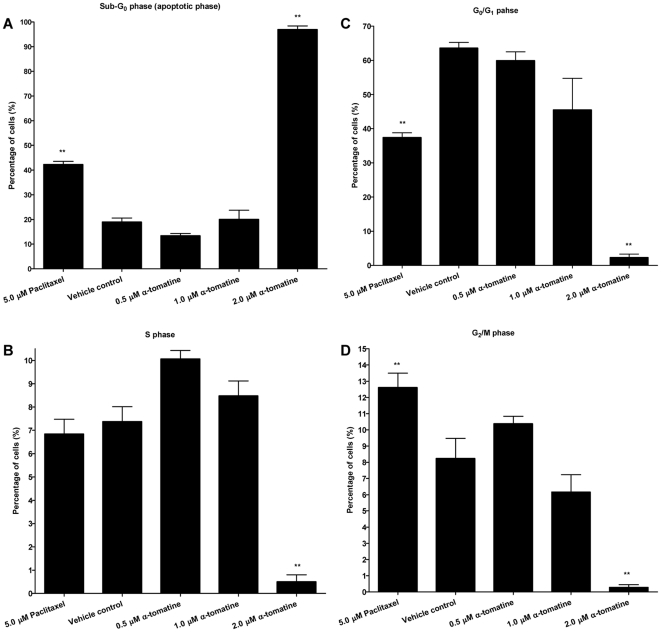
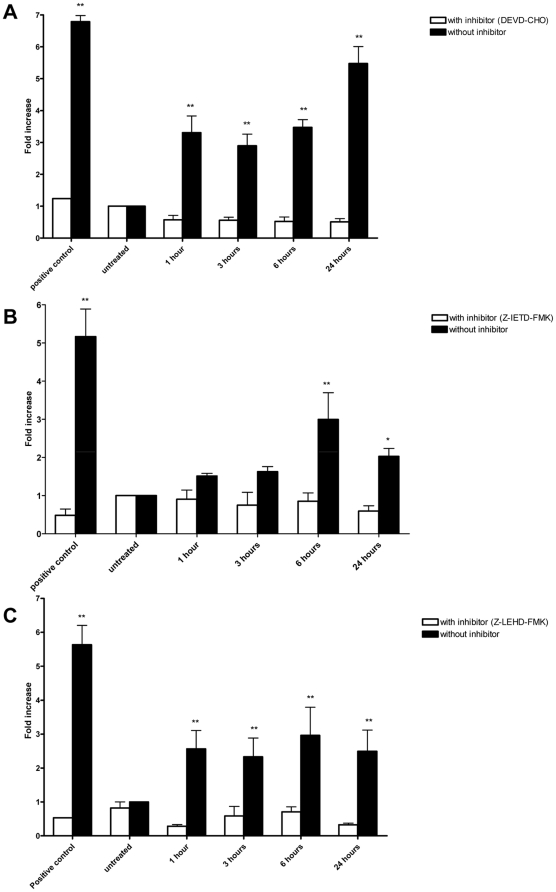
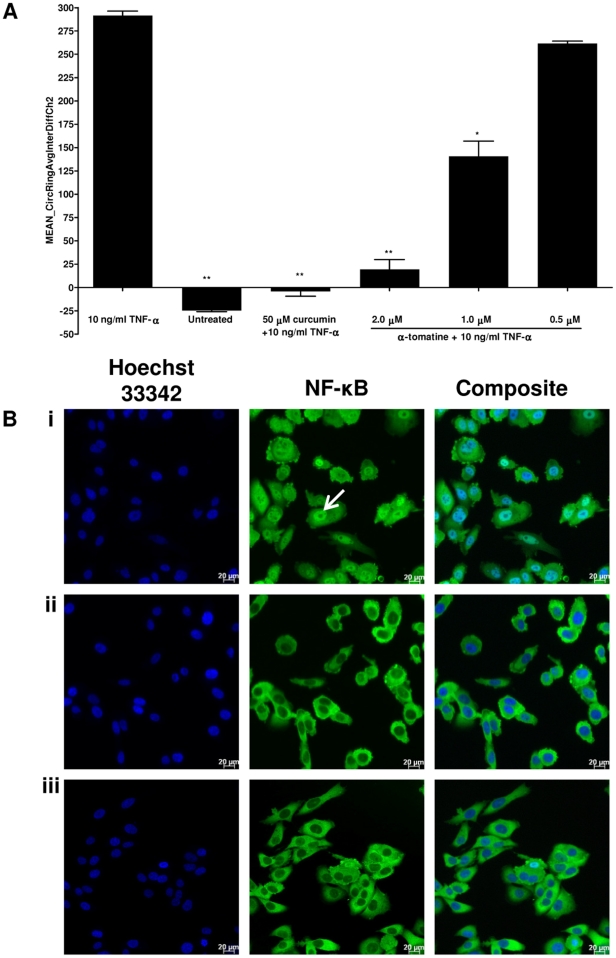
METHODOLOGY/PRINCIPAL FINDINGS: Treatment of highly aggressive human prostate cancer PC-3 cells with α-tomatine resulted in a concentration-dependent inhibition of cell growth with a half-maximal efficient concentration (EC(50)) value of 1.67±0.3 µM. It is also less cytotoxic to normal human liver WRL-68 cells and normal human prostate RWPE-1 cells. Assessment of real-time growth kinetics by cell impedance-based Real-Time Cell Analyzer (RTCA) showed that α-tomatine exhibited its cytotoxic effects against PC-3 cells as early as an hour after treatment. The inhibitory effect of α-tomatine on PC-3 cancer cell growth was mainly due to induction of apoptosis as evidenced by positive Annexin V staining and decreased in mitochondrial membrane potential but increased in nuclear condensation, polarization of F-actin, cell membrane permeability and cytochrome c expressions. Results also showed that α-tomatine induced activation of caspase-3, -8 and -9, suggesting that both intrinsic and extrinsic apoptosis pathways are involved. Furthermore, nuclear factor-kappa B (NF-κB) nuclear translocation was inhibited, which in turn resulted in significant decreased in NF-κB/p50 and NF-κB/p65 in the nuclear fraction of the treated cells compared to the control untreated cells. These results provide further insights into the molecular mechanism of the anti-proliferative actions of α-tomatine.
CONCLUSION/SIGNIFICANCE: α-tomatine induces apoptosis and inhibits NF-κB activation on prostate cancer cells. These results suggest that α-tomatine may be beneficial for protection against prostate cancer development and progression.
α-茄碱(α-tomatine)是番茄(Lycopersicon esculentum)中的主要皂苷。本研究探讨了α-茄碱对雄激素非依赖性人前列腺腺癌 PC-3 细胞的化学预防潜力。
方法/主要发现:α-茄碱处理高度侵袭性人前列腺癌 PC-3 细胞,导致细胞生长呈浓度依赖性抑制,半数有效浓度(EC50)值为 1.67±0.3 μM。它对正常人类肝 WRL-68 细胞和正常人类前列腺 RWPE-1 细胞的细胞毒性也较小。细胞阻抗实时细胞分析(RTCA)实时生长动力学评估表明,α-茄碱在处理后仅 1 小时即可对 PC-3 细胞表现出细胞毒性作用。α-茄碱对 PC-3 癌细胞生长的抑制作用主要是由于诱导细胞凋亡所致,这表现为 Annexin V 染色阳性,线粒体膜电位降低,核浓缩、F-肌动蛋白极化、细胞膜通透性和细胞色素 c 表达增加。结果还表明,α-茄碱诱导 caspase-3、-8 和 -9 的激活,表明涉及内在和外在凋亡途径。此外,核因子-κB(NF-κB)核易位被抑制,这导致与未经处理的对照细胞相比,处理细胞的核部分中 NF-κB/p50 和 NF-κB/p65 的表达显著降低。这些结果进一步深入了解了α-茄碱抗增殖作用的分子机制。
结论/意义:α-茄碱诱导前列腺癌细胞凋亡并抑制 NF-κB 激活。这些结果表明,α-茄碱可能有益于预防前列腺癌的发生和发展。