Division of Neuroscience, Los Angeles Biomedical Research Institute at Harbor-UCLA Medical Center, Torrance, CA 90502, USA.
Mol Neurodegener. 2011 May 7;6:29. doi: 10.1186/1750-1326-6-29.
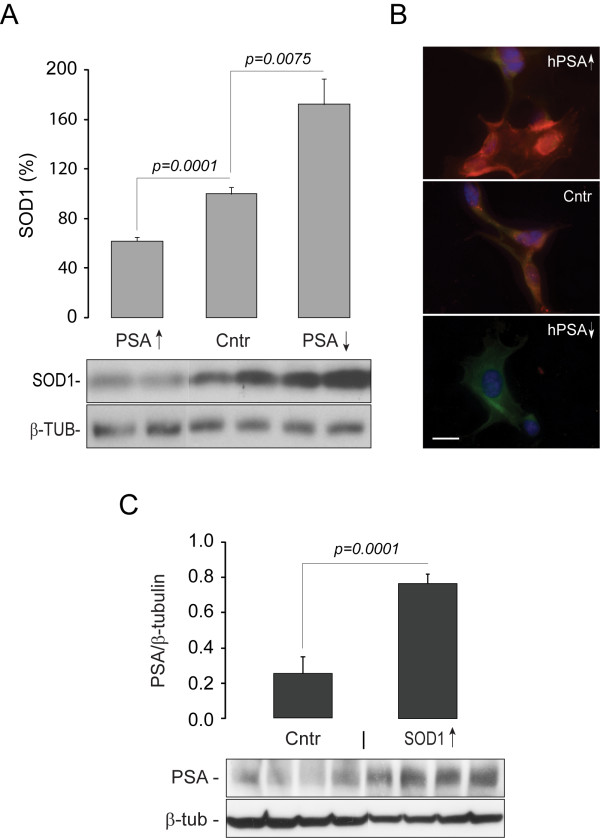
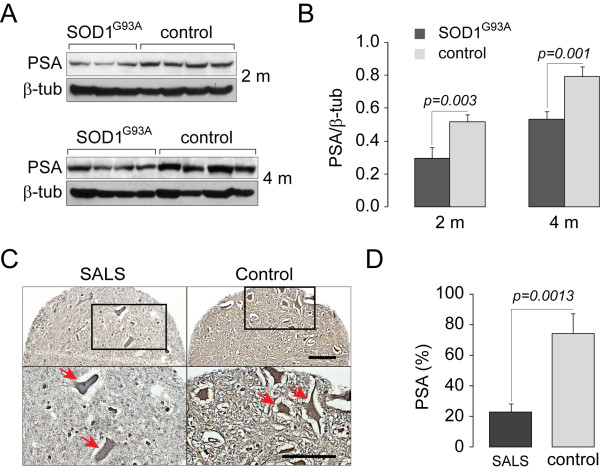
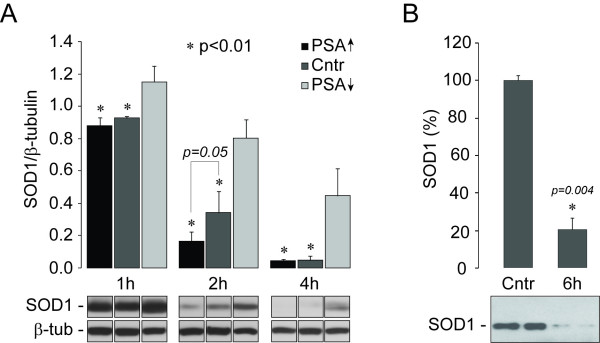
Accumulation of misfolded neurotoxic Cu, Zn-superoxide dismutase-1 (SOD1) protein found in both familial and sporadic amyotrophic lateral sclerosis (ALS) is recognized as an important contributing factor of neuronal cell death. However, little is known about the mechanisms controlling the accumulation and turnover of SOD1 protein. Puromycin-sensitive aminopeptidase (PSA/NPEPPS) was recently identified as a major peptidase acting on neurotoxic TAU protein and protecting against TAU-induced neurodegeneration. In addition, recent report implicated PSA/NPEPPS in the direct removal of neurotoxic polyglutamine repeats. These combined data suggest that PSA/NPEPPS might represent a novel degradation pathway targeting pathologically aggregating neurotoxic protein substrates including SOD1. Here, we report that PSA/NPEPPS directly regulates SOD1 protein abundance and clearance via proteolysis. In addition, PSA/NPEPPS expression is significantly decreased in motor neurons of both SODG93A transgenic mice and sporadic ALS patients, suggesting its possible contribution to the disease pathogenesis. These results implicate SOD1 as a new target protein of PSA/NPEPPS and point to the possible neuroprotective role of PSA/NPEPPS in ALS.
在家族性和散发性肌萎缩侧索硬化症(ALS)中发现的错误折叠的神经毒性 Cu、Zn-超氧化物歧化酶-1(SOD1)蛋白的积累被认为是神经元细胞死亡的一个重要因素。然而,关于控制 SOD1 蛋白积累和周转的机制知之甚少。最近发现嘌呤霉素敏感氨肽酶(PSA/NPEPPS)是一种主要的肽酶,作用于神经毒性 TAU 蛋白,并防止 TAU 诱导的神经退行性变。此外,最近的报告表明 PSA/NPEPPS 直接参与了神经毒性多聚谷氨酰胺重复序列的去除。这些综合数据表明,PSA/NPEPPS 可能代表一种针对包括 SOD1 在内的病理性聚集的神经毒性蛋白底物的新型降解途径。在这里,我们报告 PSA/NPEPPS 通过蛋白水解直接调节 SOD1 蛋白的丰度和清除。此外,在 SODG93A 转基因小鼠和散发性 ALS 患者的运动神经元中,PSA/NPEPPS 的表达显著降低,这表明其可能对疾病的发病机制有贡献。这些结果表明 SOD1 是 PSA/NPEPPS 的一个新的靶蛋白,并指出 PSA/NPEPPS 在 ALS 中的可能神经保护作用。