Biology Department, Ursinus College, 601 E Main Street, Collegeville, PA 19426, USA.
Biomedical Studies Department, Graduate School of Biomedical Sciences and Professional Studies, Drexel University College of Medicine, 2900 W. Queen Lane Philadelphia, PA 19129, US A.
G3 (Bethesda). 2021 Apr 15;11(4). doi: 10.1093/g3journal/jkab063.
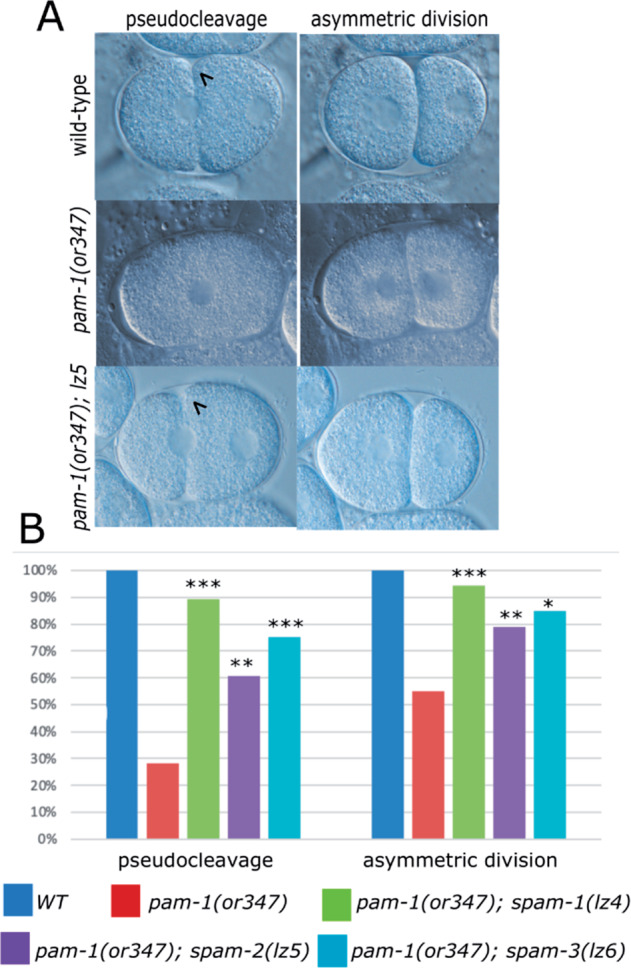
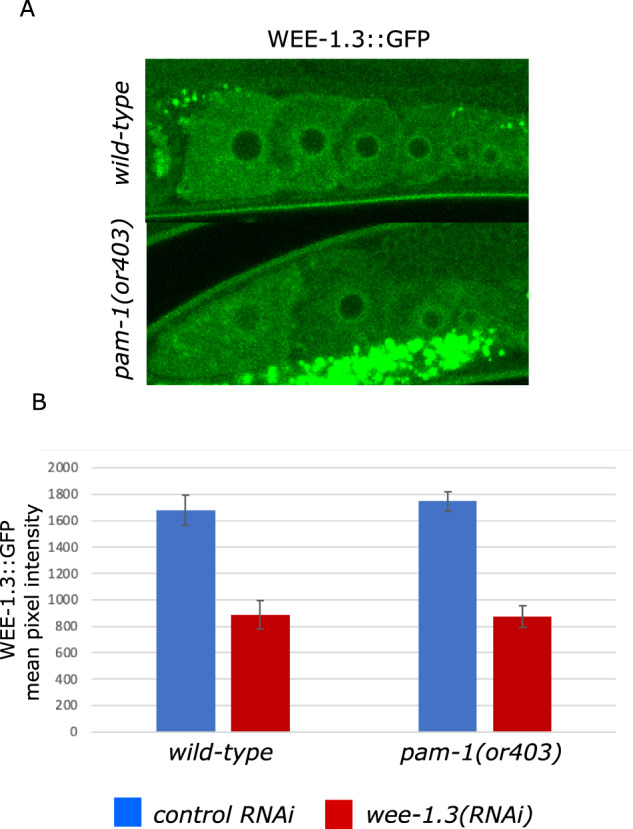
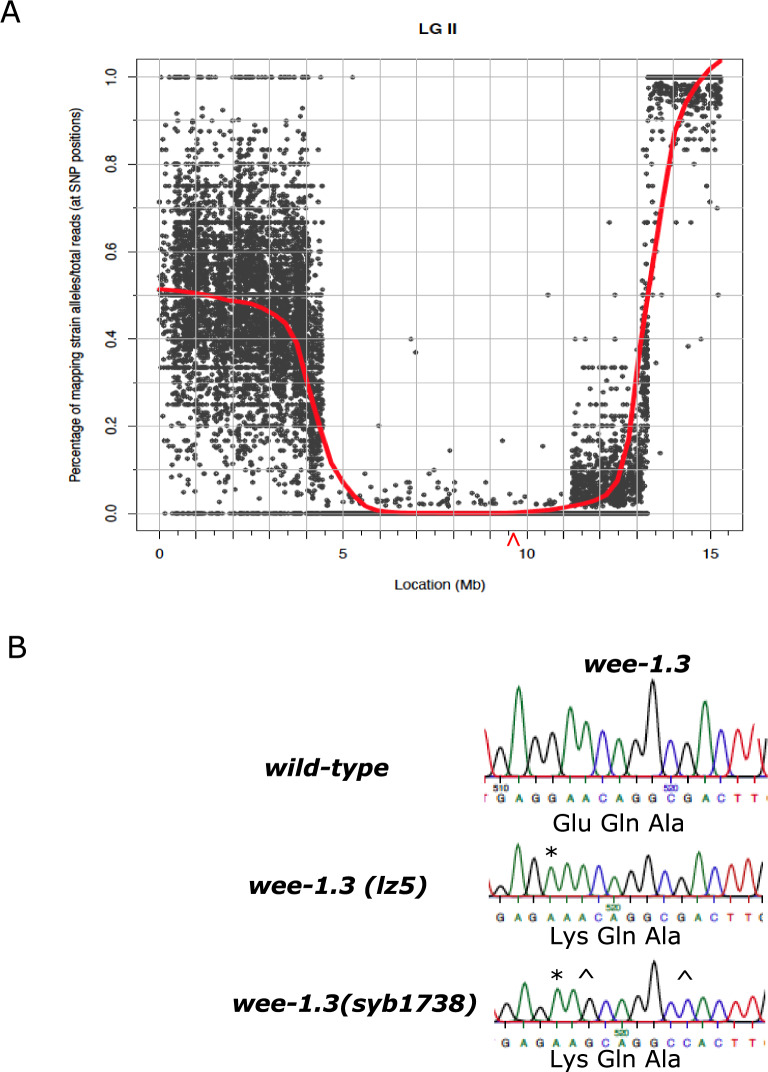
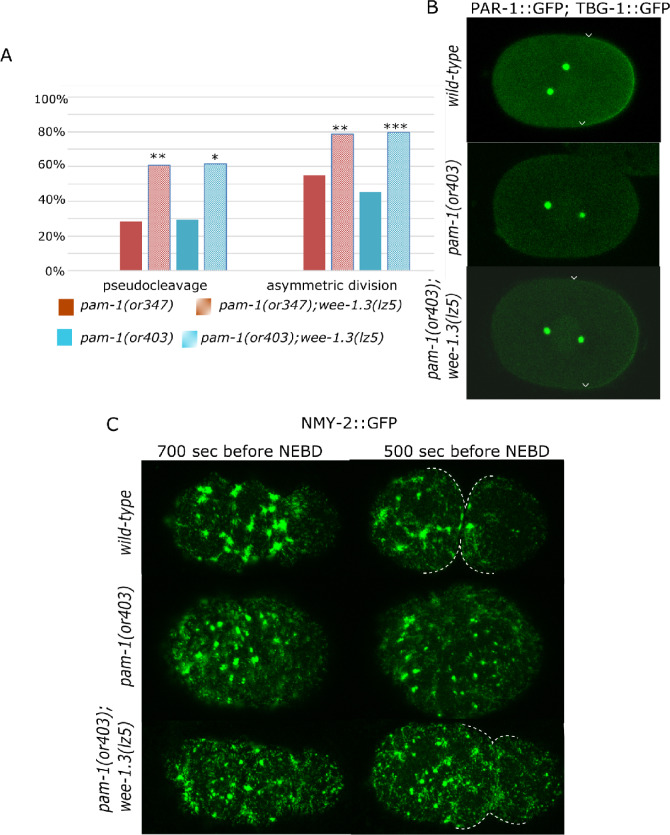
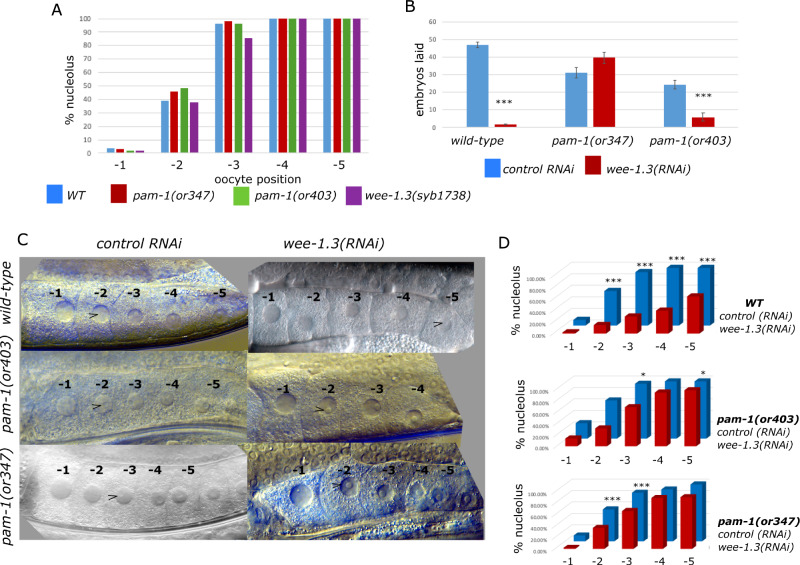
Puromycin-sensitive aminopeptidases are found across phyla and are known to regulate the cell-cycle and play a protective role in neurodegenerative disease. PAM-1 is a puromycin-sensitive aminopeptidase important for meiotic exit and polarity establishment in the one-cell Caenorhabditis elegans embryo. Despite conservation of this aminopeptidase, little is known about its targets during development. In order to identify novel interactors, we conducted a suppressor screen and isolated four suppressing mutations in three genes that partially rescued the maternal-effect lethality of pam-1 mutants. Suppressed strains show improved embryonic viability and polarization of the anterior-posterior axis. We identified a missense mutation in wee-1.3 in one of these suppressed strains. WEE-1.3 is an inhibitory kinase that regulates maturation promoting factor. Although the missense mutation suppressed polarity phenotypes in pam-1, it does so without restoring centrosome-cortical contact or altering the cortical actomyosin cytoskeleton. To see if PAM-1 and WEE-1.3 interact in other processes, we examined oocyte maturation. Although depletion of wee-1.3 causes sterility due to precocious oocyte maturation, this effect was lessened in pam-1 worms, suggesting that PAM-1 and WEE-1.3 interact in this process. Levels of WEE-1.3 were comparable between wild-type and pam-1 strains, suggesting that WEE-1.3 is not a direct target of the aminopeptidase. Thus, we have established an interaction between PAM-1 and WEE-1.3 in multiple developmental processes and have identified suppressors that are likely to further our understanding of the role of puromycin-sensitive aminopeptidases during development.
嘌呤霉素敏感氨肽酶广泛存在于各个门中,已知其可调节细胞周期并在神经退行性疾病中发挥保护作用。PAM-1 是一种嘌呤霉素敏感氨肽酶,对于有性生殖末期和线虫胚胎极性的建立是必需的。尽管该氨肽酶具有保守性,但对其在发育过程中的靶标知之甚少。为了鉴定新的相互作用蛋白,我们进行了抑制子筛选,分离出三个基因中的四个抑制突变,这些突变部分挽救了 pam-1 突变体的母体致死效应。受抑制的菌株表现出胚胎活力提高和前后轴极性的改善。我们在其中一个受抑制的菌株中鉴定出 wee-1.3 的错义突变。WEE-1.3 是一种抑制性激酶,调节成熟促进因子。尽管该错义突变抑制了 pam-1 的极性表型,但它并没有恢复中心体-皮质接触或改变皮质肌动球蛋白细胞骨架。为了观察 PAM-1 和 WEE-1.3 是否在其他过程中相互作用,我们检查了卵母细胞成熟。尽管 wee-1.3 的缺失由于卵母细胞过早成熟而导致不育,但在 pam-1 蠕虫中这种效应减轻,表明 PAM-1 和 WEE-1.3 在这个过程中相互作用。野生型和 pam-1 菌株之间的 WEE-1.3 水平相当,表明 WEE-1.3 不是氨肽酶的直接靶标。因此,我们已经在多个发育过程中建立了 PAM-1 和 WEE-1.3 之间的相互作用,并鉴定出了可能进一步了解嘌呤霉素敏感氨肽酶在发育过程中作用的抑制子。