Department of Biology, York University, Toronto, Canada.
PLoS One. 2011 Apr 28;6(4):e19143. doi: 10.1371/journal.pone.0019143.
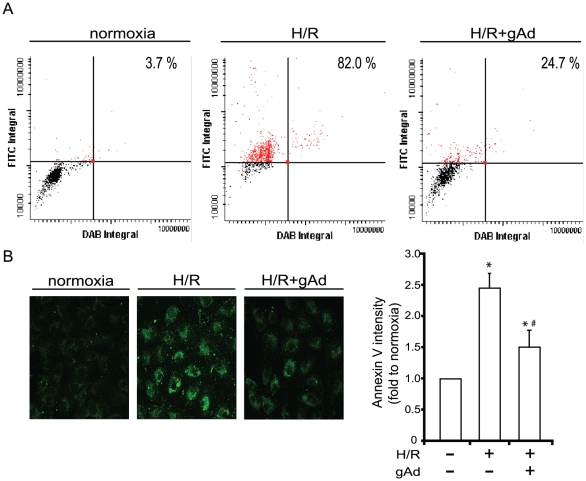
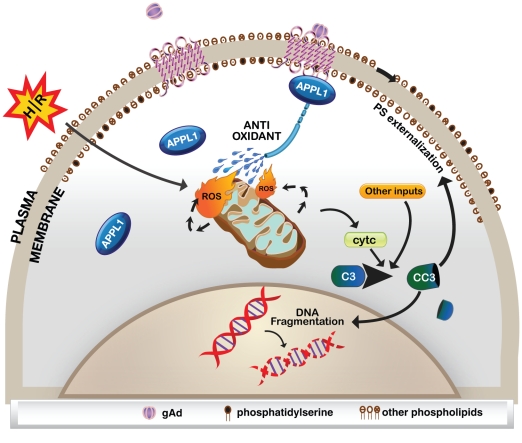
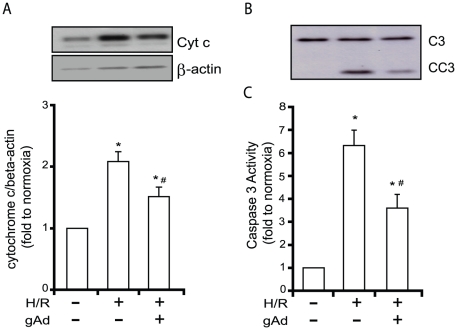
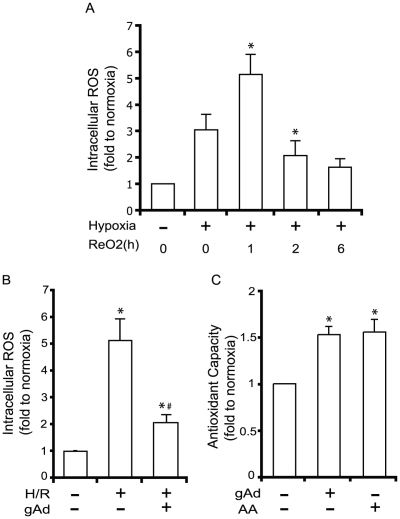
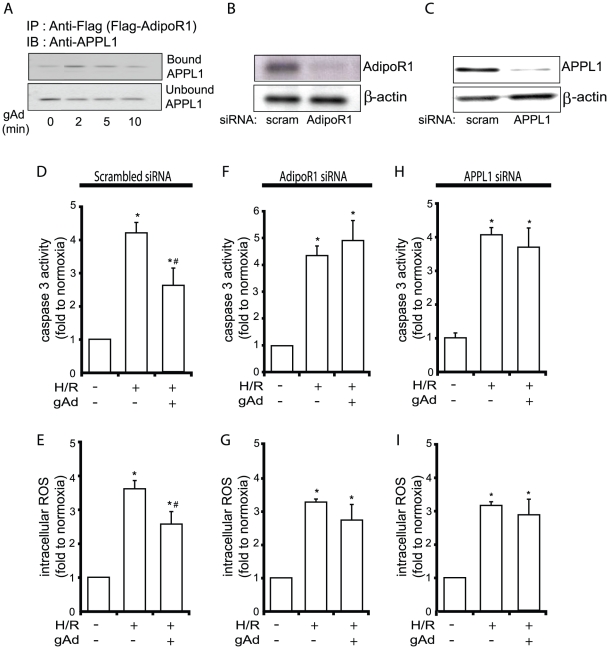
Cardiomyocyte apoptosis is an important remodeling event contributing to heart failure and adiponectin may mediate cardioprotective effects at least in part via attenuating apoptosis. Here we used hypoxia-reoxygenation (H/R) induced apoptosis in H9c2 cells to examine the effect of adiponectin and cellular mechanisms of action. We first used TUNEL labeling in combination with laser scanning cytometry to demonstrate that adiponectin prevented H/R-induced DNA fragmentation. The anti-apoptotic effect of adiponectin was also verified via attenuation of H/R-induced phosphatidylserine exposure using annexin V binding. H/R-induced apoptosis via the mitochondrial-mediated intrinsic pathway of apoptosis as assessed by cytochrome c release into cytosol and caspase-3 activation, both of which were attenuated by adiponectin. Mechanistically, we demonstrated that adiponectin enhanced anti-oxidative potential in these cells which led to attenuation of the increase in intracellular reactive oxygen species (ROS) caused by H/R. To further address the mechanism of adiponctins anti-apoptotic effects we used siRNA to efficiently knockdown adiponectin receptor (AdipoR1) expression and found that this attenuated the protective effects of adiponectin on ROS production and caspase 3 activity. Knockdown of APPL1, an important intracellular binding partner for AdipoR, also significantly reduced the ability of adiponectin to prevent H/R-induced ROS generation and caspase 3 activity. In summary, H/R-induced ROS generation and activation of the intrinsic apoptotic pathway was prevented by adiponectin via AdipoR1/APPL1 signaling and increased anti-oxidant potential.
心肌细胞凋亡是导致心力衰竭的重要重构事件,脂联素可能通过减轻细胞凋亡而发挥至少部分心脏保护作用。在这里,我们使用缺氧/复氧(H/R)诱导 H9c2 细胞凋亡,以研究脂联素的作用及其细胞作用机制。我们首先使用 TUNEL 标记与激光扫描共聚焦显微镜相结合,证明脂联素可以防止 H/R 诱导的 DNA 片段化。脂联素的抗凋亡作用还通过减少 H/R 诱导的磷脂酰丝氨酸暴露来验证,方法是用 annexin V 结合来检测。通过 H/R 诱导的线粒体介导的内在凋亡途径的凋亡,如细胞色素 c 释放到细胞质和 caspase-3 激活,这两种途径都被脂联素减弱。从机制上讲,我们证明了脂联素增强了这些细胞的抗氧化能力,从而减轻了 H/R 引起的细胞内活性氧(ROS)增加。为了进一步探讨脂联素抗凋亡作用的机制,我们使用 siRNA 有效地敲低了脂联素受体(AdipoR1)的表达,发现这减弱了脂联素对 ROS 产生和 caspase 3 活性的保护作用。APPL1 的敲低,AdipoR 的一个重要的细胞内结合伴侣,也显著降低了脂联素防止 H/R 诱导的 ROS 生成和 caspase 3 活性的能力。总之,脂联素通过 AdipoR1/APPL1 信号转导和增加抗氧化能力来防止 H/R 诱导的 ROS 生成和内在凋亡途径的激活。