Physiotherapy Program, Faculty of Health Sciences, Universiti Kebangsaan Malaysia, Kuala Lumpur, Malaysia.
Clinics (Sao Paulo). 2011;66(3):373-8. doi: 10.1590/s1807-59322011000300002.
A cross-sectional study was conducted to measure the prevalence of work-related injuries among physiotherapists in Malaysia and to explore the influence of factors such as gender, body mass index, years of work experience and clinical placement areas on the occurrence of work-related musculoskeletal disorders.
Self-administered questionnaires adapted from the Nordic Musculoskeletal Questionnaire were sent to 105 physiotherapists at three main public hospitals in Kuala Lumpur, Malaysia. The questionnaire had 12 items that covered demographic information, areas of musculoskeletal problems and physiotherapy techniques that could contribute to work-related musculoskeletal disorders. The data obtained were analyzed using the Statistical Package for Social Science version 14 software.
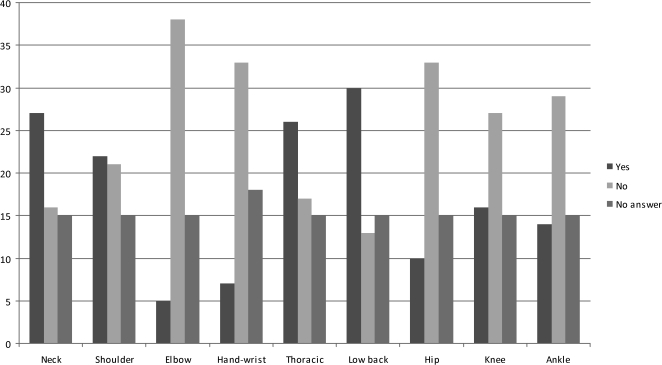
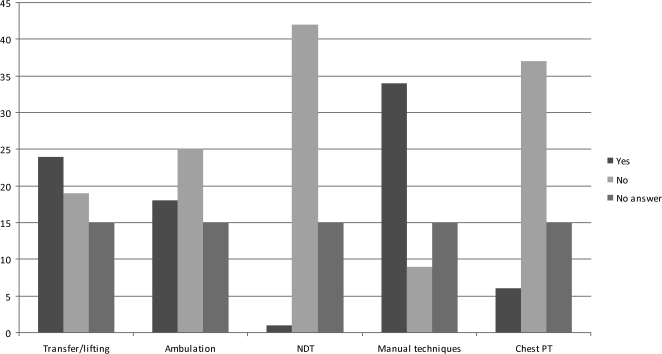
The overall prevalence of work-related injuries during the past 12 months was 71.6%. Female therapists reported a significantly higher prevalence of work-related musculoskeletal disorders than the male therapists (73.0%, p,0.001). Significant differences were observed between the proportion of therapists who had work-related musculoskeletal disorders and those who did not for the group with a body mass index (BMI) .25 (x² = 9.0, p = 0.003) and the group with a BMI of 18-25 (x² = 7.8, p = 0.006). Manual therapy (58.6%) and lifting/transfer tasks (41.3%) were the two physiotherapy techniques that most often contributed to work-related musculoskeletal disorders.
Work-related injuries are significantly higher among the physiotherapists in Malaysia compared with many other countries. Female therapists reported a higher incidence of work-related musculoskeletal disorders in this study, and work-related musculoskeletal disorders were more common among therapists working in the pediatric specialty. This study contributes to the understanding of work-related disorders among physiotherapists from a southeast Asian perspective where the profession is in its development stage.
本研究采用横断面研究方法,旨在调查马来西亚物理治疗师工作相关伤害的发生率,并探讨性别、体重指数、工作年限和临床工作场所等因素对工作相关肌肉骨骼疾病发生的影响。
本研究向马来西亚吉隆坡 3 家主要公立医院的 105 名物理治疗师发放了经过改良的北欧肌肉骨骼问卷。问卷共 12 个条目,涵盖了人口统计学信息、肌肉骨骼问题部位和可能导致工作相关肌肉骨骼疾病的物理治疗技术。使用社会科学统计软件包(SPSS)第 14 版对获得的数据进行分析。
在过去 12 个月中,整体工作相关伤害的发生率为 71.6%。女性治疗师报告的工作相关肌肉骨骼疾病发生率显著高于男性治疗师(73.0%,p,0.001)。对于体重指数(BMI)≥25 组(x²=9.0,p=0.003)和 BMI 为 18-25 组(x²=7.8,p=0.006),有工作相关肌肉骨骼疾病的治疗师比例与无工作相关肌肉骨骼疾病的治疗师比例存在显著差异。手法治疗(58.6%)和提举/搬运任务(41.3%)是导致工作相关肌肉骨骼疾病最常见的两种物理治疗技术。
与许多其他国家相比,马来西亚的物理治疗师工作相关伤害发生率较高。本研究中,女性治疗师报告的工作相关肌肉骨骼疾病发生率更高,在儿科专业工作的治疗师中,工作相关肌肉骨骼疾病更为常见。本研究从东南亚视角为理解该地区处于发展阶段的物理治疗师的职业相关疾病做出了贡献。