Chan W K, Chong T, Bernard H U, Klock G
Institute of Molecular and Cell Biology, National University of Singapore, Kent Ridge.
Nucleic Acids Res. 1990 Feb 25;18(4):763-9. doi: 10.1093/nar/18.4.763.
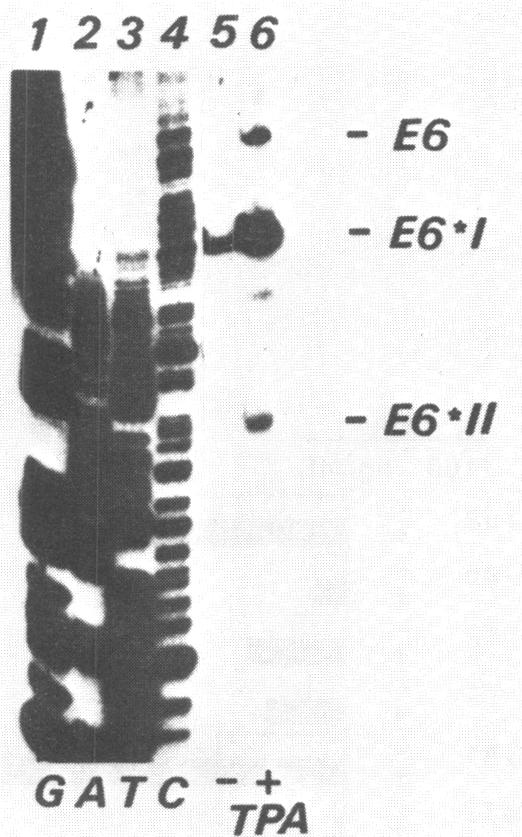
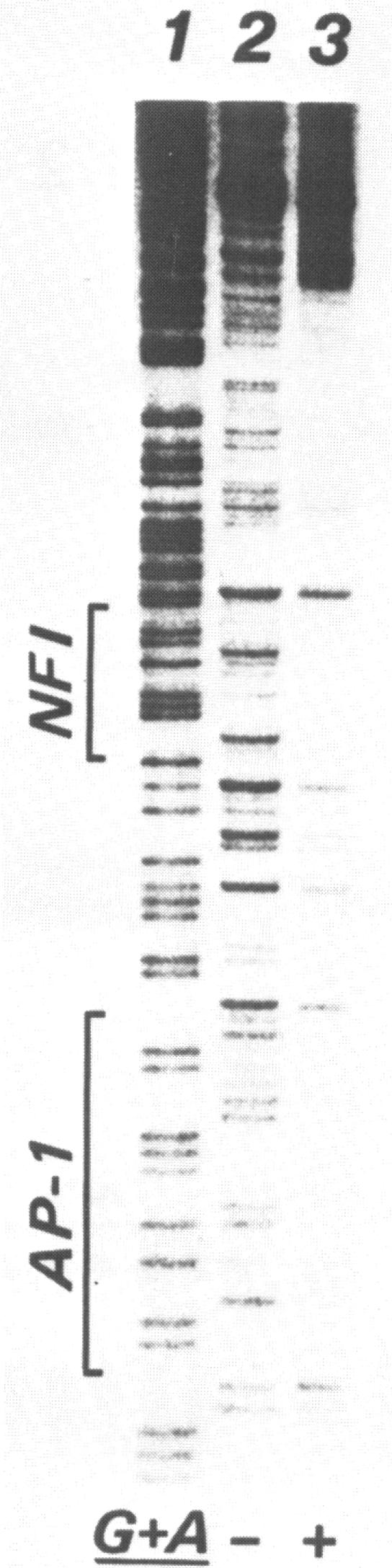
The promoter P97 of human papillomavirus-16 (HPV-16) gives rise to transcripts that encode the principal transforming genes of the virus, E6 and E7. The activity of P97 is regulated by a cell-type-specific enhancer, as well as by glucocorticoids and progesterone. We show here, that in CaSki cells, which contain HPV-16 genomes, P97 is also inducible by phorbol esters. Functional analysis of restriction fragments and oligonucleotides of the viral enhancer localizes two phorbol ester response elements on two transcription factor binding sites termed fp4e and fp9e. Sequence comparison, footprint analysis and bandshift competition of the cloned motifs suggest that both fp4e and fp9e are bound by the transcription factor AP1. These AP1 binding sites in HPV-16 and other papillomaviruses may provide a link between cellular oncogenes like jun, fos and possibly ras, whose transcription stimulating activity may lead to an elevated expression of the viral transforming genes E6 and E7.
人乳头瘤病毒16型(HPV - 16)的启动子P97可产生编码该病毒主要转化基因E6和E7的转录本。P97的活性受细胞类型特异性增强子以及糖皮质激素和孕酮的调节。我们在此表明,在含有HPV - 16基因组的CaSki细胞中,P97也可被佛波酯诱导。对病毒增强子的限制性片段和寡核苷酸进行功能分析,在两个称为fp4e和fp9e的转录因子结合位点上定位了两个佛波酯反应元件。对克隆基序的序列比较、足迹分析和带移竞争表明,fp4e和fp9e均由转录因子AP1结合。HPV - 16和其他乳头瘤病毒中的这些AP1结合位点可能在细胞癌基因如jun、fos以及可能的ras之间提供一种联系,其转录刺激活性可能导致病毒转化基因E6和E7的表达升高。