Department of Biotechnology, University of Natural Resources and Life Sciences Vienna, Muthgasse 11, 1190 Vienna, Austria.
BMC Biotechnol. 2011 May 12;11:51. doi: 10.1186/1472-6750-11-51.
The Chinese hamster ovary (CHO) expression system is the leading production platform for manufacturing biopharmaceuticals for the treatment of numerous human diseases. Efforts to optimize the production process also include the genetic construct encoding the therapeutic gene. Here we report about the successful identification of an endogenous highly active gene promoter obtained from CHO cells which shows conditionally inducible gene expression at reduced temperature.
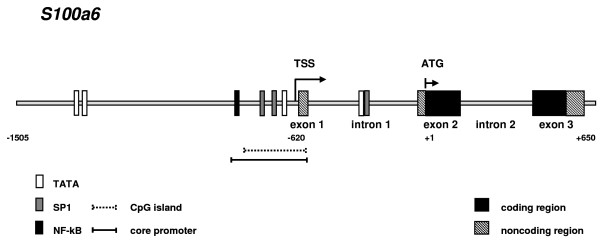
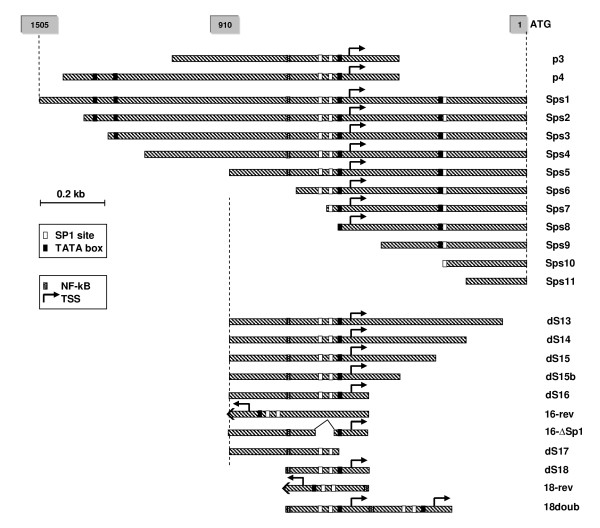
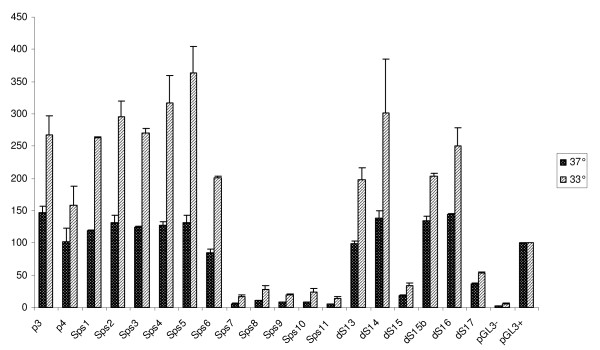
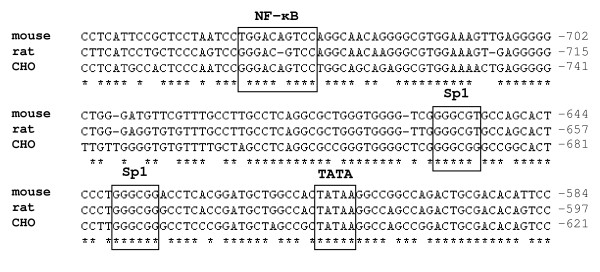
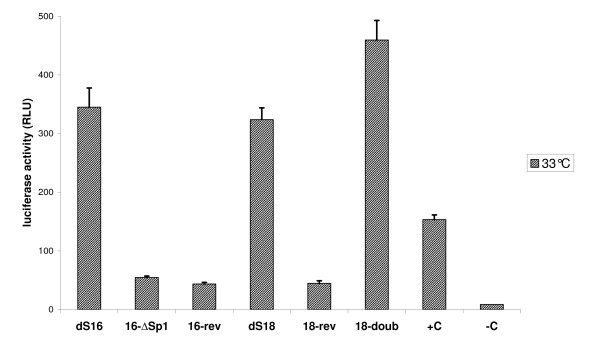
Based on CHO microarray expression data abundantly transcribed genes were selected as potential promoter candidates. The S100a6 (calcyclin) and its flanking regions were identified from a genomic CHO-K1 lambda-phage library. Computational analyses showed a predicted TSS, a TATA-box and several TFBSs within the 1.5 kb region upstream the ATG start signal. Various constructs were investigated for promoter activity at 37°C and 33°C in transient luciferase reporter gene assays. Most constructs showed expression levels even higher than the SV40 control and on average a more than two-fold increase at lower temperature. We identified the core promoter sequence (222 bp) comprising two SP1 sites and could show a further increase in activity by duplication of this minimal sequence.
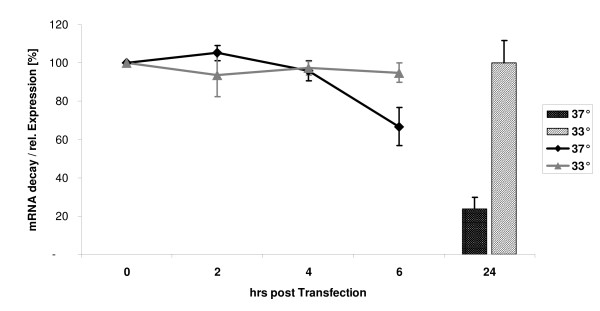
This novel CHO promoter permits conditionally high-level gene expression. Upon a shift to 33°C, a two to three-fold increase of basal productivity (already higher than SV40 promoter) is achieved. This property is of particular advantage for a process with reduced expression during initial cell growth followed by the production phase at low temperature with a boost in expression. Additionally, production of toxic proteins becomes feasible, since cell metabolism and gene expression do not directly interfere. The CHO S100a6 promoter can be characterized as cold-shock responsive with the potential for improving process performance of mammalian expression systems.
中国仓鼠卵巢(CHO)表达系统是用于治疗多种人类疾病的生物制药制造的主要生产平台。优化生产工艺的努力还包括编码治疗基因的遗传构建体。在这里,我们报告了从 CHO 细胞中成功鉴定出一种内源性高活性基因启动子的情况,该启动子在降低温度时表现出条件诱导的基因表达。
基于 CHO 微阵列表达数据,选择了大量转录的基因作为潜在启动子候选物。从 CHO-K1 噬菌体基因组文库中鉴定出 S100a6(钙调蛋白)及其侧翼区域。计算分析显示,在 ATG 起始信号上游的 1.5 kb 区域内有一个预测的 TSS、TATA 盒和几个 TFBS。在瞬时荧光素酶报告基因测定中,在 37°C 和 33°C 下研究了各种构建体的启动子活性。大多数构建体的表达水平甚至高于 SV40 对照,平均在较低温度下增加了两倍以上。我们鉴定了包含两个 SP1 位点的核心启动子序列(222 bp),并通过重复该最小序列显示了活性的进一步增加。
这种新型 CHO 启动子允许条件性高水平基因表达。在转移到 33°C 时,基础生产力(已经高于 SV40 启动子)提高了两到三倍。在初始细胞生长期间表达减少,随后在低温下进行生产阶段并提高表达的过程中,这种特性具有特别的优势。此外,由于细胞代谢和基因表达不会直接干扰,因此可以生产有毒蛋白。CHO S100a6 启动子可被表征为冷休克反应性,具有改善哺乳动物表达系统工艺性能的潜力。