Department of Biochemistry and Molecular Biology, Xinxiang Medical University, China.
Henan Collaborative Innovation Center of Molecular Diagnosis and Laboratory Medicine, Xinxiang, China.
FEBS Open Bio. 2021 Jan;11(1):95-104. doi: 10.1002/2211-5463.13029. Epub 2020 Dec 3.
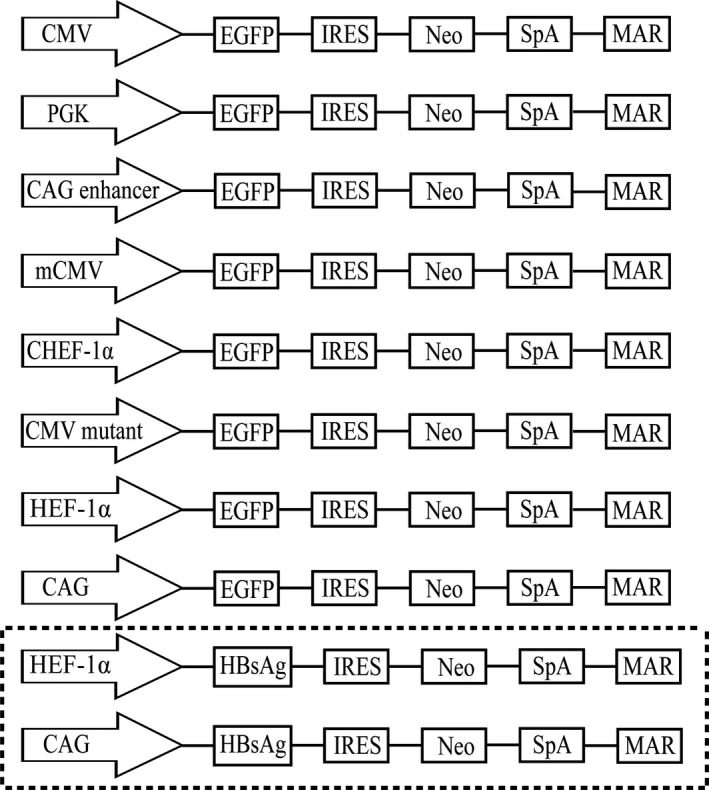
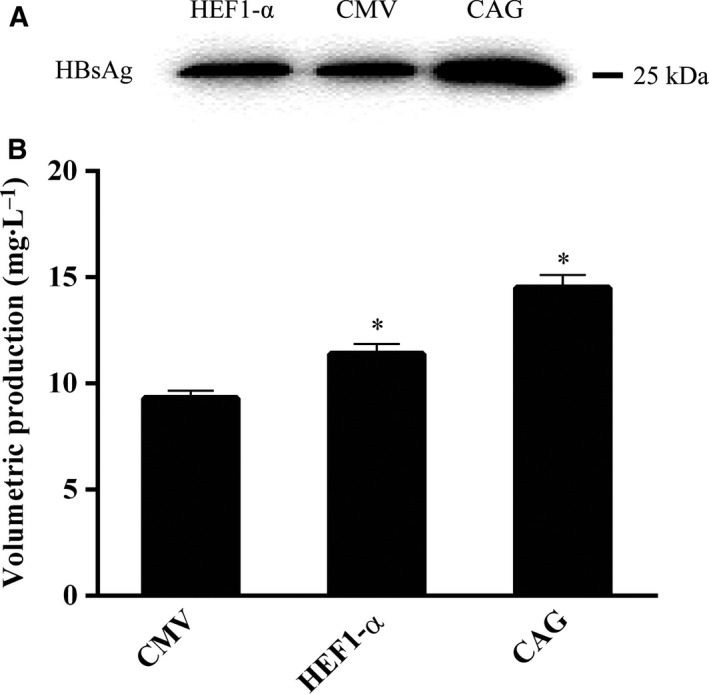
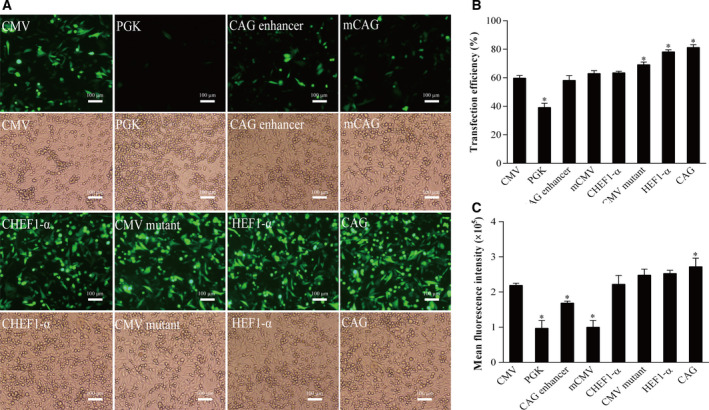
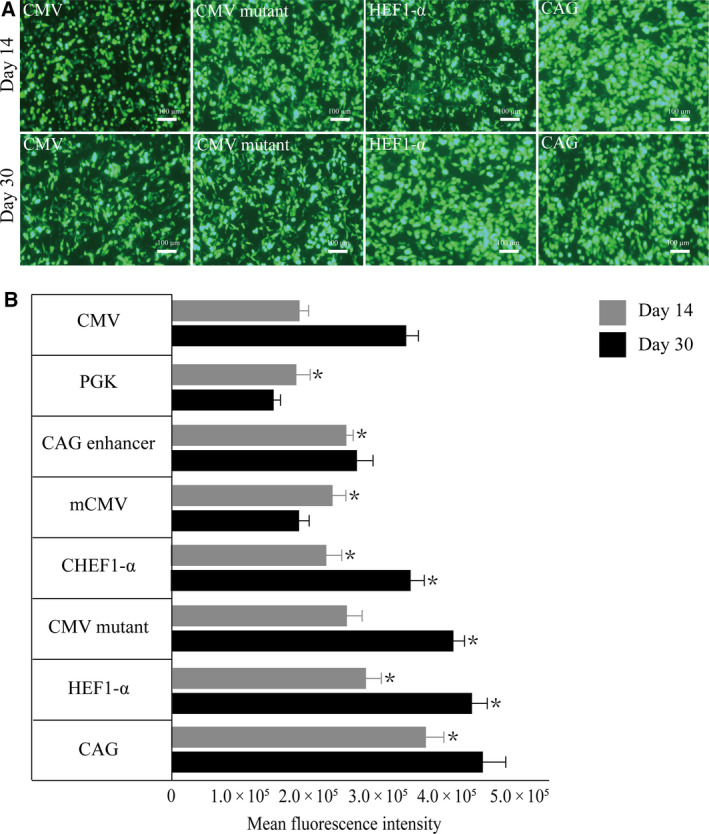
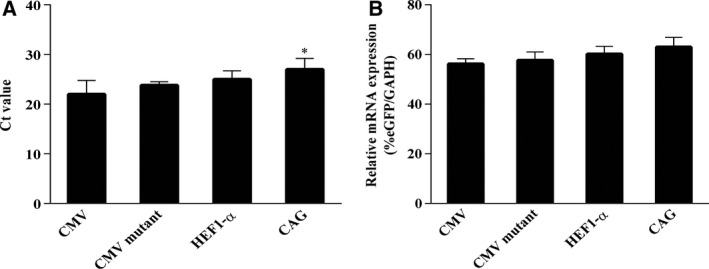
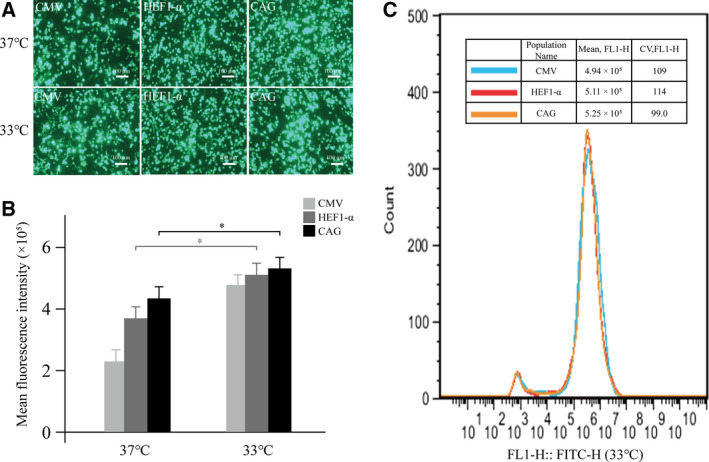
The vast majority of therapeutic recombinant proteins are produced in mammalian cell lines. However, proteins generated in nonhuman cell lines, such as Chinese hamster ovary (CHO) cells, are decorated with human-like glycan structures that differ from those of human cells, and these may induce immunogenic responses in human cells. Human embryonic kidney cells (HEK293F) are also extensively used as hosts for the expression of recombinant therapeutic proteins, but their utility is limited by the low expression of transgenes in these cells. Here, we investigated recombinant protein expression from eight frequently used promoters in transfected HEK293F cells. The expression levels and stability of the transgenes were evaluated by flow cytometry and qRT-PCR. The most efficient expression (in terms of both mRNA and protein yields) was achieved using a cytomegalovirus (CMV) major immediate-early enhancer combined with the chicken beta-actin promoter (CAG) promoter, as compared to all other tested promoters under both transient and stable transfection conditions. In addition, application of mild hypothermia (i.e., 33 °C) after transfection improved the positive effect of the CMV enhancer fused to the chicken beta-actin promoter (CAG promoter) on enhanced green fluorescent protein (eGFP) expression. Although the temperature sensitivity of the CMV promoter is greater than that of CAG promoter, recombinant protein levels were still highest when expression was driven by the CAG promoter. When eGFP was replaced with hepatitis B surface antigen, the CAG promoter still showed the highest transgene expression. In conclusion, our data show that the CAG promoter is a strong promoter for recombinant protein expression in HEK293F cells.
绝大多数治疗性重组蛋白都是在哺乳动物细胞系中生产的。然而,在非人类细胞系(如中国仓鼠卵巢(CHO)细胞)中产生的蛋白质具有类似于人类的聚糖结构,与人类细胞中的聚糖结构不同,这些结构可能会在人类细胞中引起免疫反应。人胚肾细胞(HEK293F)也被广泛用作表达重组治疗性蛋白的宿主,但由于这些细胞中转基因的表达水平低,其用途受到限制。在这里,我们研究了转染 HEK293F 细胞中八个常用启动子的重组蛋白表达。通过流式细胞术和 qRT-PCR 评估转基因的表达水平和稳定性。在瞬时和稳定转染条件下,与所有其他测试的启动子相比,使用巨细胞病毒(CMV)主要早期增强子与鸡β-肌动蛋白启动子(CAG)启动子组合可实现最高的表达效率(无论是在 mRNA 和蛋白质产量方面)。此外,在转染后应用轻度低温(即 33°C)可改善 CMV 增强子与鸡β-肌动蛋白启动子(CAG 启动子)融合对增强型绿色荧光蛋白(eGFP)表达的积极影响。尽管 CMV 启动子的温度敏感性大于 CAG 启动子,但当由 CAG 启动子驱动表达时,重组蛋白水平仍然最高。当 eGFP 被乙肝表面抗原取代时,CAG 启动子仍显示出最高的转基因表达。总之,我们的数据表明 CAG 启动子是 HEK293F 细胞中重组蛋白表达的强启动子。