Department of Biochemistry and Molecular Biophysics, Columbia University, New York, New York, USA. Center for Computational Biology and Bioinformatics, Columbia University, New York, New York, USA. Howard Hughes Medical Institute, Columbia University, New York, New York, USA.
Nat Struct Mol Biol. 2011 Jun;18(6):693-700. doi: 10.1038/nsmb.2051. Epub 2011 May 15.
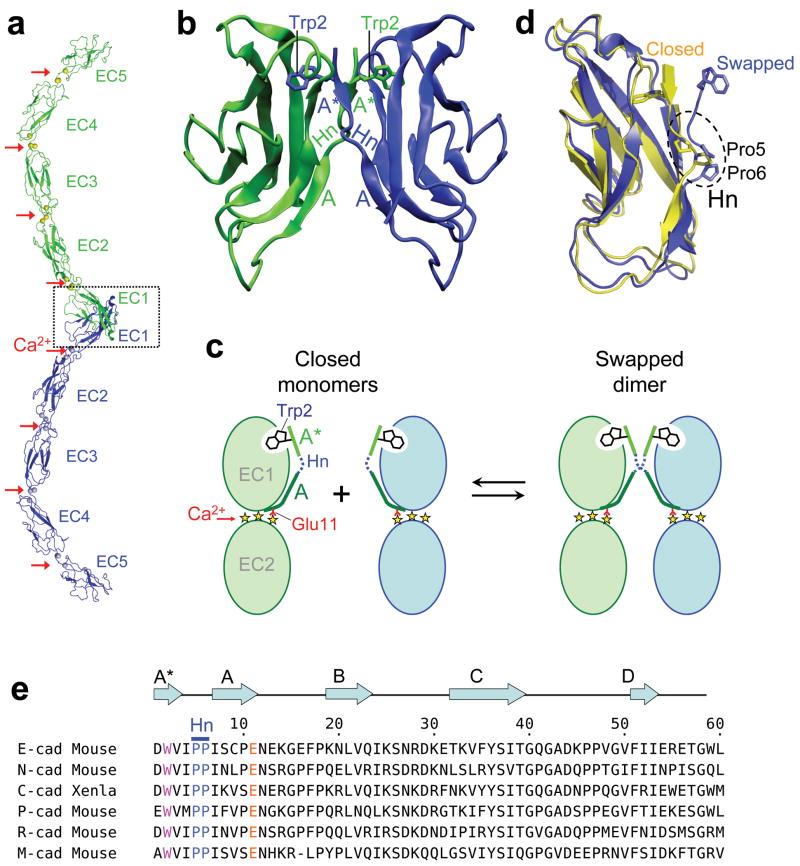
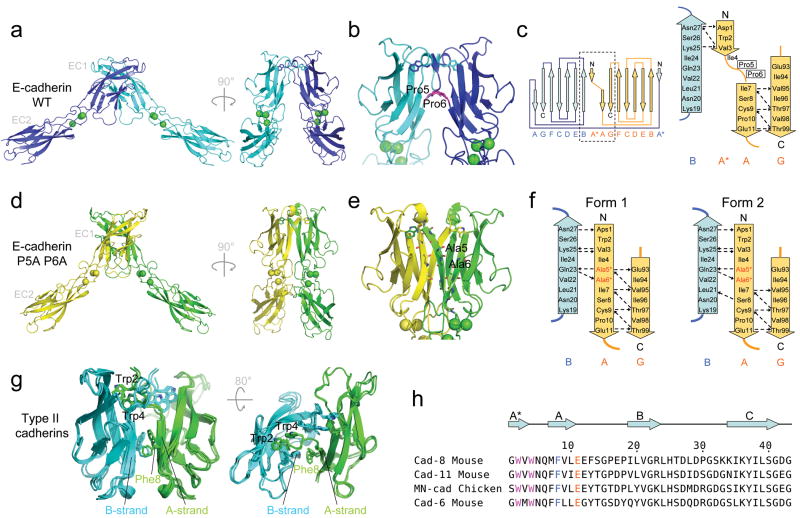
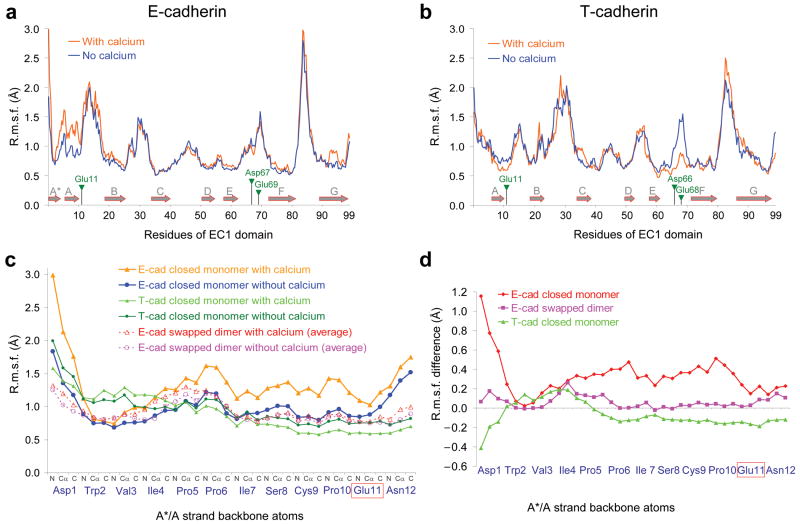
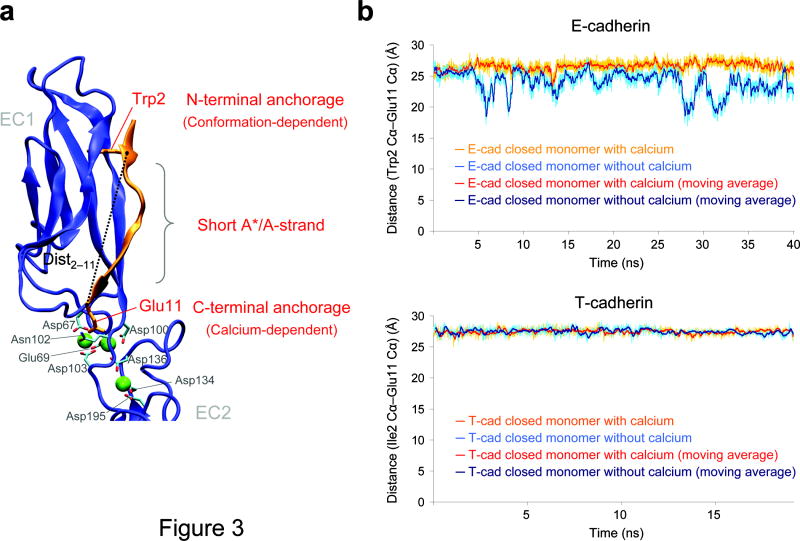
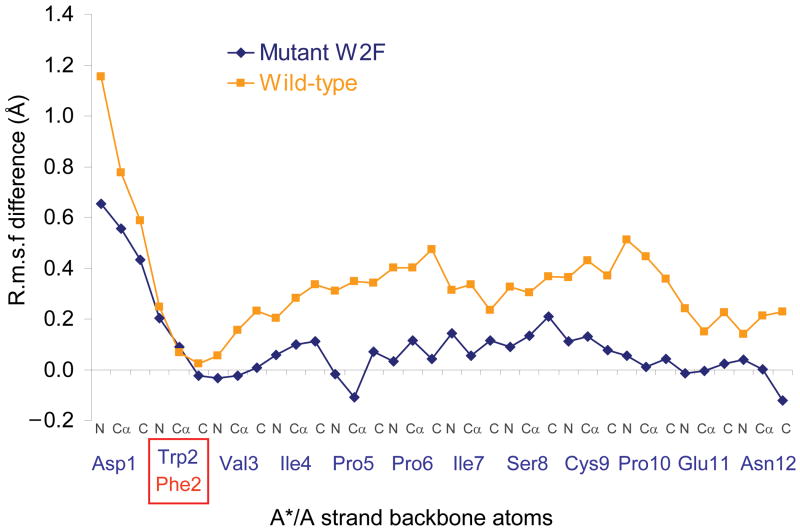
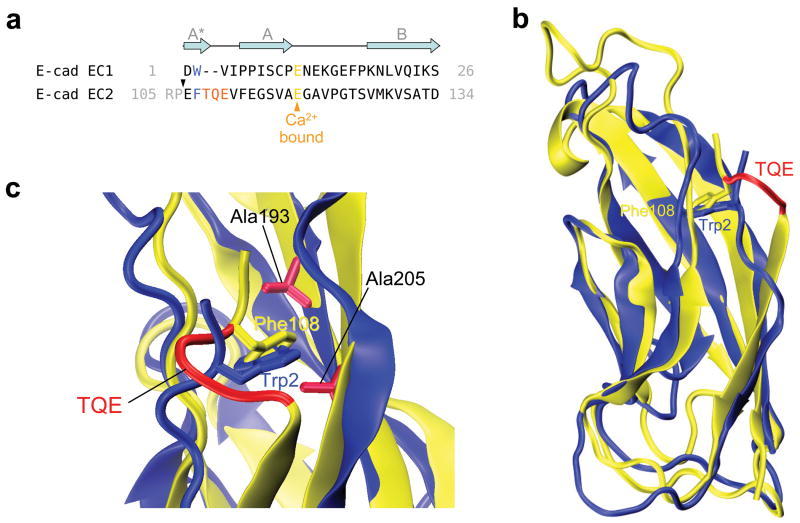
Cell adhesion by classical cadherins is mediated by dimerization of their EC1 domains through the 'swapping' of N-terminal β-strands. We use molecular simulations, measurements of binding affinities and X-ray crystallography to provide a detailed picture of the structural and energetic factors that control the adhesive dimerization of cadherins. We show that strand swapping in EC1 is driven by conformational strain in cadherin monomers that arises from the anchoring of their short N-terminal strand at one end by the conserved Trp2 and at the other by ligation to Ca(2+) ions. We also demonstrate that a conserved proline-proline motif functions to avoid the formation of an overly tight interface where affinity differences between different cadherins, crucial at the cellular level, are lost. We use these findings to design site-directed mutations that transform a monomeric EC2-EC3 domain cadherin construct into a strand-swapped dimer.
经典钙黏蛋白通过 EC1 结构域二聚化介导细胞黏附,其通过“交换”N 端β-链实现。我们使用分子模拟、结合亲和力测量和 X 射线晶体学,为控制钙黏蛋白黏附二聚化的结构和能量因素提供了详细的描述。我们表明,EC1 中的链交换是由钙黏蛋白单体中的构象应变驱动的,这种构象应变源于其短 N 端链在一端由保守的色氨酸 2 固定,另一端与 Ca(2+) 离子连接。我们还证明,一个保守的脯氨酸-脯氨酸基序可避免形成过于紧密的界面,而不同钙黏蛋白之间的亲和力差异在细胞水平上是至关重要的,在这种界面中会丧失亲和力差异。我们利用这些发现设计了定点突变,将单体 EC2-EC3 结构域钙黏蛋白构建体转化为链交换二聚体。