Yochelis A, Knobloch E, Xie Y, Qu Z, Garfinkel A
Department of Medicine (Cardiology), University of California - Los Angeles, CA 90095, USA.
Europhys Lett. 2008 Sep 12;83(6):64005p1-64005p6. doi: 10.1209/0295-5075/83/64005.
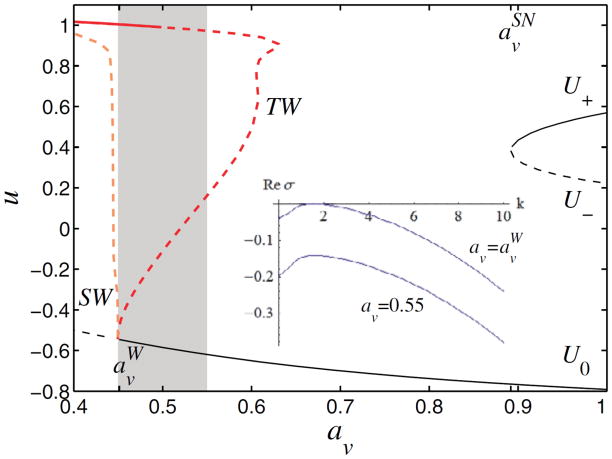
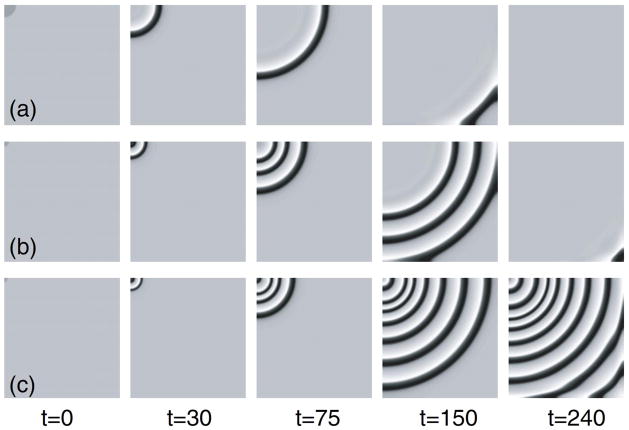
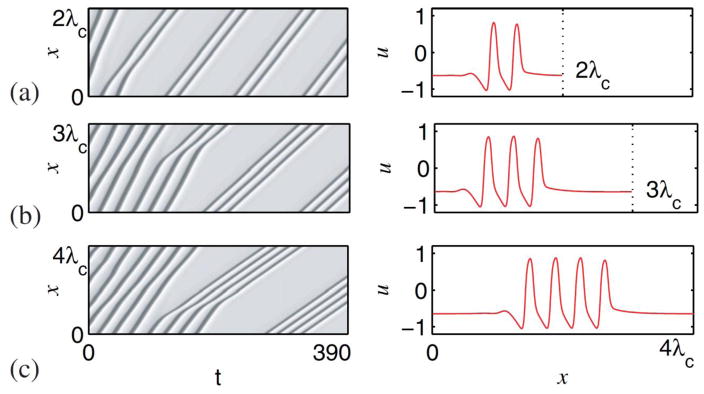
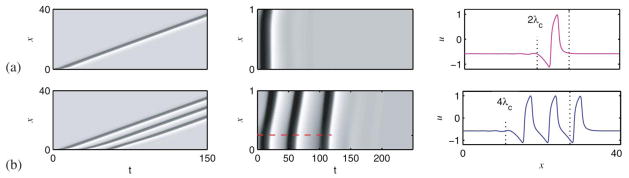
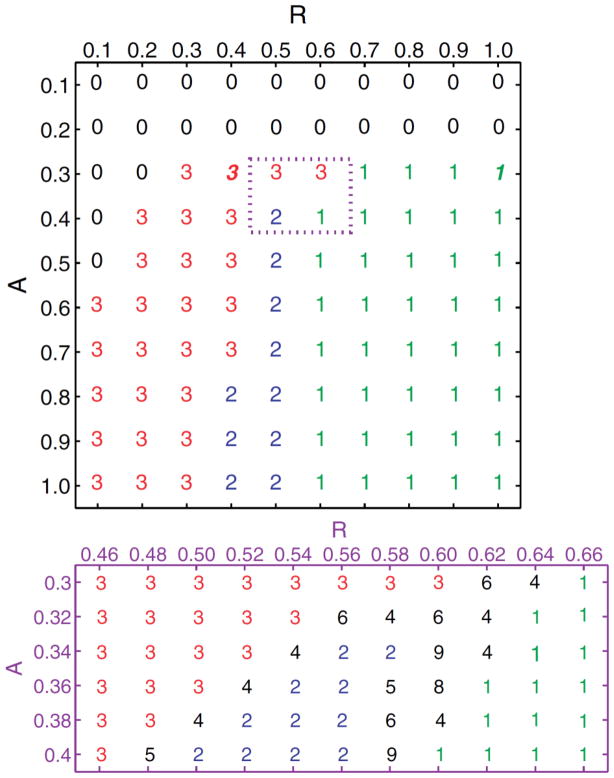
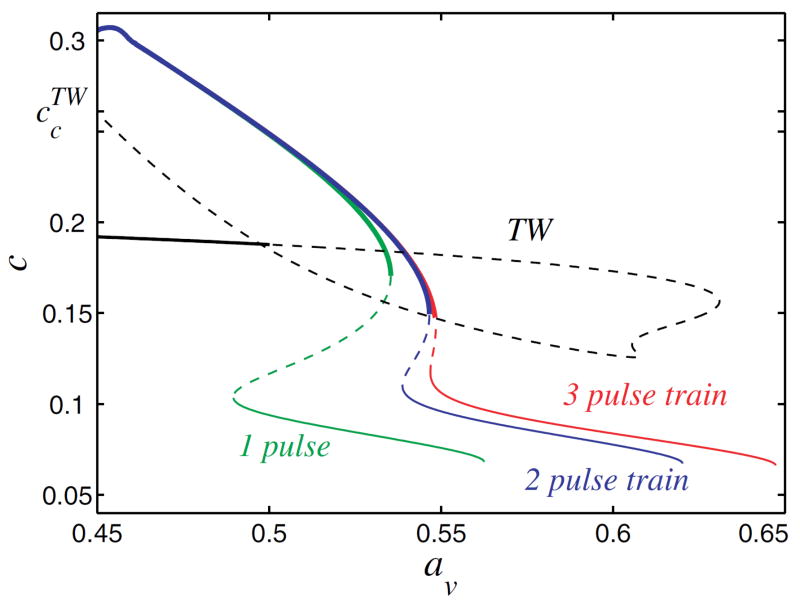
Spatiotemporal control of excitable media is of paramount importance in the development of new applications, ranging from biology to physics. To this end, we identify and describe a qualitative property of excitable media that enables us to generate a sequence of traveling pulses of any desired length, using a one-time initial stimulus. The wave trains are produced by a transient pacemaker generated by a one-time suitably tailored spatially localized finite amplitude stimulus, and belong to a family of fast pulse trains. A second family, of slow pulse trains, is also present. The latter are created through a clumping instability of a traveling wave state (in an excitable regime) and are inaccessible to single localized stimuli of the type we use. The results indicate that the presence of a large multiplicity of stable, accessible, multi-pulse states is a general property of simple models of excitable media.
可激发介质的时空控制在从生物学到物理学等新应用的开发中至关重要。为此,我们识别并描述了可激发介质的一种定性特性,该特性使我们能够使用一次性初始刺激生成任意所需长度的一系列传播脉冲。波列由一次性适当定制的空间局部有限振幅刺激产生的瞬态起搏器产生,并且属于快速脉冲列家族。还存在第二个家族,即慢脉冲列。后者是通过行波状态(在可激发状态下)的聚集不稳定性产生的,并且对于我们使用的那种类型的单个局部刺激是无法实现的。结果表明,大量稳定、可及的多脉冲状态的存在是可激发介质简单模型的一般特性。