Key Laboratory of Cenozoic Geology and Environment, Institute of Geology and Geophysics, Chinese Academy of Sciences, Beijing, China.
PLoS One. 2011 May 6;6(5):e19726. doi: 10.1371/journal.pone.0019726.
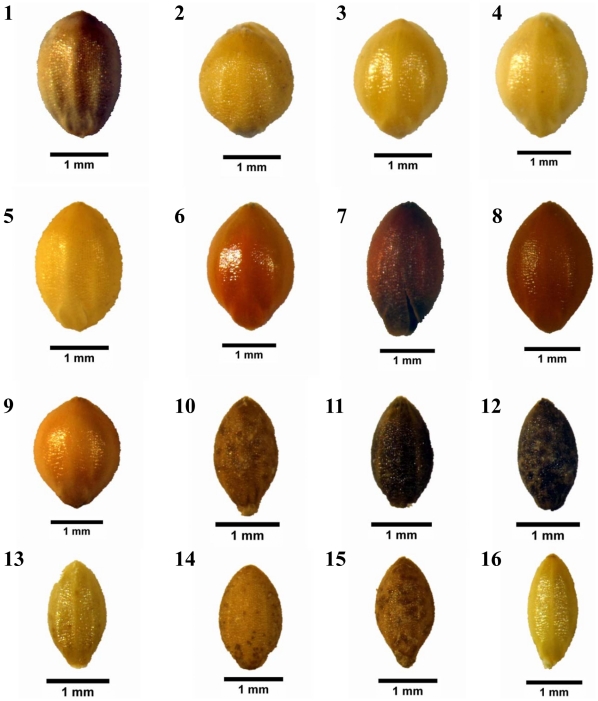
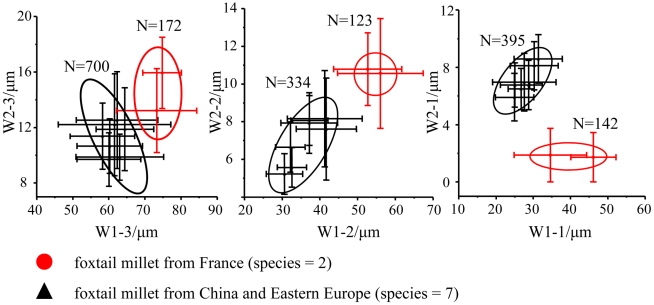
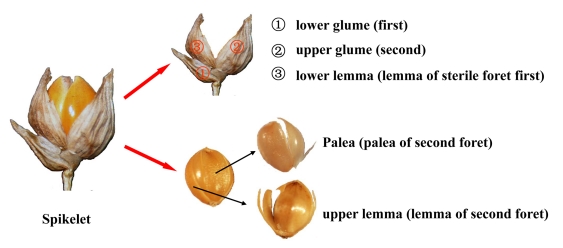
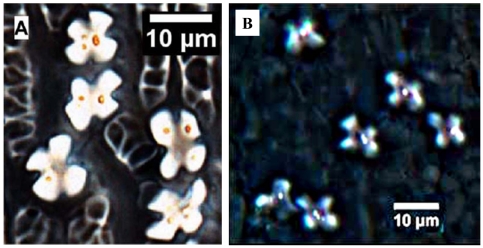
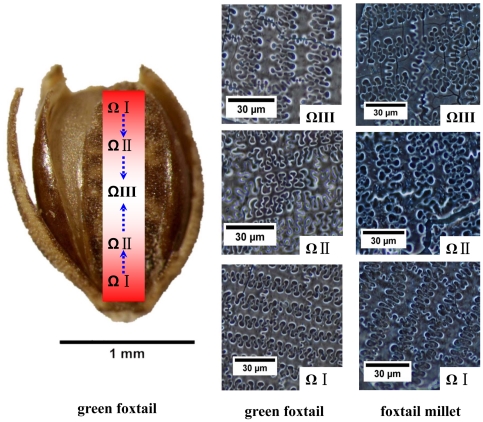
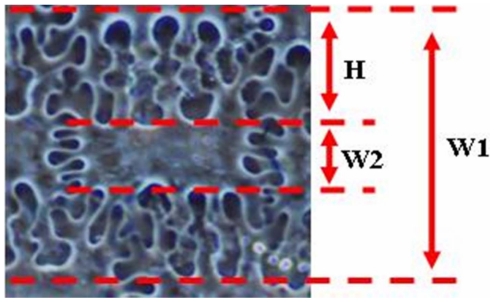
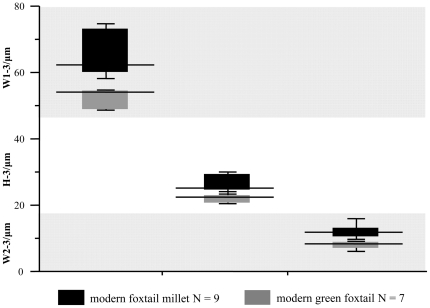
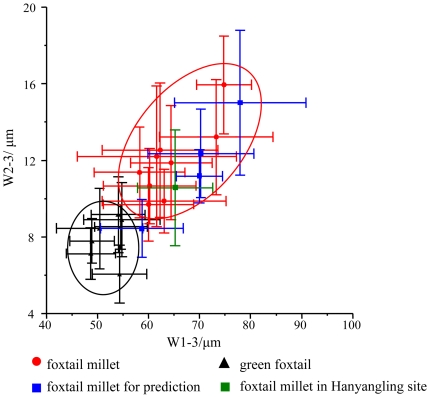
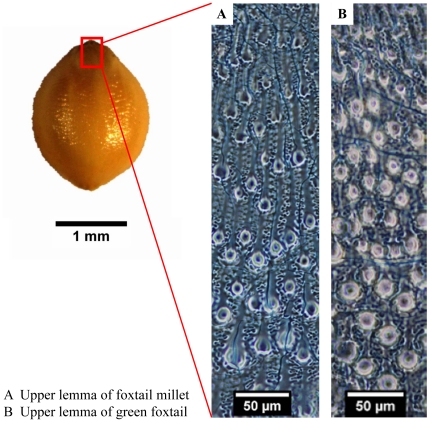
Foxtail millet (Setaria italica) is one of the oldest domesticated cereal crops in Eurasia, but identifying foxtail millets, especially in charred grains, and differentiating it from its wild ancestor, green foxtail (Setaria viridis), in the archaeobotanical remains, is still problematic. Phytolithic analysis provides a meaningful method for identifying this important crop. In this paper, the silicon structure patterns in the glumes, lemmas, and paleas from inflorescence bracts in 16 modern plants of foxtail millet and green foxtail from China and Europe are examined using light microscopy with phase-contrast and a microscopic interferometer. Our research shows that the silicon structure of ΩIII from upper lemmas and paleas in foxtail millet and green foxtail can be correspondingly divided into two groups. The size of ΩIII type phytolith of foxtail millet is bigger than that from green foxtail. Discriminant function analysis reveals that 78.4% of data on foxtail millet and 76.9% of data on green foxtail are correctly classified. This means certain morphotypes of phytoliths are relatively reliable tools for distinguishing foxtail millet from green foxtail. Our results also revealed that the husk phytolith morphologies of foxtail millets from China and Eastern Europe are markedly different from those from Western Europe. Our research gives a meaningful method of separating foxtail millet and green foxtail. The implications of these findings for understanding the history of foxtail millet domestication and cultivation in ancient civilizations are significant.
黍(Setaria italica)是欧亚大陆最古老的驯化谷物之一,但在考古植物学遗存中,识别黍,特别是碳化颗粒中的黍,以及将其与野生祖先绿色狗尾草(Setaria viridis)区分开来,仍然存在问题。植硅石分析为识别这种重要作物提供了有意义的方法。在本文中,使用具有相差和微观干涉仪的光学显微镜检查了来自中国和欧洲的 16 种现代黍和绿色狗尾草的花序苞片的颖片、外稃和内稃中的硅结构模式。我们的研究表明,来自黍和绿色狗尾草的上外稃和内稃的 ΩIII 的硅结构可以相应地分为两组。黍的 ΩIII 型植硅石的大小大于绿色狗尾草的。判别函数分析显示,78.4%的黍数据和 76.9%的绿色狗尾草数据被正确分类。这意味着某些形态类型的植硅石是区分黍和绿色狗尾草的相对可靠工具。我们的结果还表明,来自中国和东欧的黍的外壳植硅石形态与来自西欧的明显不同。我们的研究为分离黍和绿色狗尾草提供了一种有意义的方法。这些发现对理解古代文明中黍的驯化和栽培历史具有重要意义。