Fuller Dorian Q
Institute of Archaeology, University College London, 31-34 Gordon Square, London WC1H 0PY, UK.
Ann Bot. 2007 Nov;100(5):903-24. doi: 10.1093/aob/mcm048. Epub 2007 May 10.
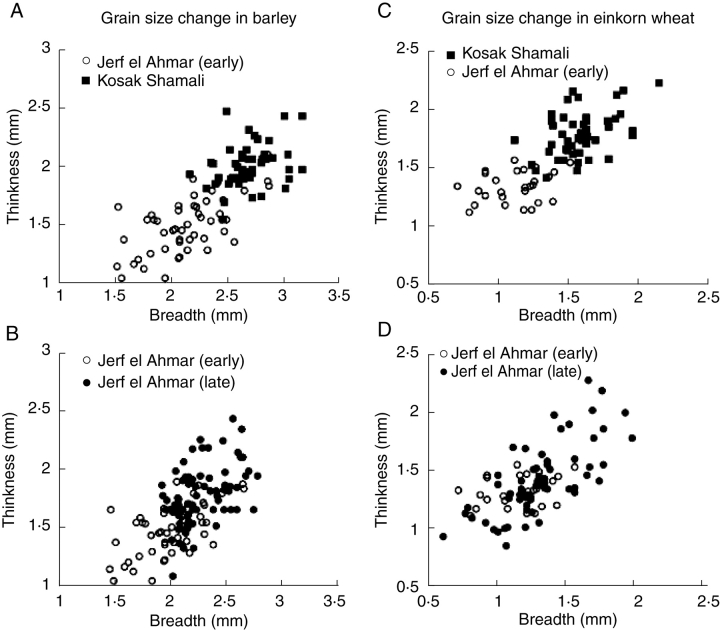
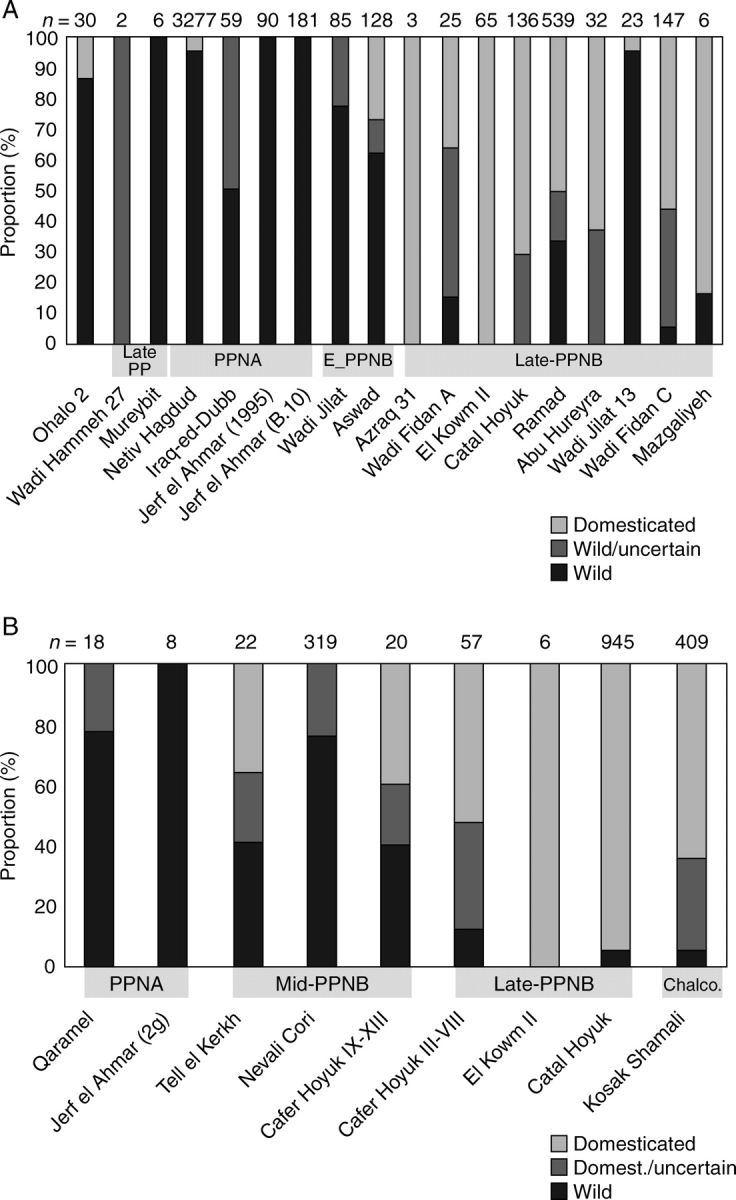
Archaeobotany, the study of plant remains from sites of ancient human activity, provides data for studying the initial evolution of domesticated plants. An important background to this is defining the domestication syndrome, those traits by which domesticated plants differ from wild relatives. These traits include features that have been selected under the conditions of cultivation. From archaeological remains the easiest traits to study are seed size and in cereal crops the loss of natural seed dispersal.
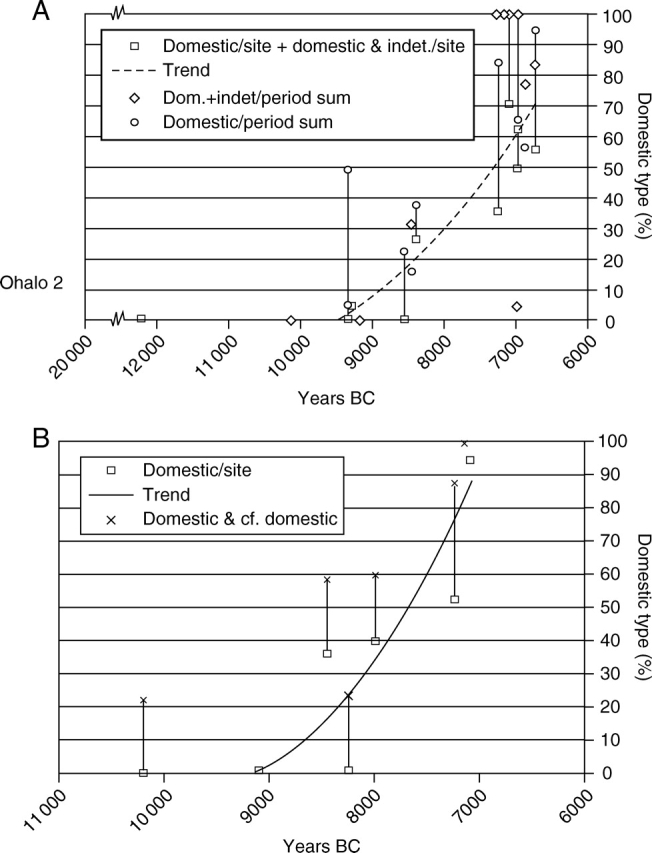
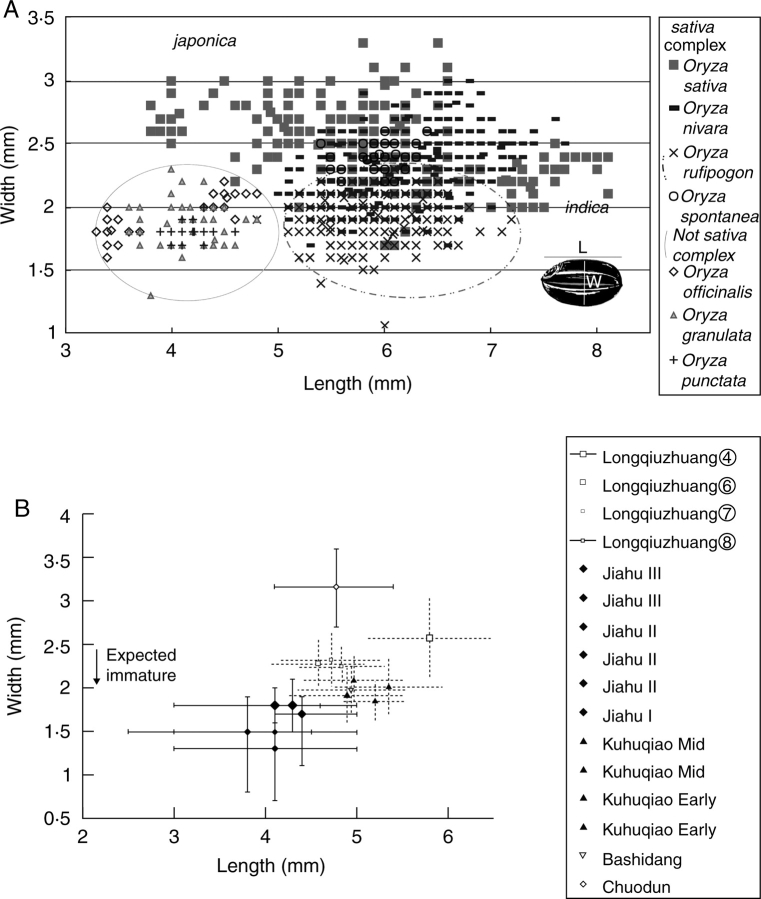
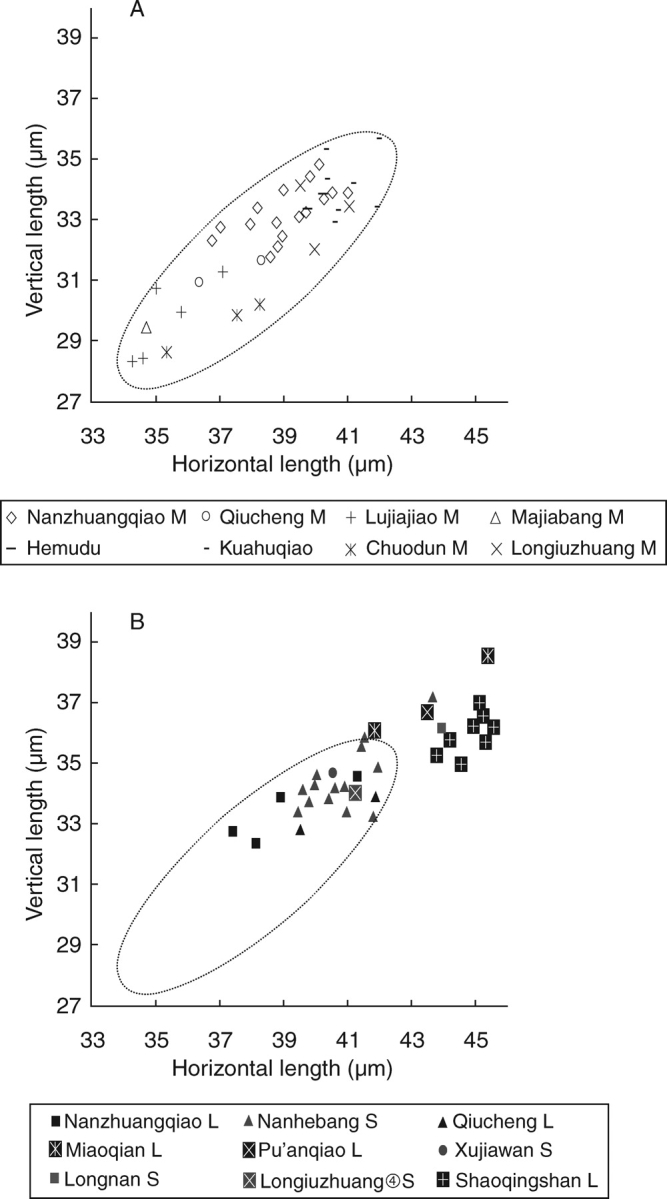
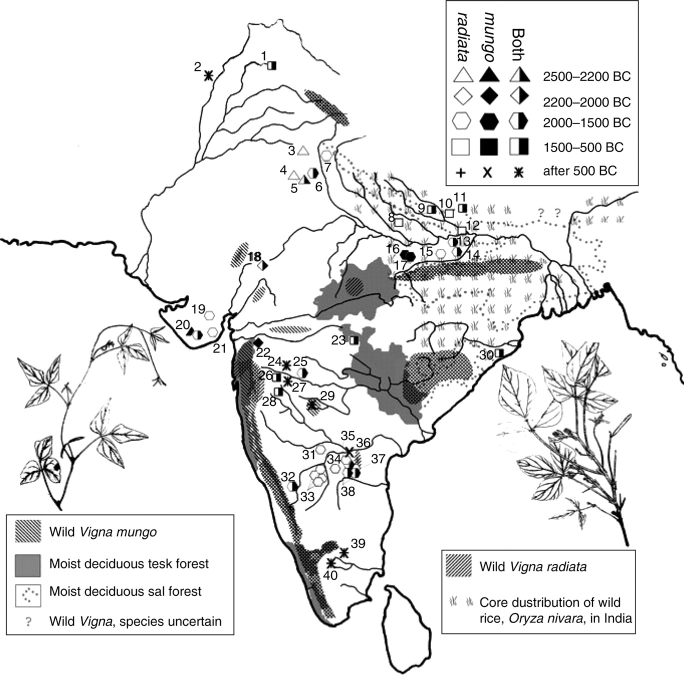
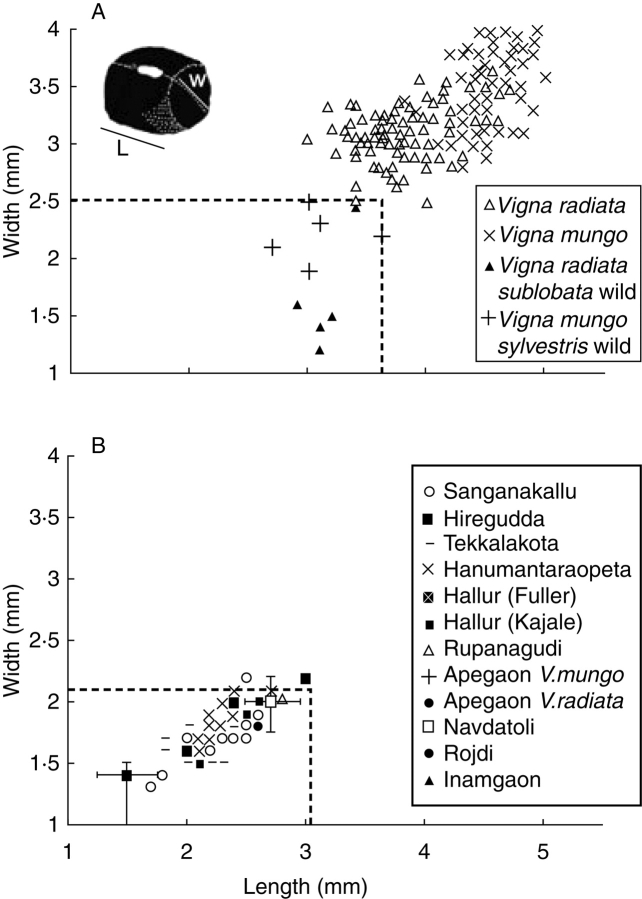
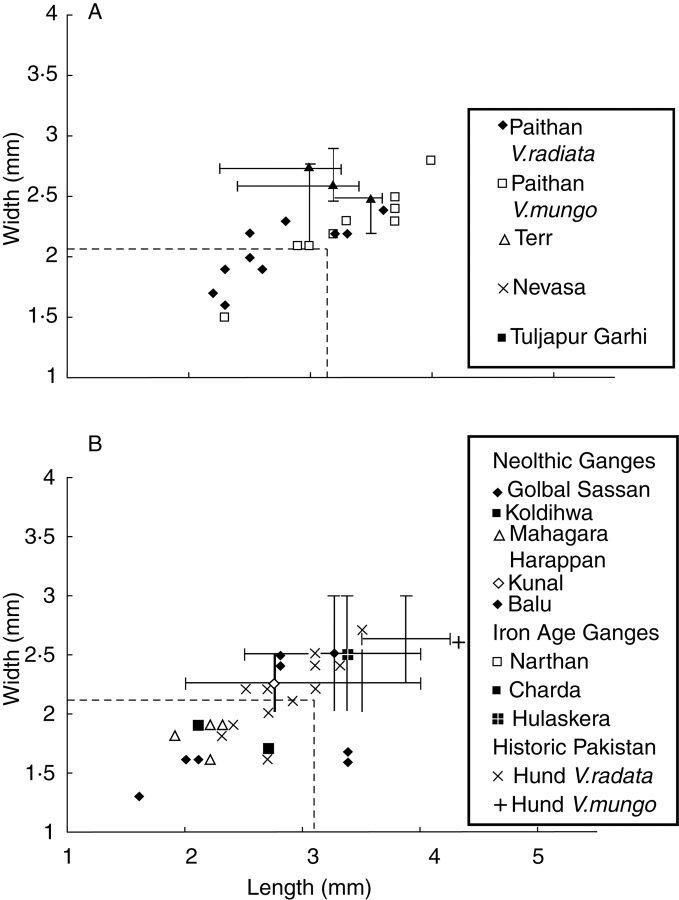
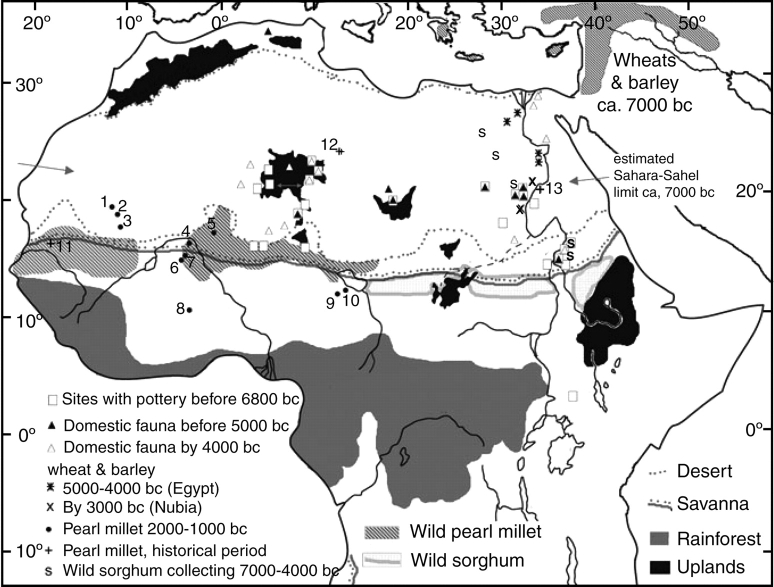
The rate at which these features evolved and the ordering in which they evolved can now be documented for a few crops of Asia and Africa. This paper explores this in einkorn wheat (Triticum monococcum) and barley (Hordeum vulgare) from the Near East, rice (Oryza sativa) from China, mung (Vigna radiata) and urd (Vigna mungo) beans from India, and pearl millet (Pennisetum glaucum) from west Africa. Brief reference is made to similar data on lentils (Lens culinaris), peas (Pisum sativum), soybean (Glycine max) and adzuki bean (Vigna angularis). Available quantitative data from archaeological finds are compiled to explore changes with domestication. The disjunction in cereals between seed size increase and dispersal is explored, and rates at which these features evolved are estimated from archaeobotanical data. Contrasts between crops, especially between cereals and pulses, are examined.
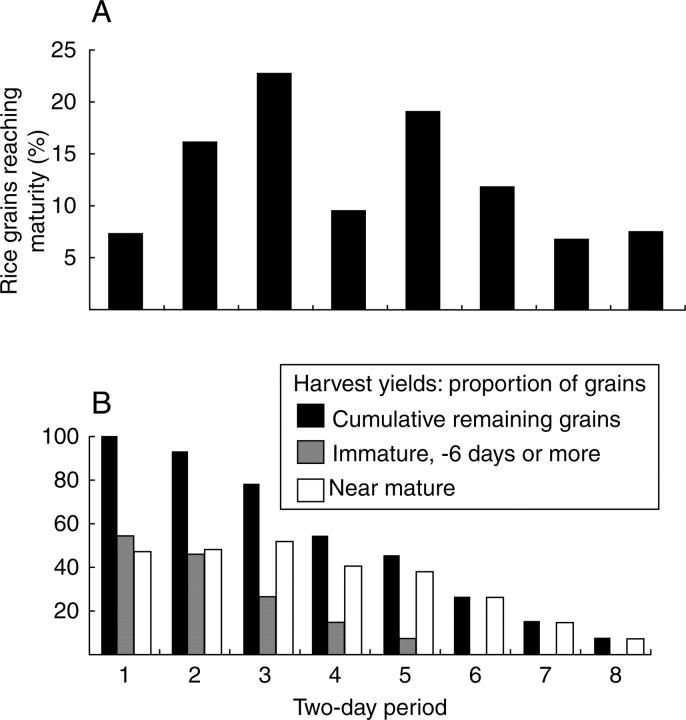
These data suggest that in domesticated grasses, changes in grain size and shape evolved prior to non-shattering ears or panicles. Initial grain size increases may have evolved during the first centuries of cultivation, within perhaps 500-1000 years. Non-shattering infructescences were much slower, becoming fixed about 1000-2000 years later. This suggests a need to reconsider the role of sickle harvesting in domestication. Pulses, by contrast, do not show evidence for seed size increase in relation to the earliest cultivation, and seed size increase may be delayed by 2000-4000 years. This implies that conditions that were sufficient to select for larger seed size in Poaceae were not sufficient in Fabaceae. It is proposed that animal-drawn ploughs (or ards) provided the selection pressure for larger seeds in legumes. This implies different thresholds of selective pressure, for example in relation to differing seed ontogenetics and underlying genetic architecture in these families. Pearl millet (Pennisetum glaucum) may show some similarities to the pulses in terms of a lag-time before truly larger-grained forms evolved.
考古植物学是对古代人类活动遗址中的植物遗存进行研究,为研究驯化植物的最初演化提供数据。其重要背景之一是界定驯化综合征,即驯化植物与野生亲缘物种相区别的那些性状。这些性状包括在栽培条件下被选择出来的特征。从考古遗存中最容易研究的性状是种子大小,而在谷类作物中则是自然种子传播方式的丧失。
现在可以记录亚洲和非洲的一些作物这些特征的演化速率及其演化顺序。本文对近东地区的一粒小麦(Triticum monococcum)和大麦(Hordeum vulgare)、中国的水稻(Oryza sativa)、印度的绿豆(Vigna radiata)和黑绿豆(Vigna mungo)以及西非的珍珠粟(Pennisetum glaucum)进行了探讨。简要提及了关于小扁豆(Lens culinaris)、豌豆(Pisum sativum)、大豆(Glycine max)和赤小豆(Vigna angularis)的类似数据。整理考古发现中的现有定量数据,以探究驯化过程中的变化。探讨了谷类作物种子大小增加与种子传播方式之间的脱节现象,并根据考古植物学数据估算这些特征的演化速率。研究了不同作物之间的差异,特别是谷类作物和豆类作物之间的差异。
这些数据表明,在驯化的禾本科植物中,籽粒大小和形状的变化先于不易脱粒的穗或圆锥花序的出现。最初的籽粒大小增加可能在栽培的最初几个世纪中,即在大约500 - 1000年内发生。不易脱粒的果实则要慢得多,大约在1000 - 2000年后才固定下来。这表明需要重新考虑镰刀收割在驯化过程中的作用。相比之下,豆类作物没有显示出与最早栽培相关的种子大小增加的证据,种子大小增加可能会延迟2000 - 4000年。这意味着在禾本科植物中足以选择更大种子大小的条件在豆科植物中并不充分。有人提出,畜力牵引的犁(或犁铧)为豆科植物中更大种子提供了选择压力。这意味着选择压力的不同阈值,例如与这些科中不同的种子个体发育和潜在的遗传结构有关。珍珠粟(Pennisetum glaucum)在真正更大粒型演化之前的滞后时间方面可能与豆类作物有一些相似之处。