Department of Medicine, NorthShore Research Institute, University of Chicago Pritzker School of Medicine, Evanston, IL 60201, USA.
J Cell Biol. 2011 May 16;193(4):711-25. doi: 10.1083/jcb.201006135.
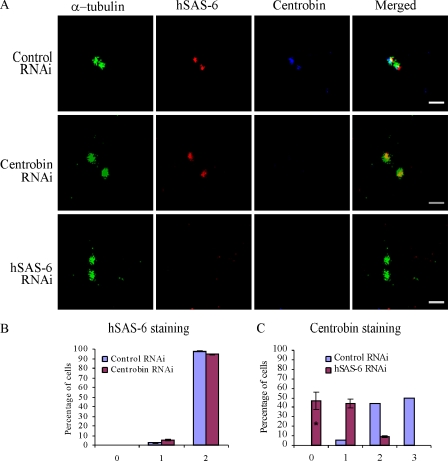
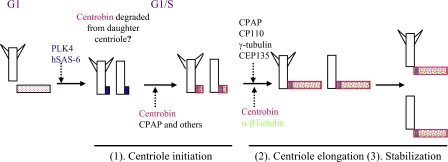
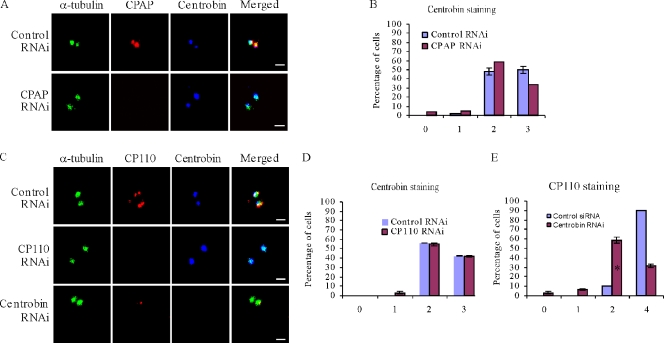
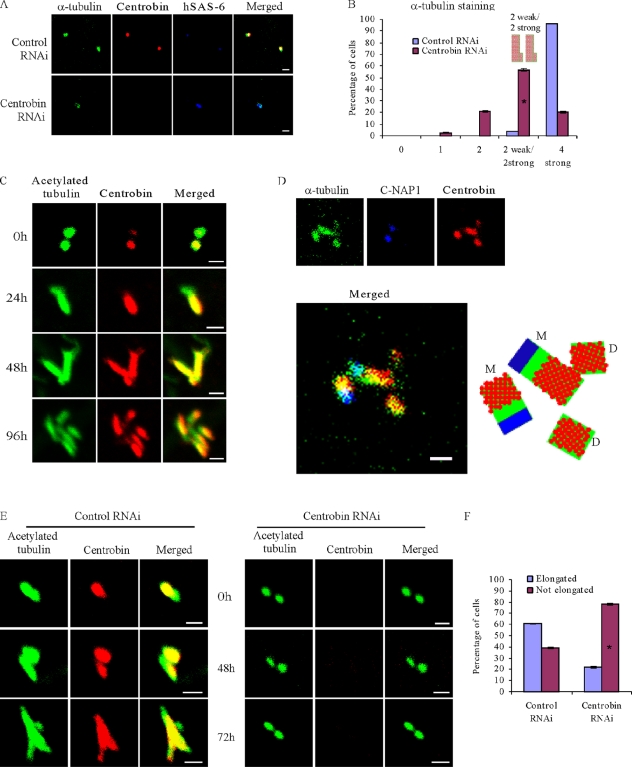
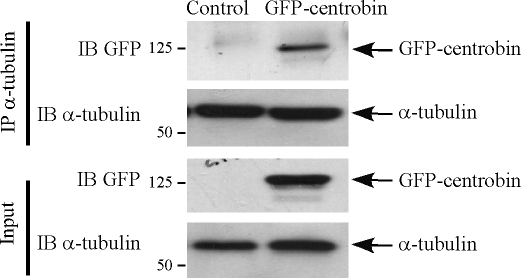
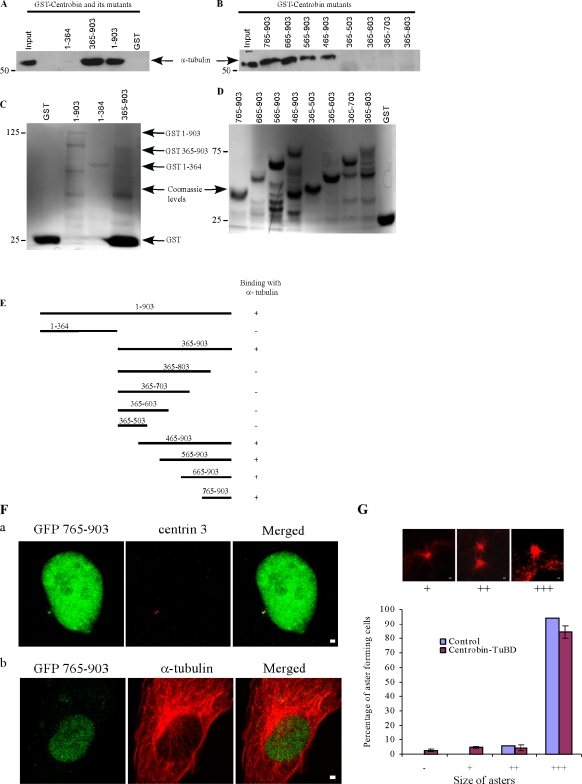
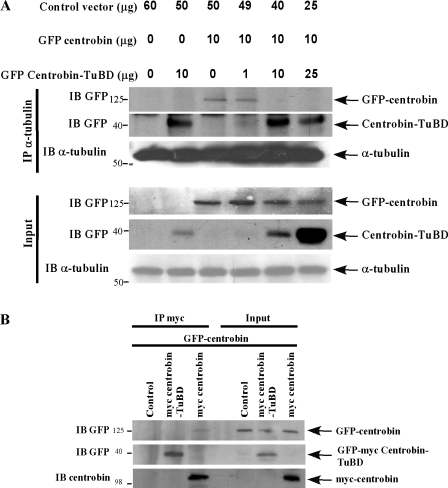
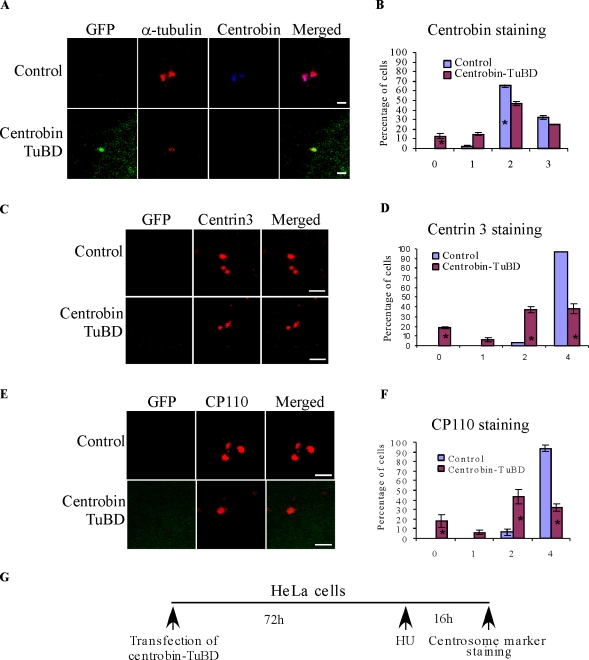
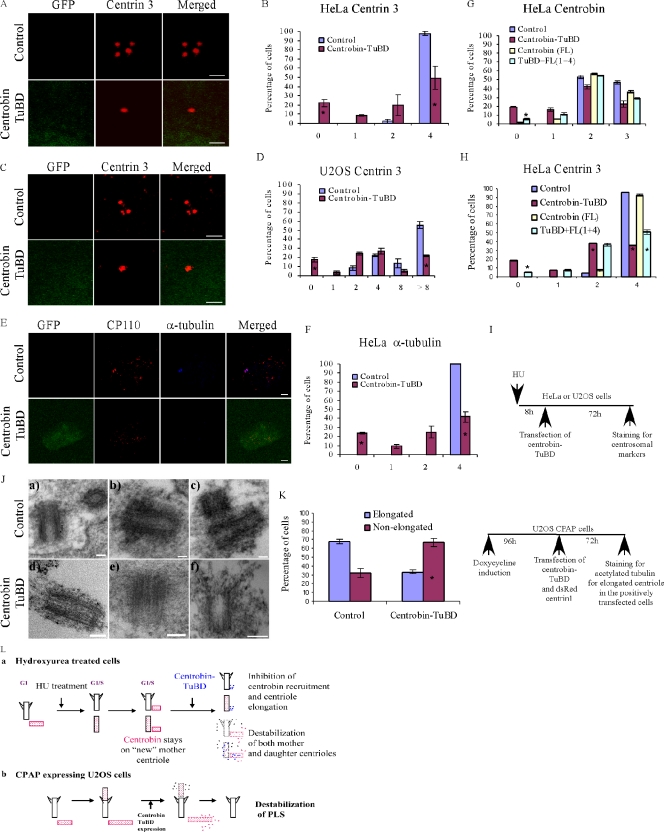
Centrobin is a daughter centriole protein that is essential for centrosome duplication. However, the molecular mechanism by which centrobin functions during centriole duplication remains undefined. In this study, we show that centrobin interacts with tubulin directly, and centrobin-tubulin interaction is pivotal for the function of centrobin during centriole duplication. We found that centrobin is recruited to the centriole biogenesis site via its interaction with tubulins during the early stage of centriole biogenesis, and its recruitment is dependent on hSAS-6 but not centrosomal P4.1-associated protein (CPAP) and CP110. The function of centrobin is also required for the elongation of centrioles, which is likely mediated by its interaction with tubulin. Furthermore, disruption of centrobin-tubulin interaction led to destabilization of existing centrioles and the preformed procentriole-like structures induced by CPAP expression, indicating that centrobin-tubulin interaction is critical for the stability of centrioles. Together, our study demonstrates that centrobin facilitates the elongation and stability of centrioles via its interaction with tubulins.
Centrobin 是一种中心体蛋白,对于中心体复制是必需的。然而,centrobin 在中心体复制过程中的功能的分子机制尚不清楚。在这项研究中,我们表明 centrobin 与微管蛋白直接相互作用,并且 centrobin-微管蛋白相互作用对于 centrobin 在中心体复制过程中的功能至关重要。我们发现,在中心体生物发生的早期阶段,centrobin 通过与微管蛋白的相互作用被募集到中心体生物发生部位,其募集依赖于 hSAS-6,但不依赖于中心体 P4.1 相关蛋白 (CPAP) 和 CP110。centrobin 的功能对于中心体的延伸也是必需的,这可能是通过其与微管蛋白的相互作用介导的。此外,破坏 centrobin-微管蛋白相互作用导致现有中心体的不稳定性和由 CPAP 表达诱导的预先形成的类中心体样结构,表明 centrobin-微管蛋白相互作用对于中心体的稳定性至关重要。总之,我们的研究表明,centrobin 通过与微管蛋白相互作用促进中心体的延伸和稳定性。