Life Sciences Institute, University of Michigan, Ann Arbor, MI 48109, USA.
J Cell Biol. 2011 May 16;193(4):755-67. doi: 10.1083/jcb.201102092.
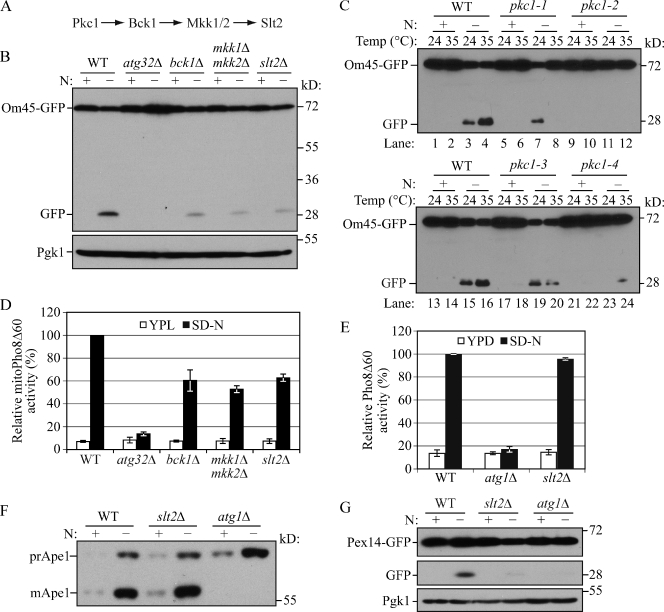
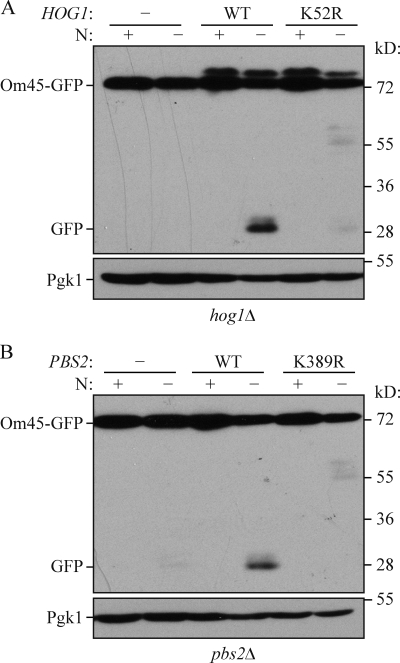
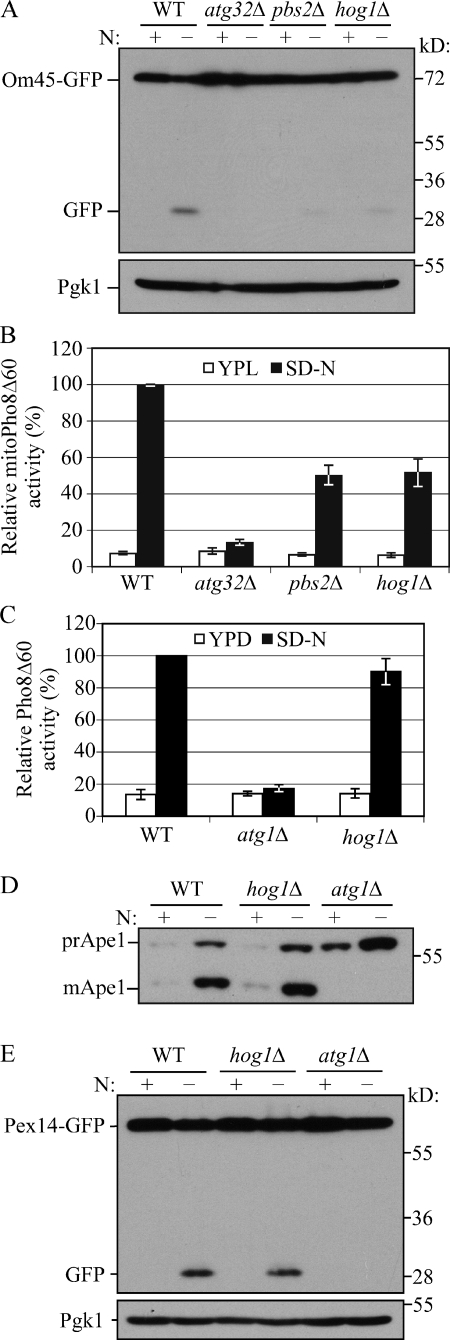
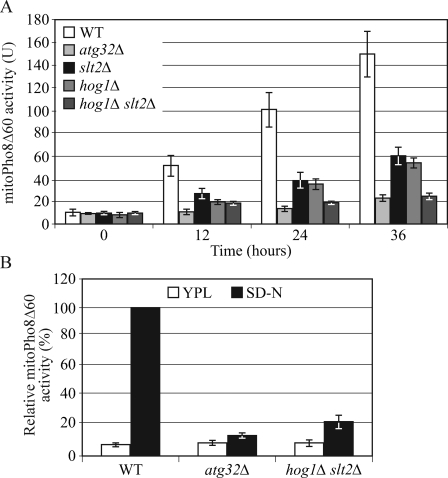
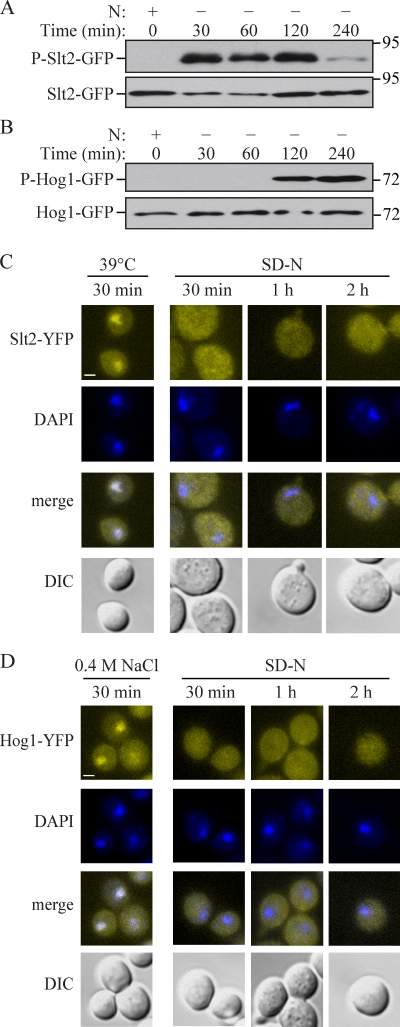
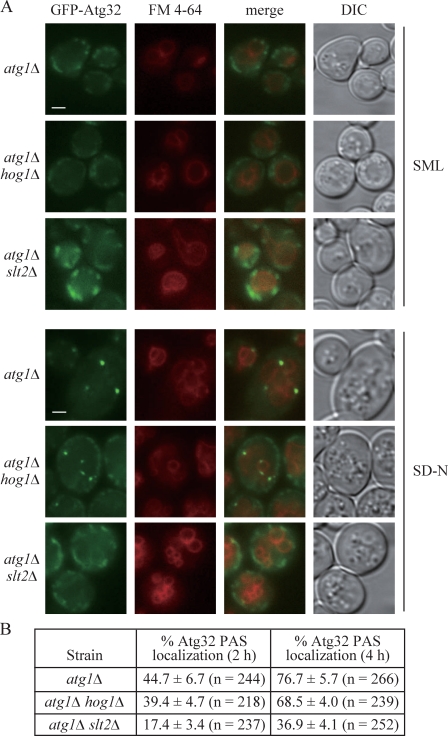
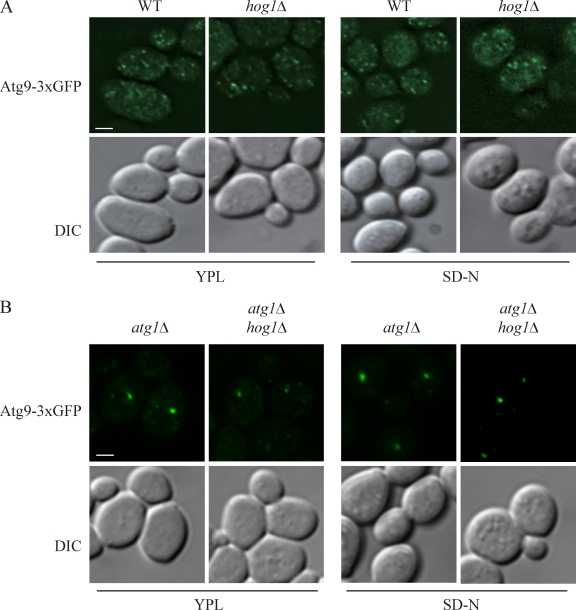
Macroautophagy (hereafter referred to simply as autophagy) is a catabolic pathway that mediates the degradation of long-lived proteins and organelles in eukaryotic cells. The regulation of mitochondrial degradation through autophagy plays an essential role in the maintenance and quality control of this organelle. Compared with our understanding of the essential function of mitochondria in many aspects of cellular metabolism such as energy production and of the role of dysfunctional mitochondria in cell death, little is known regarding their degradation and especially how upstream signaling pathways control this process. Here, we report that two mitogen-activated protein kinases (MAPKs), Slt2 and Hog1, are required for mitophagy in Saccharomyces cerevisiae. Slt2 is required for the degradation of both mitochondria and peroxisomes (via pexophagy), whereas Hog1 functions specifically in mitophagy. Slt2 also affects the recruitment of mitochondria to the phagophore assembly site (PAS), a critical step in the packaging of cargo for selective degradation.
自噬(下文简称 autophagy)是一种分解代谢途径,介导真核细胞中长寿命蛋白质和细胞器的降解。通过自噬调节线粒体的降解,在维持和细胞器的质量控制中发挥着重要作用。与我们对线粒体在细胞代谢的许多方面(如能量产生)中的基本功能的理解相比,以及对功能失调的线粒体在细胞死亡中的作用的理解相比,我们对它们的降解,尤其是上游信号通路如何控制这一过程,知之甚少。在这里,我们报告说,两种丝裂原激活蛋白激酶(MAPKs),Slt2 和 Hog1,是酿酒酵母中线粒体自噬所必需的。Slt2 需要降解线粒体和过氧化物酶体(通过 pexophagy),而 Hog1 则专门在线粒体自噬中发挥作用。Slt2 还影响线粒体向吞噬体组装位点(PAS)的募集,这是对货物进行选择性降解的关键步骤。