Sotníková Ružena, Nedelčevová Jana, Navarová Jana, Nosáĺová Viera, Drábiková Katarína, Szöcs Katalin, Křenek Peter, Kyseĺová Zuzana, Bezek Stefan, Knezl Vladimír, Dřímal Ján, Brosková Zuzana, Kristová Viera, Okruhlicová Ludmila, Bernátová Iveta, Bauer Viktor
Institute of Experimental Pharmacology & Toxicology, Slovak Academy of Sciences, Bratislava, Slovakia.
Interdiscip Toxicol. 2011 Mar;4(1):20-6. doi: 10.2478/v10102-011-0005-y.
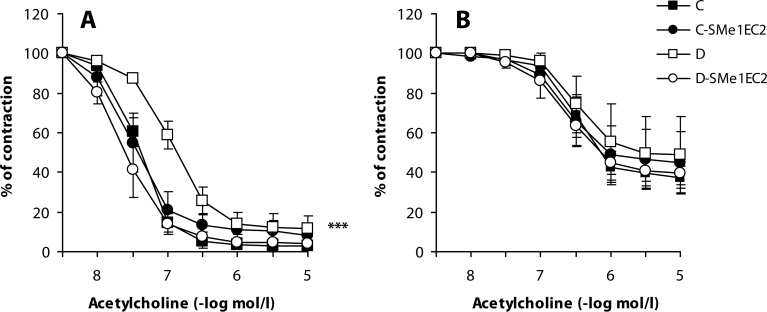
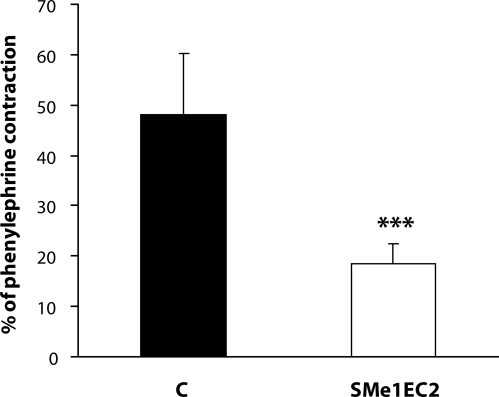
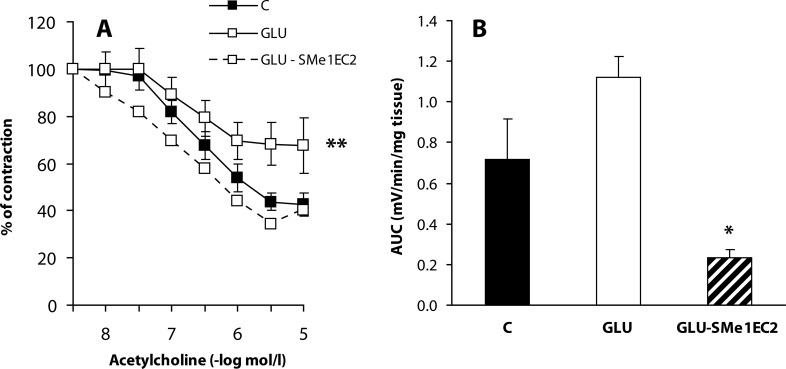
One of the factors proposed as mediators of vascular dysfunction observed in diabetes is the increased generation of reactive oxygen species (ROS). This provides support for the use of antioxidants as early and appropriate pharmacological intervention in the development of late diabetic complications. In streptozotocin (STZ)-induced diabetes in rats we observed endothelial dysfuction manifested by reduced endothelium-dependent response to acetylcholine of the superior mesenteric artery (SMA) and aorta, as well as by increased endothelaemia. Changes in endothelium-dependent relaxation of SMA were induced by injury of the nitric oxide radical (·NO)-signalling pathway since the endothelium-derived hyperpolarising factor (EDHF)-component of relaxation was not impaired by diabetes. The endothelial dysfunction was accompanied by decreased ·NO bioavailabity as a consequence of reduced activity of eNOS rather than its reduced expression. The results obtained using the chemiluminiscence method (CL) argue for increased oxidative stress and increased ROS production. The enzyme NAD(P)H-oxidase problably participates in ROS production in the later phases of diabetes. Oxidative stress was also connected with decreased levels of reduced glutathione (GSH) in the early phase of diabetes. After 10 weeks of diabetes, adaptational mechanisms probably took place because GSH levels were not changed compared to controls. Antioxidant properties of SMe1EC2 found in vitro were partly confirmed in vivo. Administration of SMe1EC2 protected endothelial function. It significantly decreased endothelaemia of diabetic rats and improved endothelium-dependent relaxation of arteries, slightly decreased ROS-production and increased bioavailability of ·NO in the aorta. Further studies with higher doses of SMe1EC2 may clarify the mechanism of its endothelium-protective effect in vivo.
在糖尿病中观察到的血管功能障碍的介导因素之一是活性氧(ROS)生成增加。这为在糖尿病晚期并发症发展过程中使用抗氧化剂作为早期适当的药物干预提供了支持。在链脲佐菌素(STZ)诱导的大鼠糖尿病模型中,我们观察到内皮功能障碍,表现为肠系膜上动脉(SMA)和主动脉对乙酰胆碱的内皮依赖性反应降低,以及内皮血症增加。SMA内皮依赖性舒张的变化是由一氧化氮自由基(·NO)信号通路损伤引起的,因为糖尿病并未损害舒张的内皮衍生超极化因子(EDHF)成分。内皮功能障碍伴随着·NO生物利用度降低,这是eNOS活性降低而非其表达减少的结果。使用化学发光法(CL)获得的结果表明氧化应激增加和ROS生成增加。NAD(P)H氧化酶可能在糖尿病后期参与ROS生成。氧化应激还与糖尿病早期还原型谷胱甘肽(GSH)水平降低有关。糖尿病10周后,可能发生了适应性机制,因为与对照组相比,GSH水平没有变化。体外发现的SMe1EC2的抗氧化特性在体内得到了部分证实。给予SMe1EC2可保护内皮功能。它显著降低了糖尿病大鼠的内皮血症,改善了动脉的内皮依赖性舒张,略微降低了ROS生成,并增加了主动脉中·NO的生物利用度。对更高剂量的SMe1EC2进行进一步研究可能会阐明其在体内内皮保护作用的机制。