Bauerová Katarína, Poništ Silvester, Mihalová Danica, Dráfi František, Kuncírová Viera
Institute of Experimental Pharmacology & Toxicology, Slovak Academy of Sciences, SK-84104 Bratislava, Slovak Republic.
Interdiscip Toxicol. 2011 Mar;4(1):33-9. doi: 10.2478/v10102-011-0007-9.
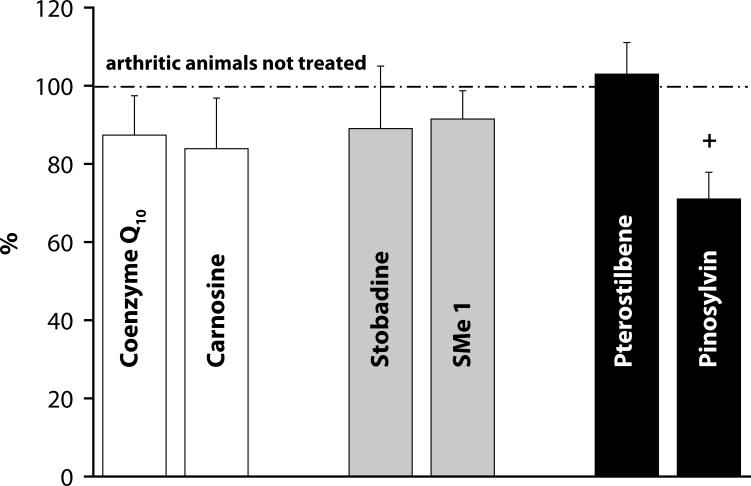
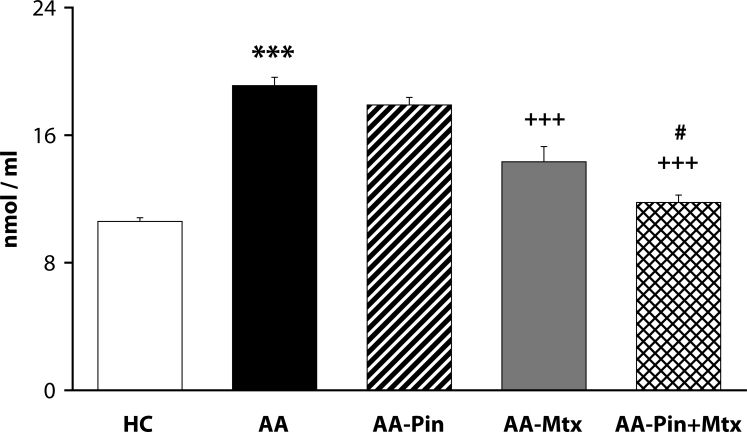
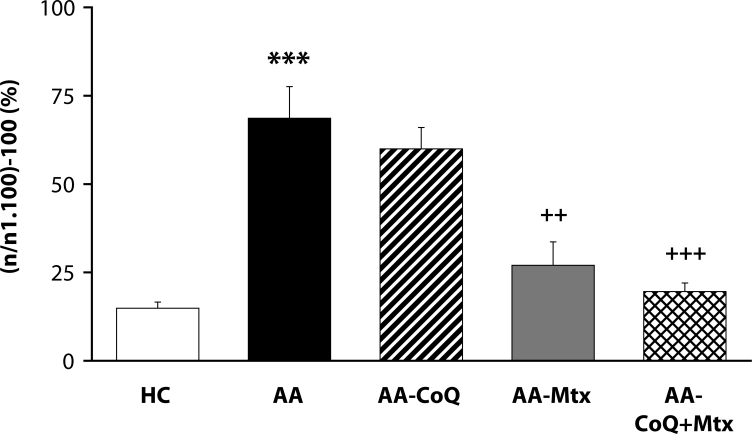
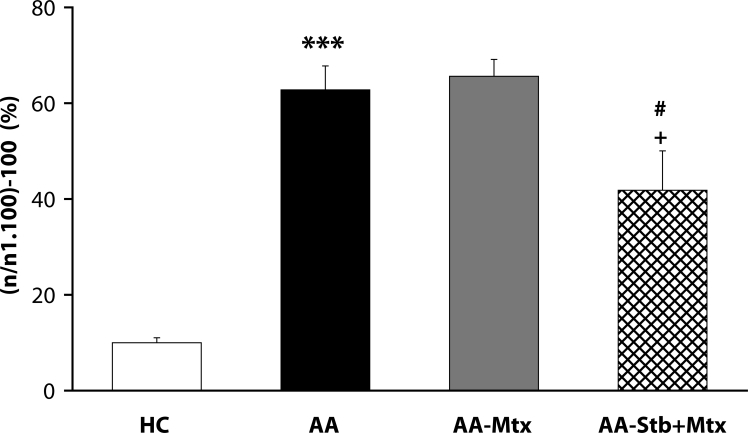
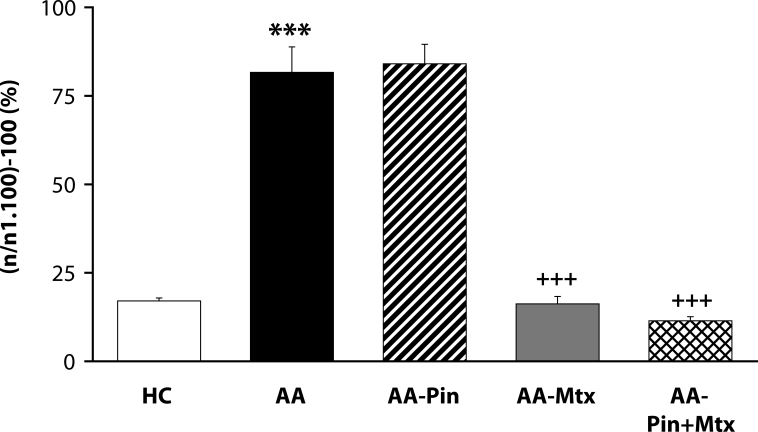
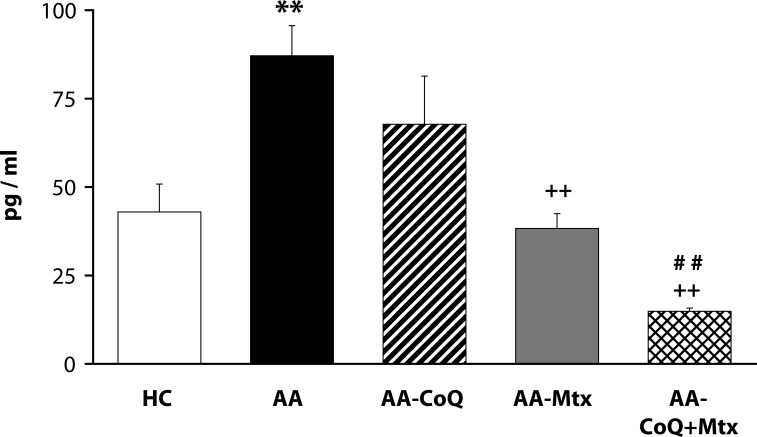
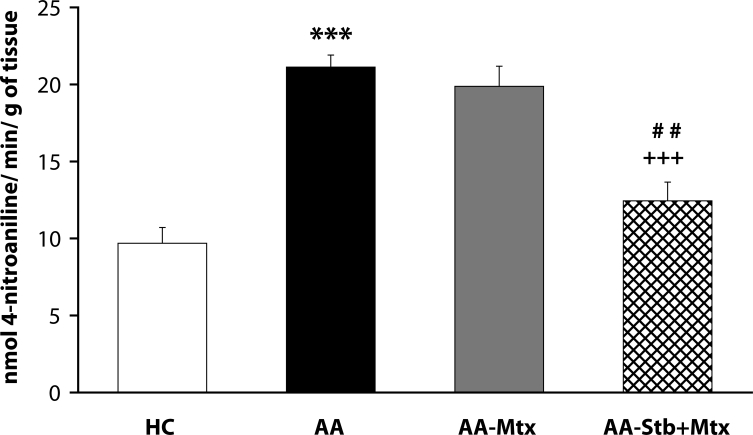
As a number of disease-modifying anti-rheumatic drugs often have side effects at high doses and/or during long-term administration, increased efficacy without increased toxicity is expected for combination therapy of rheumatoid arthritis (RA). The safety of long-term therapy of RA is very important as patients with RA are usually treated for two or more decades. This experimental overview is focused on some promising substances and their combinations with the standard antirheumatic drug - methotrexate (Mtx) for treatment of rheumatoid arthritis. The adjuvant arthritis model in Lewis rats was used for evaluation of antiinflammatory efficacy of the substances evaluated. Mtx was administered in the oral dose of 0.3 mg/kg b.w. twice a week. Natural and synthetic antioxidants were administered in the daily oral dose of 20 mg/kg b.w for coenzyme Q(10) (CoQ(10)), 150 mg/kg b.w for carnosine (Carn), 15 mg/kg b.w. for stobadine dipalmitate (Stb) and its derivative SMe1.2HCl (SMe1), and 30 mg/kg b.w. for pinosylvin (Pin) or pterostilbene (Pte). Mtx in the oral dose of 0.4 mg/kg b.w. twice a week was combined with Pin in the oral daily dose of 50 mg/kg b.w. Clinical (hind paw volume - HPV), biochemical (activity of GGT in joint and level of TBARS in plasma), and immunological (IL-1 in plasma) parameters were assessed. Our results achieved with different antioxidants in monotherapies showed a reduction of oxidative stress in adjuvant arthritis independently of the chemical structure of the compounds. Pin was the most effective antioxidant tested in decreasing HPV. All combinations tested showed a higher efficacy in affecting biochemical or immunological parameters than Mtx administered in monotherapy. The findings showed the benefit of antioxidant compounds for their use in combination therapy with methotrexate.
由于许多改善病情的抗风湿药物在高剂量和/或长期给药时往往会产生副作用,因此类风湿关节炎(RA)联合治疗有望在不增加毒性的情况下提高疗效。由于类风湿关节炎患者通常需要接受二十年或更长时间的治疗,因此RA长期治疗的安全性非常重要。本实验综述聚焦于一些有前景的物质及其与标准抗风湿药物甲氨蝶呤(Mtx)联合用于治疗类风湿关节炎的情况。采用Lewis大鼠佐剂性关节炎模型评估所评估物质的抗炎效果。Mtx以0.3mg/kg体重的口服剂量每周两次给药。天然和合成抗氧化剂的口服日剂量分别为:辅酶Q10(CoQ10)20mg/kg体重、肌肽(Carn)150mg/kg体重、二棕榈酸司他定(Stb)及其衍生物SMe1.2HCl(SMe1)15mg/kg体重、白皮杉醇(Pin)或紫檀芪(Pte)30mg/kg体重。Mtx以0.4mg/kg体重的口服剂量每周两次与Pin以50mg/kg体重的口服日剂量联合使用。评估了临床(后爪体积 - HPV)、生化(关节中γ-谷氨酰转移酶活性和血浆中丙二醛水平)和免疫(血浆中白细胞介素-1)参数。我们在单一疗法中使用不同抗氧化剂所取得的结果表明,佐剂性关节炎中的氧化应激降低,与化合物的化学结构无关。Pin是测试的最有效的抗氧化剂,可降低HPV。所有测试的联合用药在影响生化或免疫参数方面均比单一疗法使用的Mtx具有更高的疗效。研究结果表明抗氧化剂化合物与甲氨蝶呤联合治疗有益。