Institut de Biologie Moléculaire des Plantes, Centre National de la Recherche Scientifique, Université de Strasbourg, Strasbourg Cedex, France.
PLoS Pathog. 2011 May;7(5):e1002035. doi: 10.1371/journal.ppat.1002035. Epub 2011 May 12.
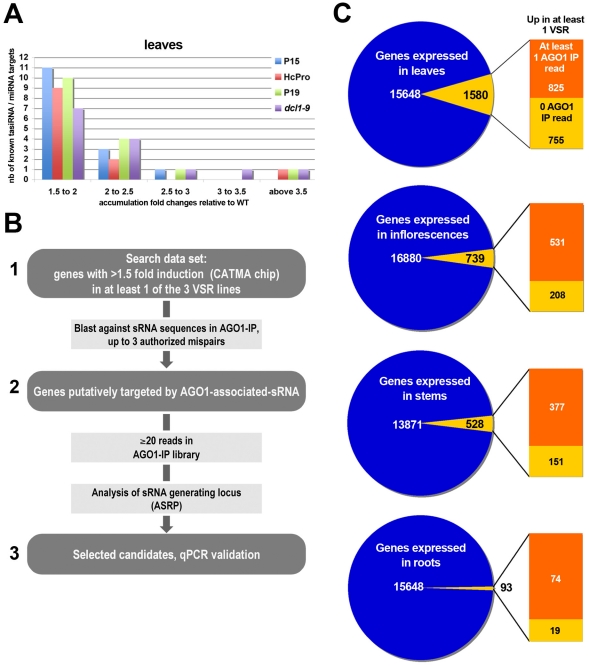
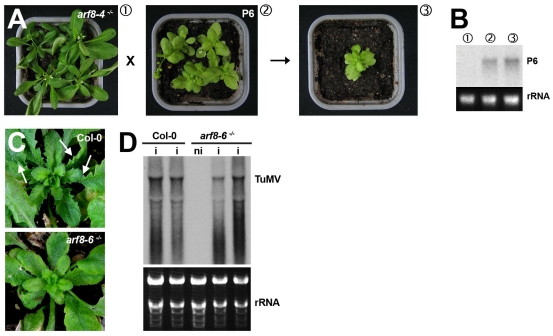
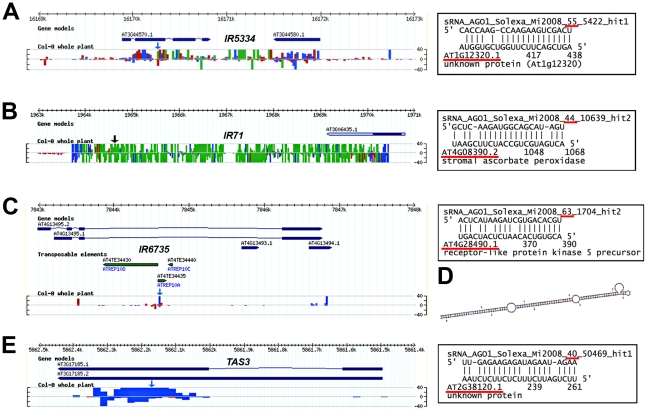
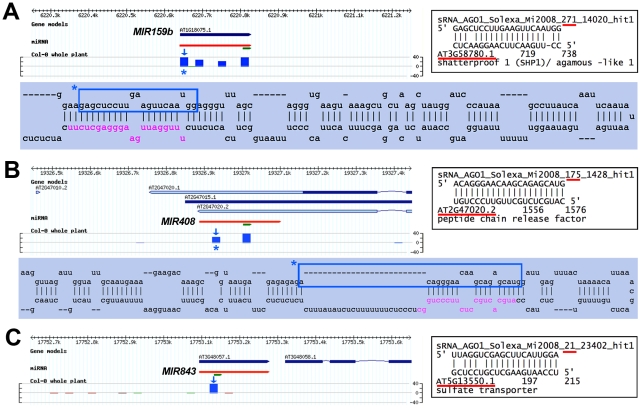
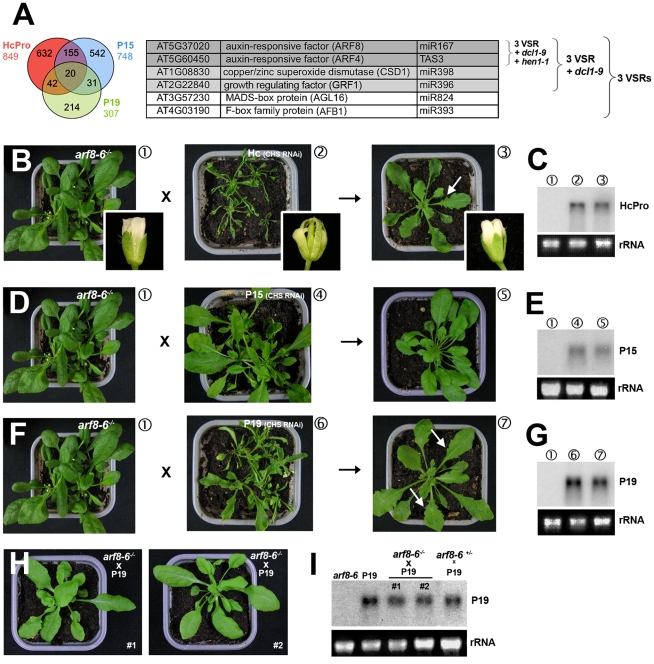
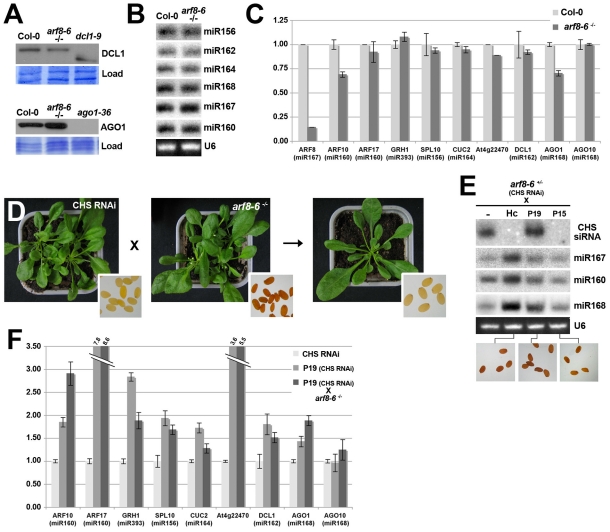
In Arabidopsis, micro (mi)RNAs and trans-acting (ta-si)RNAs synthesized directly or indirectly through the DICER-LIKE-1 (DCL1) ribonuclease have roles in patterning and hormonal responses, while DCL2,3,4-dependent small-interfering (si)RNAs are mainly involved in silencing of transposable elements and antiviral defense. Viral suppressors of RNA silencing (VSRs) produced by phytoviruses to counter plant defense may perturb plant developmental programs because of the collision of their inhibitory effects with the regulatory action of endogenous miRNAs and ta-siRNAs. This could explain the similar developmental aberrations displayed by Arabidopsis miRNA/ta-siRNA pathway mutants, including dcl1, and by some VSR-expressing plants. Nonetheless, the molecular bases for these morphological aberrations have remained mysterious, and their contribution to viral disease symptoms/virulence unexplored. The extent of VSR inhibitory actions to other types of endogenous small RNAs remains also unclear. Here, we present an in-depth analysis of transgenic Arabidopsis expressing constitutively HcPro, P19 and P15, three unrelated VSRs. We show that VSR expression has comparable, yet modest effects on known miRNA and ta-siRNA target RNA levels, similar to those observed using an hypomorphic dcl1 mutation. However, by combining results of transcriptome studies with deep-sequencing data from immuno-precipitated small RNAs, additional, novel endogenous targets of miRNA and ta-siRNA were identified, unraveling an unsuspected complexity in the origin and scope-of-action of these molecules. Other stringent analyses pinpointed misregulation of the miR167 target AUXIN RESPONSE FACTOR 8 (ARF8) as a major cause for the developmental aberrations exhibited by VSR transgenic plants, but also for the phenotypes induced during normal viral infection caused by the HcPro-encoding Turnip mosaic virus (TuMV). Neither RNA silencing, its suppression by VSRs, nor the virulence/accumulation of TuMV was altered by mutations in ARF8. These findings have important implications for our understanding of viral disease symptoms and small RNA-directed regulation of plant growth/development.
在拟南芥中,通过 DICER-LIKE-1 (DCL1) 核糖核酸酶直接或间接合成的微 (mi)RNAs 和反式作用 (ta-si)RNAs 在模式形成和激素反应中发挥作用,而 DCL2、3、4 依赖性小干扰 (si)RNAs 主要参与转座元件的沉默和抗病毒防御。植物病毒产生的 RNA 沉默抑制因子 (VSRs) 用于对抗植物防御,可能会扰乱植物发育程序,因为它们的抑制作用与内源性 miRNAs 和 ta-siRNAs 的调节作用发生碰撞。这可以解释拟南芥 miRNA/ta-siRNA 途径突变体(包括 dcl1)和一些表达 VSR 的植物表现出的类似发育异常。尽管如此,这些形态异常的分子基础仍然神秘莫测,它们对病毒病症状/毒力的贡献也尚未得到探索。VSR 对其他类型内源性小 RNA 的抑制作用的程度也不清楚。在这里,我们对表达组成型 HcPro、P19 和 P15 的转基因拟南芥进行了深入分析,这三种 VSR 是不相关的。我们表明,VSR 的表达对已知的 miRNA 和 ta-siRNA 靶 RNA 水平具有类似但适度的影响,与使用功能减弱的 dcl1 突变观察到的影响相似。然而,通过将转录组研究的结果与免疫沉淀小 RNA 的深度测序数据相结合,鉴定出了 miRNA 和 ta-siRNA 的其他新的内源性靶标,揭示了这些分子的起源和作用范围的出人意料的复杂性。其他严格的分析指出,miR167 靶标 AUXIN RESPONSE FACTOR 8 (ARF8) 的调控异常是 VSR 转基因植物表现出的发育异常的主要原因,但也是由编码芜菁花叶病毒 (TuMV) 的 HcPro 引起的正常病毒感染所诱导的表型的主要原因。ARF8 的突变既不改变 RNA 沉默、VSR 对其的抑制,也不改变 TuMV 的毒力/积累。这些发现对我们理解病毒病症状和小 RNA 指导的植物生长/发育调控具有重要意义。