Stem Cell & Regenerative Medicine Program, Research Centre of Heart, Brain, Hormone and Healthy Ageing, Li Ka Shing Faculty of Medicine, University of Hong Kong, Hong Kong.
PLoS One. 2011 May 11;6(5):e19787. doi: 10.1371/journal.pone.0019787.
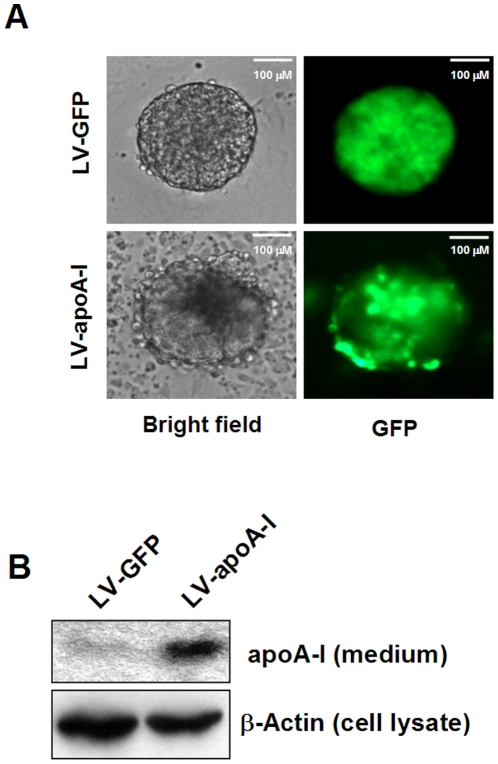
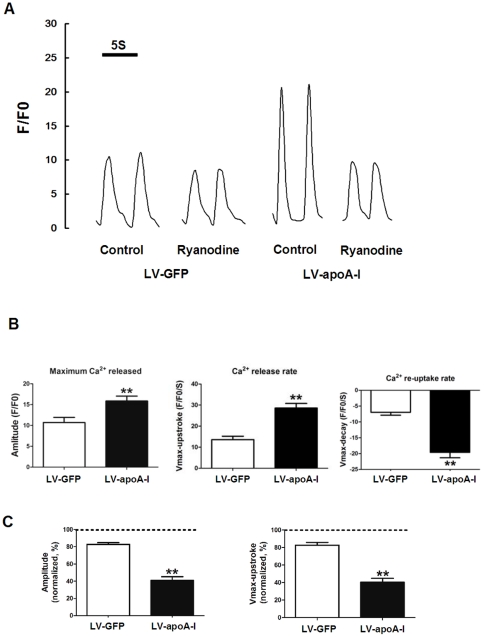
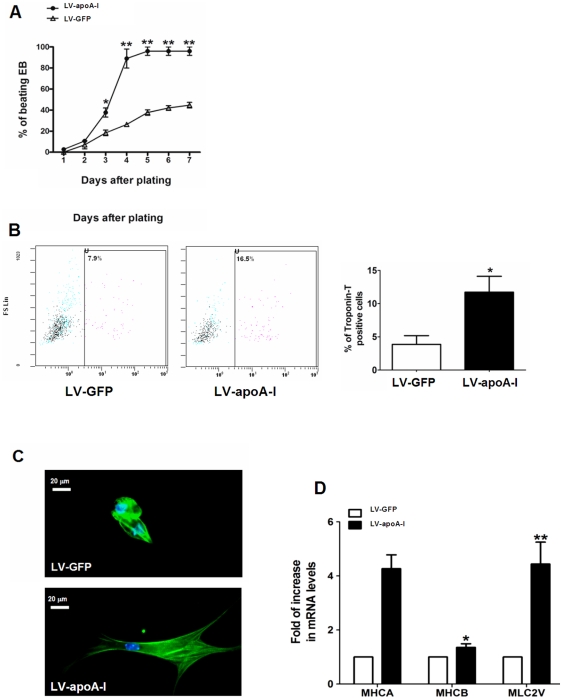
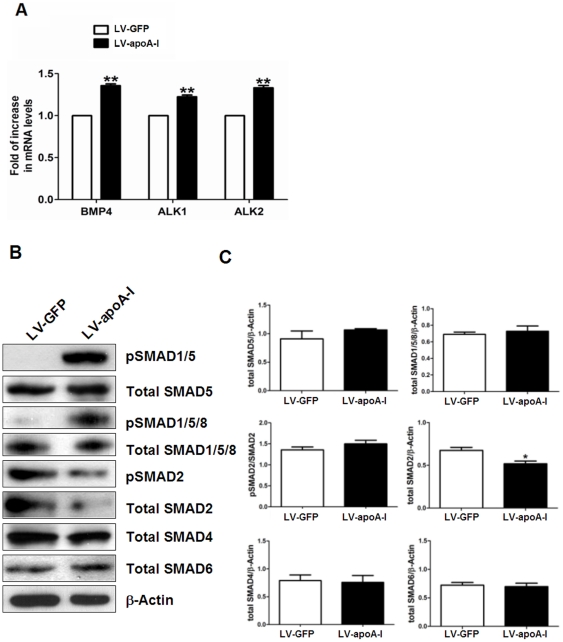
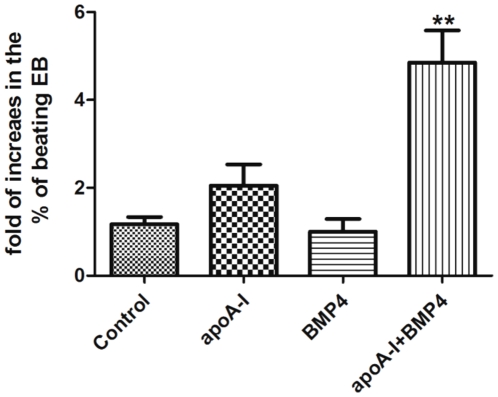
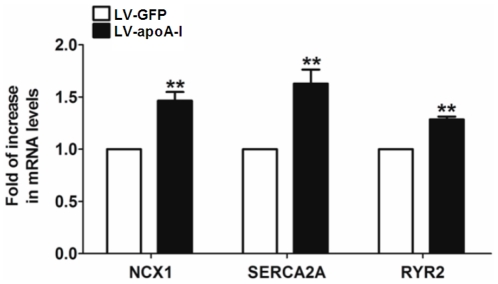
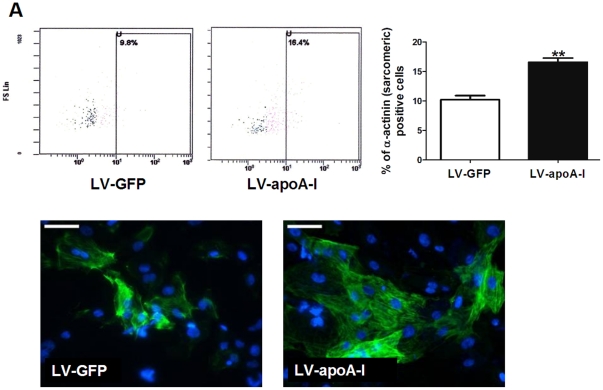
The cardioprotective effects of high-density lipoprotein cholesterol (HDL-C) and apolipoprotein A1 (apoA-I) are well documented, but their effects in the direction of the cardiac differentiation of embryonic stem cells are unknown. We evaluated the effects of exogenous apoA-I expression on cardiac differentiation of ESCs and maturation of ESC-derived cardiomyocytes. We stably over-expressed full-length human apoA-I cDNA with lentivirus (LV)-mediated gene transfer in undifferentiated mouse ESCs and human induced pluripotent stem cells. Upon cardiac differentiation, we observed a significantly higher percentage of beating embryoid bodies, an increased number of cardiomyocytes as determined by flow cytometry, and expression of cardiac markers including α-myosin heavy chain, β-myosin heavy chain and myosin light chain 2 ventricular transcripts in LV-apoA-I transduced ESCs compared with control (LV-GFP). In the presence of noggin, a BMP4 antagonist, activation of BMP4-SMAD signaling cascade in apoA-I transduced ESCs completely abolished the apoA-I stimulated cardiac differentiation. Furthermore, co-application of recombinant apoA-I and BMP4 synergistically increased the percentage of beating EBs derived from untransduced D3 ESCs. These together suggests that that pro-cardiogenic apoA-I is mediated via the BMP4-SMAD signaling pathway. Functionally, cardiomyocytes derived from the apoA-I-transduced cells exhibited improved calcium handling properties in both non-caffeine and caffeine-induced calcium transient, suggesting that apoA-I plays a role in enhancing cardiac maturation. This increased cardiac differentiation and maturation has also been observed in human iPSCs, providing further evidence of the beneficial effects of apoA-I in promoting cardiac differentiation. In Conclusion, we present novel experimental evidence that apoA-I enhances cardiac differentiation of ESCs and iPSCs and promotes maturation of the calcium handling property of ESC-derived cardiomyocytes via the BMP4/SMAD signaling pathway.
高密度脂蛋白胆固醇(HDL-C)和载脂蛋白 A1(apoA-I)的心脏保护作用已有充分的文献记载,但它们在胚胎干细胞心脏分化方向的作用尚不清楚。我们评估了外源性 apoA-I 表达对 ESC 心脏分化和 ESC 衍生心肌细胞成熟的影响。我们通过慢病毒(LV)介导的基因转移在未分化的小鼠 ESC 和人诱导多能干细胞中稳定过表达全长人 apoA-I cDNA。在心脏分化时,我们观察到更多的搏动胚体,通过流式细胞术确定的心肌细胞数量增加,并且与对照(LV-GFP)相比,LV-apoA-I 转导的 ESC 中表达了心脏标志物,包括α-肌球蛋白重链、β-肌球蛋白重链和肌球蛋白轻链 2 心室转录本。在 noggin 的存在下,BMP4 拮抗剂,apoA-I 转导的 ESC 中 BMP4-SMAD 信号级联的激活完全消除了 apoA-I 刺激的心脏分化。此外,重组 apoA-I 和 BMP4 的共同应用协同增加了未转导的 D3 ESC 衍生的搏动 EB 的百分比。这些都表明,前心脏apoA-I 是通过 BMP4-SMAD 信号通路介导的。在功能上,apoA-I 转导的细胞衍生的心肌细胞在非咖啡因和咖啡因诱导的钙瞬变中表现出改善的钙处理特性,表明 apoA-I 在增强心脏成熟中起作用。在人 iPSC 中也观察到这种增加的心脏分化和成熟,进一步证明了 apoA-I 在促进心脏分化方面的有益作用。总之,我们提供了新的实验证据,表明 apoA-I 通过 BMP4/SMAD 信号通路增强 ESC 和 iPSC 的心脏分化,并促进 ESC 衍生心肌细胞的钙处理特性的成熟。