Centre for Oncology and Molecular Medicine, Division of Medical Sciences, Ninewells Hospital and Medical School, University of Dundee, Dundee, UK.
Oncogene. 2011 Nov 17;30(46):4666-77. doi: 10.1038/onc.2011.180. Epub 2011 May 23.
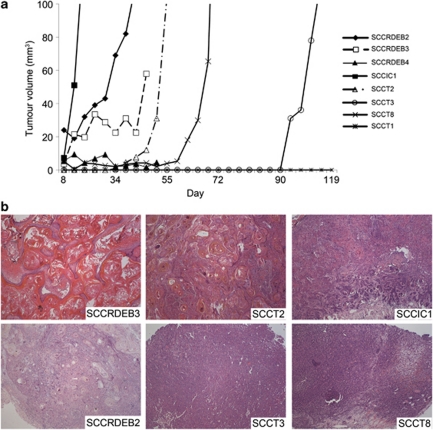
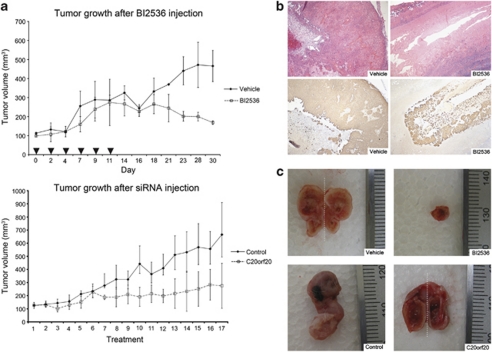
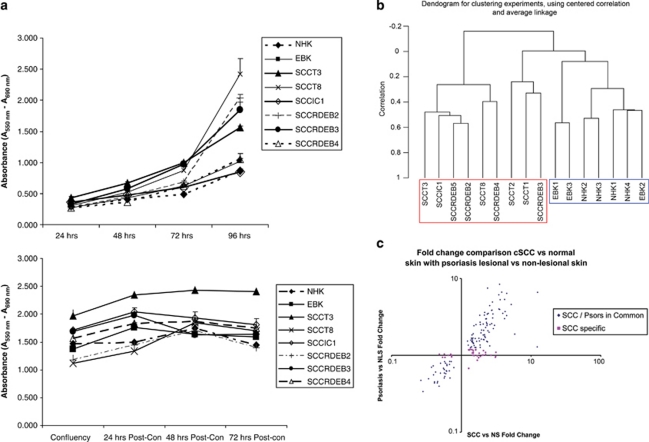
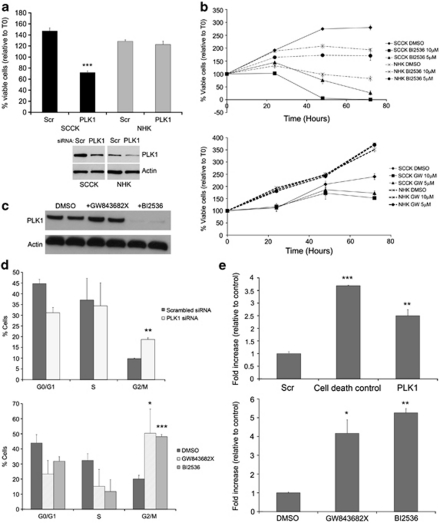
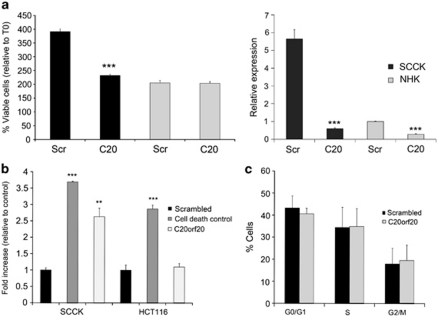
Identifying therapeutic targets for cancer treatment relies on consistent changes within particular types or sub-types of malignancy. The ability to define either consistent changes or sub-types of malignancy is often masked by tumor heterogeneity. To elucidate therapeutic targets in cutaneous squamous cell carcinoma (cSCC), the most frequent skin neoplasm with malignant potential, we have developed an integrated approach to gene expression profiling beginning with primary keratinocytes in culture. Candidate drivers of cSCC development were derived by first defining a set of in vitro cancer genes and then comparing their expression in a range of clinical data sets containing normal skin, cSCC and the benign hyper-proliferative condition psoriasis. A small interfering RNA (siRNA) screen of the resulting 21 upregulated genes has yielded targets capable of reducing xenograft tumor volume in vivo. Small-molecule inhibitors for one target, Polo-like kinase-1 (PLK1), are already in clinical trials for other malignancies, and our data show efficacy in cSCC. Another target, C20orf20, is identified as being overexpressed in cSCC, and siRNA-mediated knockdown induces apoptosis in vitro and reduces tumor growth in vivo. Thus, our approach has shown established and uncharacterized drivers of tumorigenesis with potent efficacy as therapeutic targets for the treatment of cSCC.
为了确定癌症治疗的治疗靶点,需要在特定类型或亚类型的恶性肿瘤中找到一致的变化。通过肿瘤异质性,往往会掩盖定义一致性变化或恶性肿瘤亚类型的能力。为了阐明皮肤鳞状细胞癌(cSCC)的治疗靶点,这是最常见的具有恶性潜能的皮肤肿瘤,我们开发了一种从培养的原代角质形成细胞开始的基因表达谱综合分析方法。首先通过定义一组体外癌症基因,然后比较它们在包含正常皮肤、cSCC 和良性过度增殖性疾病银屑病的一系列临床数据集的表达,从而确定 cSCC 发展的候选驱动基因。对由此产生的 21 个上调基因的小干扰 RNA(siRNA)筛选产生了能够在体内减少异种移植物肿瘤体积的靶点。针对一个靶标 Polo 样激酶 1(PLK1)的小分子抑制剂已经在其他恶性肿瘤的临床试验中进行了研究,我们的数据显示了在 cSCC 中的疗效。另一个靶标 C20orf20 在 cSCC 中过表达,siRNA 介导的敲低在体外诱导细胞凋亡,并在体内减少肿瘤生长。因此,我们的方法已经显示出具有潜在疗效的肿瘤发生的既定和未表征的驱动因素,是治疗 cSCC 的有效治疗靶点。