Division of Pulmonary, Allergy, and Critical Care Medicine, University of Pennsylvania Medical Center, Philadelphia, Pennsylvania 19104, USA.
Clin Cancer Res. 2011 Jul 15;17(14):4719-30. doi: 10.1158/1078-0432.CCR-11-0351. Epub 2011 May 24.
Adoptive T-cell immunotherapy with tumor infiltrating lymphocytes or genetically-modified T cells has yielded dramatic results in some cancers. However, T cells need to traffic properly into tumors to adequately exert therapeutic effects.
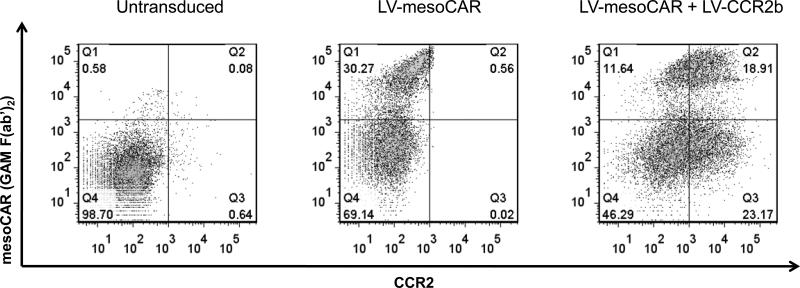
The chemokine CCL2 was highly secreted by malignant pleural mesotheliomas (MPM; a planned tumor target), but the corresponding chemokine receptor (CCR2) was minimally expressed on activated human T cells transduced with a chimeric antibody receptor (CAR) directed to the MPM tumor antigen mesothelin (mesoCAR T cells). The chemokine receptor CCR2b was thus transduced into mesoCAR T cells using a lentiviral vector, and the modified T cells were used to treat established mesothelin-expressing tumors.
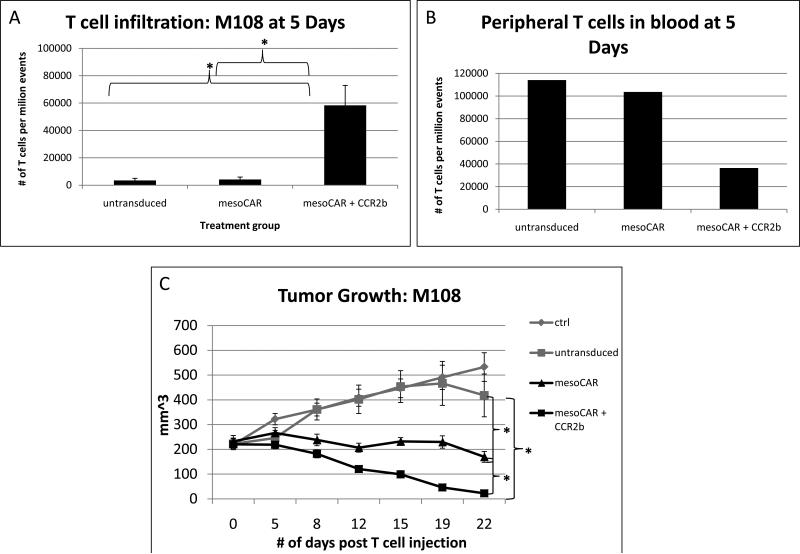
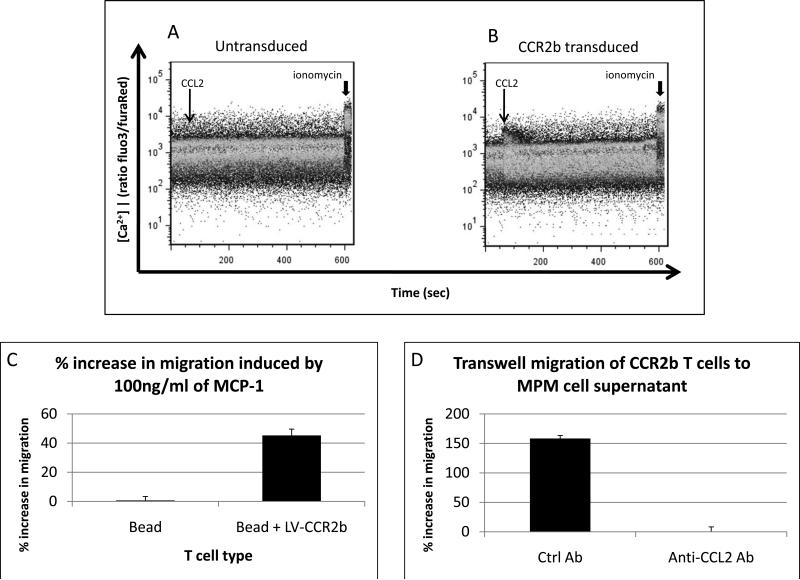
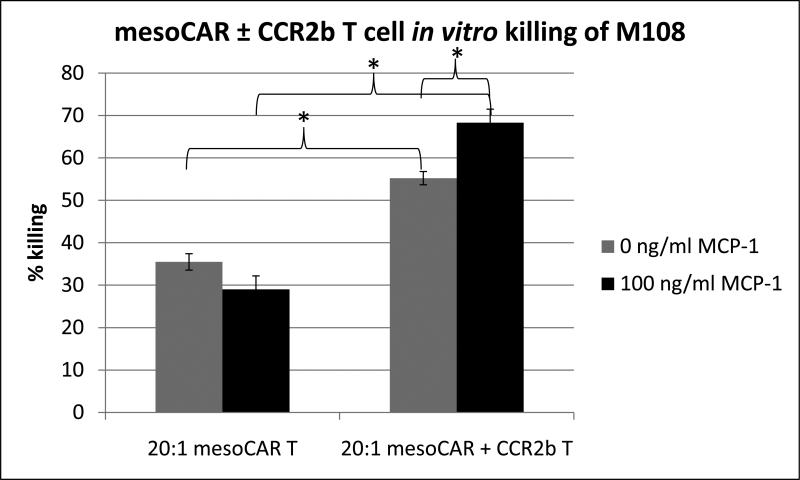
CCR2b transduction led to CCL2-induced calcium flux and increased transmigration, as well as augmentation of in vitro T-cell killing ability. A single intravenous injection of 20 million mesoCAR + CCR2b T cells into immunodeficient mice bearing large, established tumors (without any adjunct therapy) resulted in a 12.5-fold increase in T-cell tumor infiltration by day 5 compared with mesoCAR T cells. This was associated with significantly increased antitumor activity.
CAR T cells bearing a functional chemokine receptor can overcome the inadequate tumor localization that limits conventional CAR targeting strategies and can significantly improve antitumor efficacy in vivo.
过继性 T 细胞免疫疗法,采用肿瘤浸润淋巴细胞或基因修饰的 T 细胞,在某些癌症中已取得显著效果。然而,T 细胞需要正确地进入肿瘤,以充分发挥治疗效果。
趋化因子 CCL2 由恶性胸膜间皮瘤(MPM;计划中的肿瘤靶标)高度分泌,但激活的人 T 细胞转导嵌合抗体受体(CAR)靶向 MPM 肿瘤抗原间皮素(mesoCAR T 细胞)时,相应的趋化因子受体(CCR2)表达极少。因此,使用慢病毒载体将趋化因子受体 CCR2b 转导到 mesoCAR T 细胞中,并使用修饰后的 T 细胞治疗已建立的间皮素表达肿瘤。
CCR2b 转导导致 CCL2 诱导的钙流和迁移增加,并增强体外 T 细胞杀伤能力。将 2000 万 mesoCAR+CCR2b T 细胞单次静脉注射到携带大的已建立肿瘤的免疫缺陷小鼠(无任何辅助治疗)中,与 mesoCAR T 细胞相比,第 5 天 T 细胞肿瘤浸润增加了 12.5 倍。这与抗肿瘤活性显著增强相关。
携带功能性趋化因子受体的 CAR T 细胞可以克服限制常规 CAR 靶向策略的肿瘤定位不足,并可显著提高体内抗肿瘤疗效。