Moon Edmund K, Wang Liang-Chuan, Dolfi Douglas V, Wilson Caleph B, Ranganathan Raghuveer, Sun Jing, Kapoor Veena, Scholler John, Puré Ellen, Milone Michael C, June Carl H, Riley James L, Wherry E John, Albelda Steven M
Division of Pulmonary, Allergy, and Critical Care, Department of Medicine,
Division of Pulmonary, Allergy, and Critical Care, Department of Medicine.
Clin Cancer Res. 2014 Aug 15;20(16):4262-73. doi: 10.1158/1078-0432.CCR-13-2627. Epub 2014 Jun 11.
Immunotherapy using vaccines or adoptively transferred tumor-infiltrating lymphocytes (TIL) is limited by T-cell functional inactivation within the solid tumor microenvironment. The purpose of this study was to determine whether a similar tumor-induced inhibition occurred with genetically modified cytotoxic T cells expressing chimeric antigen receptors (CAR) targeting tumor-associated antigens.
Human T cells expressing CAR targeting mesothelin or fibroblast activation protein and containing CD3ζ and 4-1BB cytoplasmic domains were intravenously injected into immunodeficient mice bearing large, established human mesothelin-expressing flank tumors. CAR TILs were isolated from tumors at various time points and evaluated for effector functions and status of inhibitory pathways.
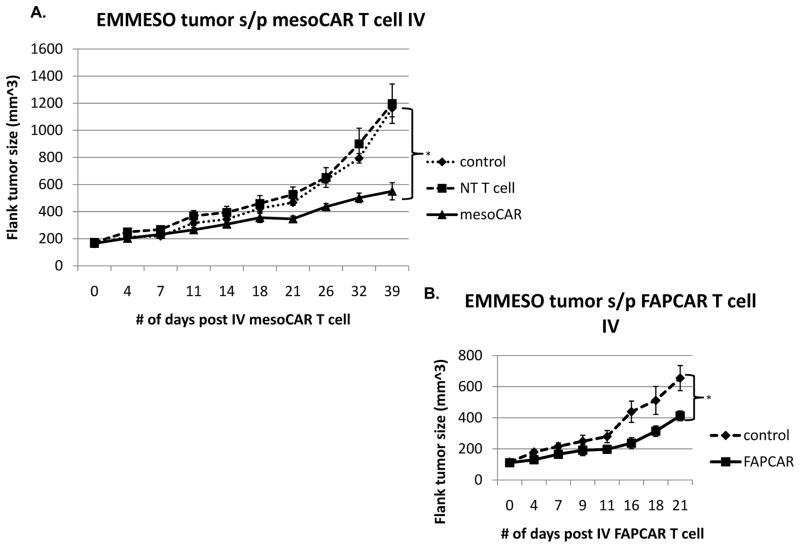
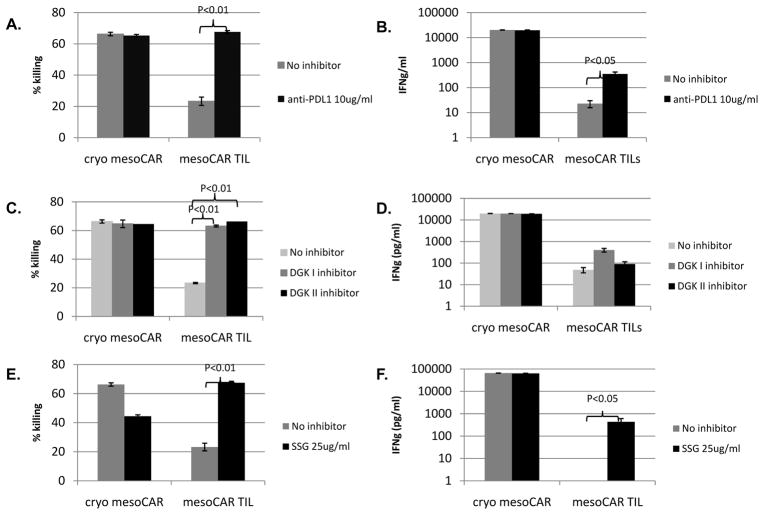
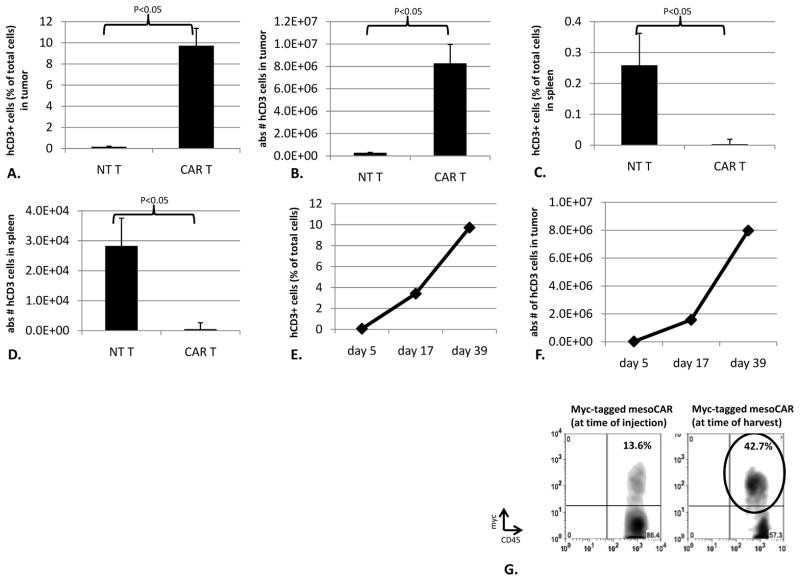
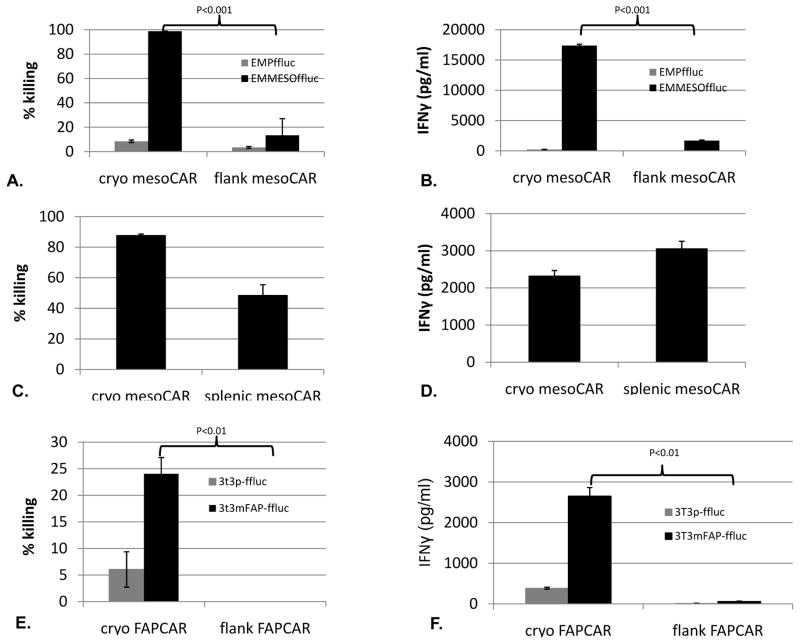
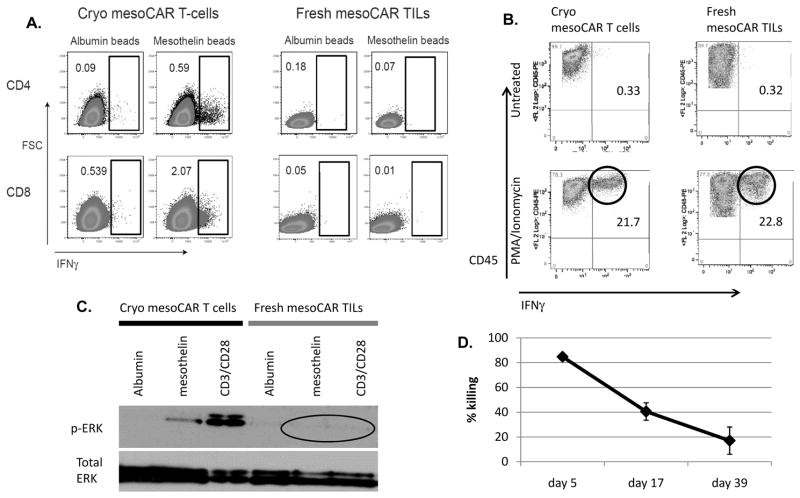
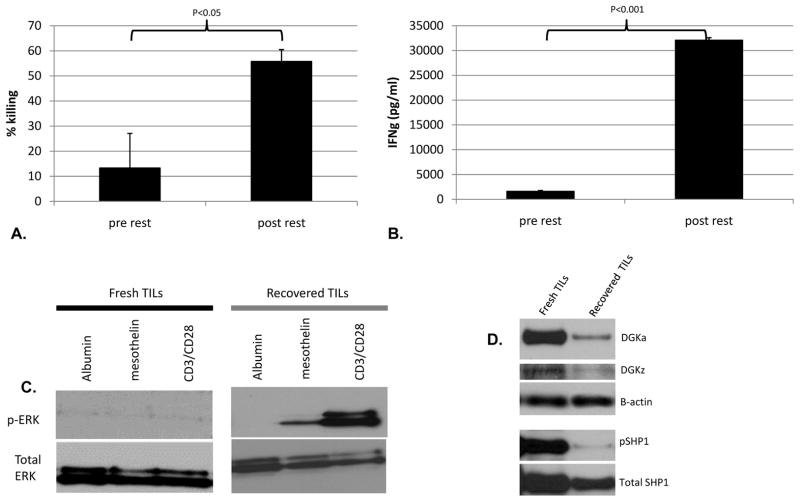
CAR T cells were able to traffic into tumors with varying efficiency and proliferate. They were able to slow tumor growth, but did not cause regressions or cures. The CAR TILs underwent rapid loss of functional activity that limited their therapeutic efficacy. This hypofunction was reversible when the T cells were isolated away from the tumor. The cause of the hypofunction seemed to be multifactorial and was associated with upregulation of intrinsic T-cell inhibitory enzymes (diacylglycerol kinase and SHP-1) and the expression of surface inhibitory receptors (PD1, LAG3, TIM3, and 2B4).
Advanced-generation human CAR T cells are reversibly inactivated within the solid tumor microenvironment of some tumors by multiple mechanisms. The model described here will be an important tool for testing T cell-based strategies or systemic approaches to overcome this tumor-induced inhibition. Our results suggest that PD1 pathway antagonism may augment human CAR T-cell function.
使用疫苗或过继性转移肿瘤浸润淋巴细胞(TIL)进行免疫治疗受到实体瘤微环境中T细胞功能失活的限制。本研究的目的是确定表达靶向肿瘤相关抗原的嵌合抗原受体(CAR)的基因改造细胞毒性T细胞是否会发生类似的肿瘤诱导抑制。
将表达靶向间皮素或成纤维细胞活化蛋白且含有CD3ζ和4-1BB胞质结构域的人T细胞静脉注射到携带大型、已形成的人表达间皮素的侧腹肿瘤的免疫缺陷小鼠体内。在不同时间点从肿瘤中分离CAR TIL,并评估其效应功能和抑制途径状态。
CAR T细胞能够以不同效率进入肿瘤并增殖。它们能够减缓肿瘤生长,但不会导致肿瘤消退或治愈。CAR TIL的功能活性迅速丧失,这限制了它们的治疗效果。当T细胞与肿瘤分离时,这种功能减退是可逆的。功能减退的原因似乎是多因素的,并且与内在T细胞抑制酶(二酰基甘油激酶和SHP-1)的上调以及表面抑制性受体(PD1、LAG3、TIM3和2B4)的表达有关。
先进一代的人CAR T细胞在某些肿瘤的实体瘤微环境中通过多种机制被可逆性失活。这里描述的模型将是测试基于T细胞的策略或全身性方法以克服这种肿瘤诱导抑制的重要工具。我们的结果表明,PD1途径拮抗作用可能增强人CAR T细胞功能。