Division of Immunobiology, Department of Pediatrics, Cincinnati Children's Hospital Medical Center, University of Cincinnati, Cincinnati, OH 45229, USA.
J Exp Med. 2011 Jun 6;208(6):1203-14. doi: 10.1084/jem.20102538. Epub 2011 May 30.
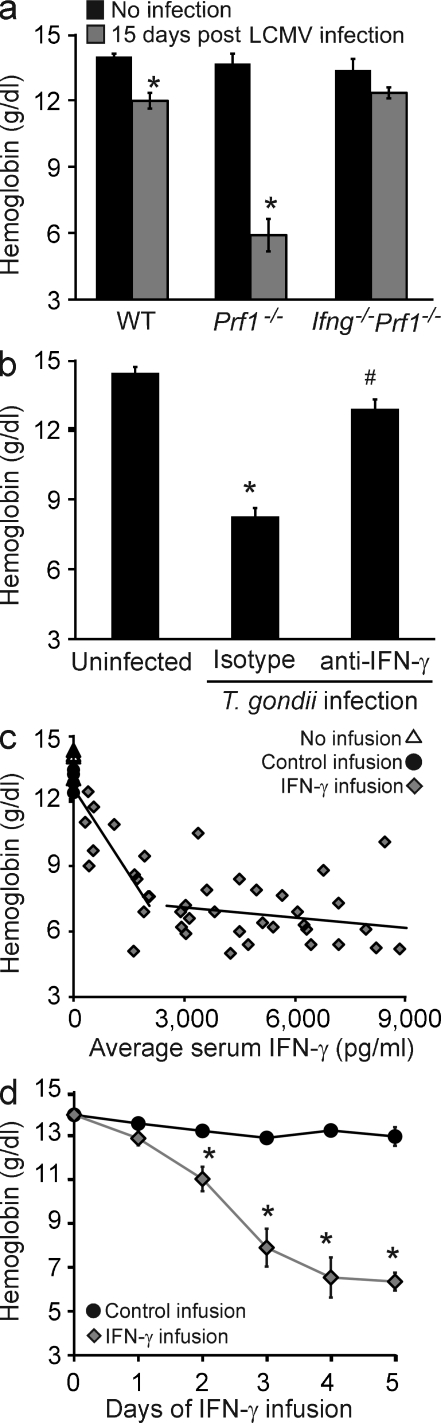
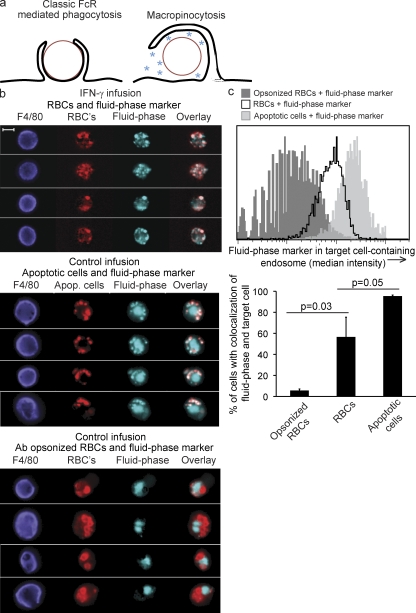
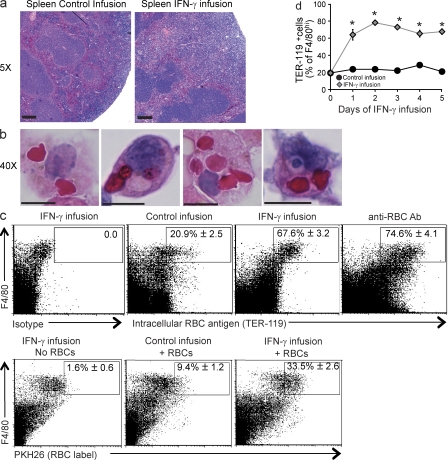
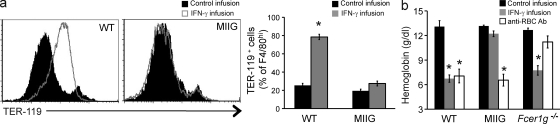
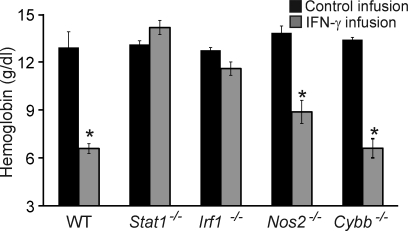
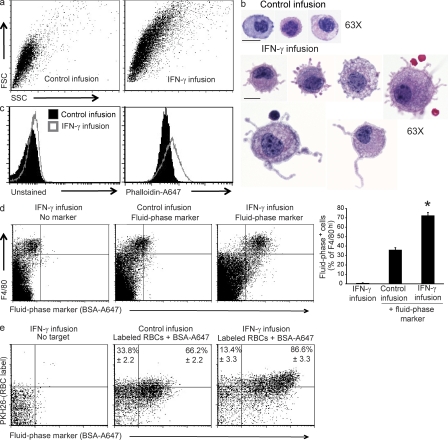
Cytopenias of uncertain etiology are commonly observed in patients during severe inflammation. Hemophagocytosis, the histological appearance of blood-eating macrophages, is seen in the disorder hemophagocytic lymphohistiocytosis and other inflammatory contexts. Although it is hypothesized that these phenomena are linked, the mechanisms facilitating acute inflammation-associated cytopenias are unknown. We report that interferon γ (IFN-γ) is a critical driver of the acute anemia observed during diverse microbial infections in mice. Furthermore, systemic exposure to physiologically relevant levels of IFN-γ is sufficient to cause acute cytopenias and hemophagocytosis. Demonstrating the significance of hemophagocytosis, we found that IFN-γ acts directly on macrophages in vivo to alter endocytosis and provoke blood cell uptake, leading to severe anemia. These findings define a unique pathological process of broad clinical and immunological significance, which we term the consumptive anemia of inflammation.
在严重炎症期间,常观察到原因不明的细胞减少症。噬血细胞现象,即吞噬血细胞的巨噬细胞的组织学表现,见于噬血细胞性淋巴组织细胞增生症和其他炎症环境中。虽然人们假设这些现象是相关的,但促进急性炎症相关细胞减少症的机制尚不清楚。我们报告说,干扰素 γ(IFN-γ)是在小鼠的各种微生物感染期间观察到的急性贫血的关键驱动因素。此外,全身暴露于生理相关水平的 IFN-γ足以引起急性细胞减少症和噬血细胞现象。通过证明噬血细胞现象的重要性,我们发现 IFN-γ在体内直接作用于巨噬细胞以改变内吞作用并引发血细胞摄取,导致严重贫血。这些发现定义了一种具有广泛临床和免疫学意义的独特病理过程,我们称之为炎症消耗性贫血。