Committee on Immunology, Howard Hughes Medical Institute, University of Chicago, Chicago, IL 60637, USA.
J Exp Med. 2011 Jun 6;208(6):1179-88. doi: 10.1084/jem.20102630. Epub 2011 May 30.
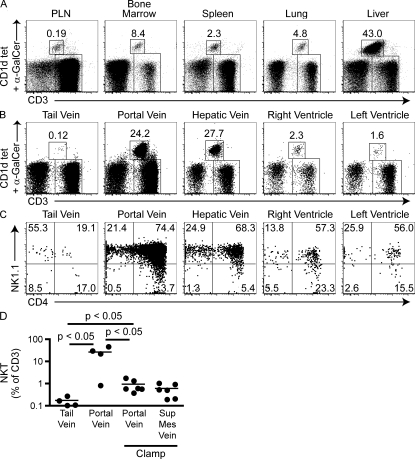
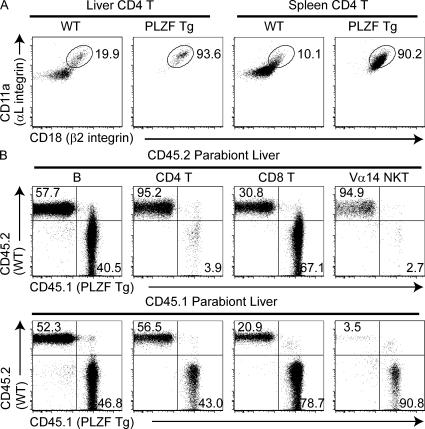
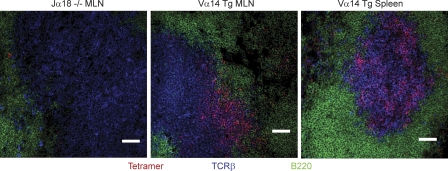
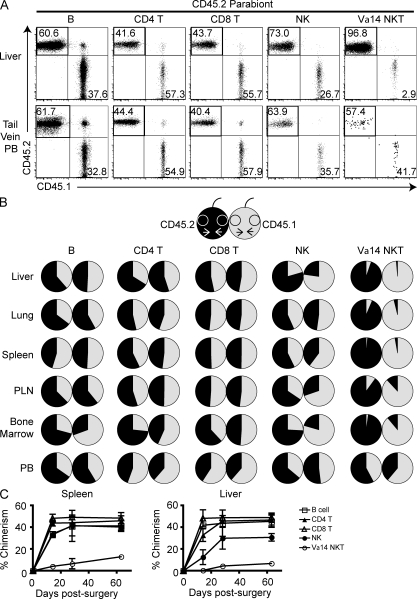
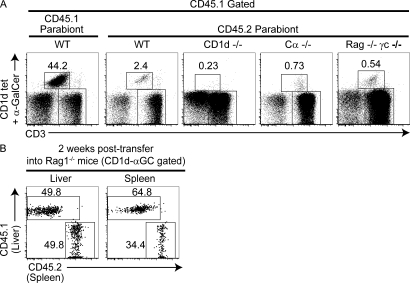
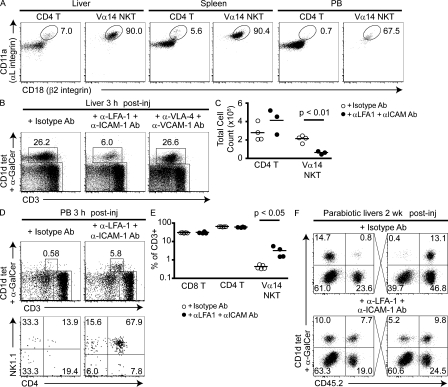
Innate-like NKT cells conspicuously accumulate within the liver microvasculature of healthy mice, crawling on the luminal side of endothelial cells, but their general recirculation pattern and the mechanism of their intravascular behavior have not been elucidated. Using parabiotic mice, we demonstrated that, despite their intravascular location, most liver NKT cells failed to recirculate. Antibody blocking experiments established that they were retained locally through constitutive LFA-1-intercellular adhesion molecule (ICAM) 1 interactions. This unprecedented lifelong intravascular residence could be induced in conventional CD4 T cells by the sole expression of promyelocytic leukemia zinc finger (PLZF), a transcription factor specifically expressed in the NKT lineage. These findings reveal the unique genetic and biochemical pathway that underlies the innate intravascular surveillance program of NKT cells.
天然样 NKT 细胞在健康小鼠的肝脏微血管中明显积聚,在血管内皮细胞的腔侧爬行,但它们的一般再循环模式和其血管内行为的机制尚未阐明。使用联体小鼠,我们证明,尽管它们位于血管内,但大多数肝脏 NKT 细胞未能再循环。抗体阻断实验证实,它们通过组成性 LFA-1-细胞间黏附分子(ICAM)1 相互作用而被局部保留。这种前所未有的终身血管内居留可以通过仅表达在 NKT 谱系中特异性表达的早幼粒细胞白血病锌指(PLZF)来诱导常规 CD4 T 细胞。这些发现揭示了 NKT 细胞先天血管内监视计划所基于的独特的遗传和生化途径。