Li Jia, Xiao Chu, Li Chunxiang, He Jie
Department of Thoracic Surgery, National Cancer Center/National Clinical Research Center for Cancer/Cancer Hospital, Chinese Academy of Medical Sciences and Peking Union Medical College, Beijing, China.
Signal Transduct Target Ther. 2025 Jan 17;10(1):12. doi: 10.1038/s41392-024-02050-5.
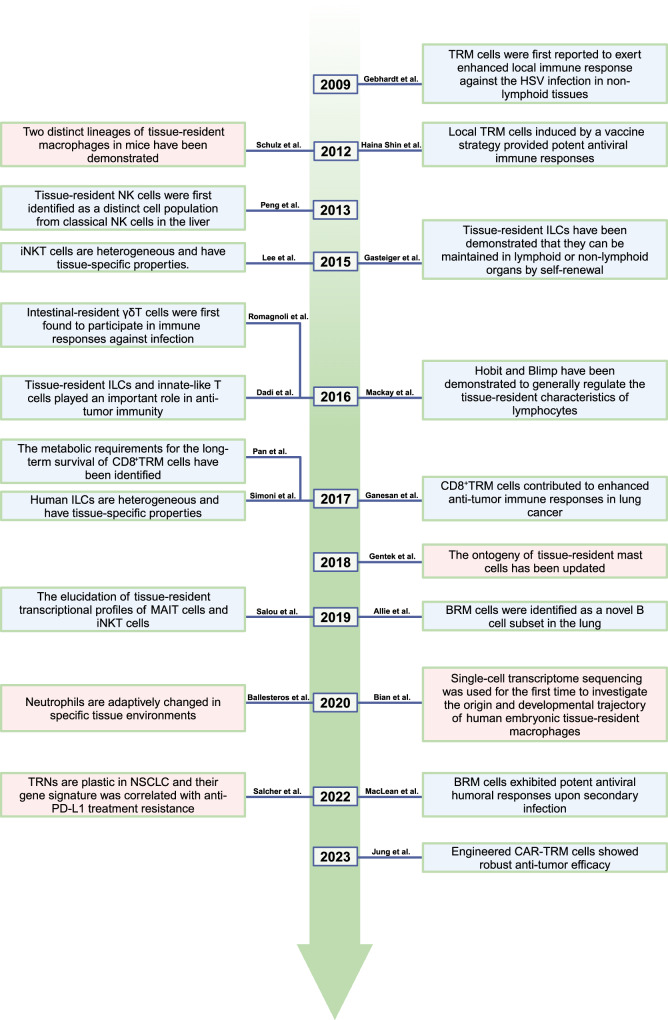
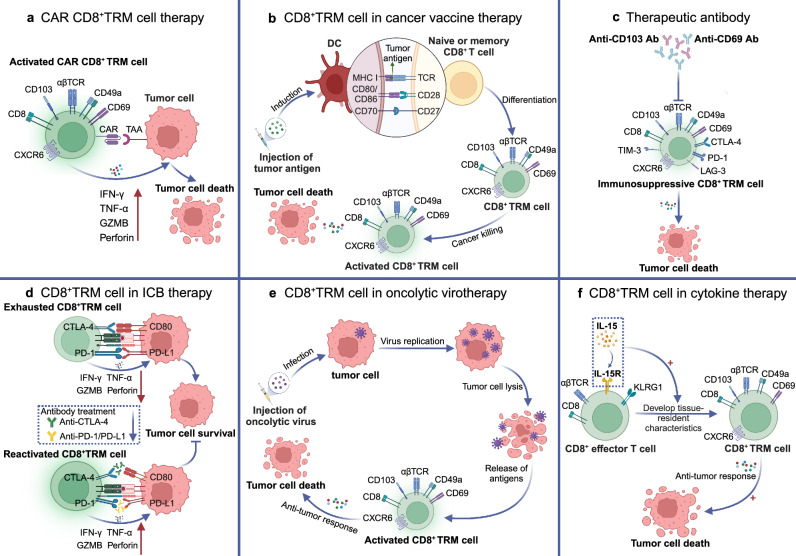
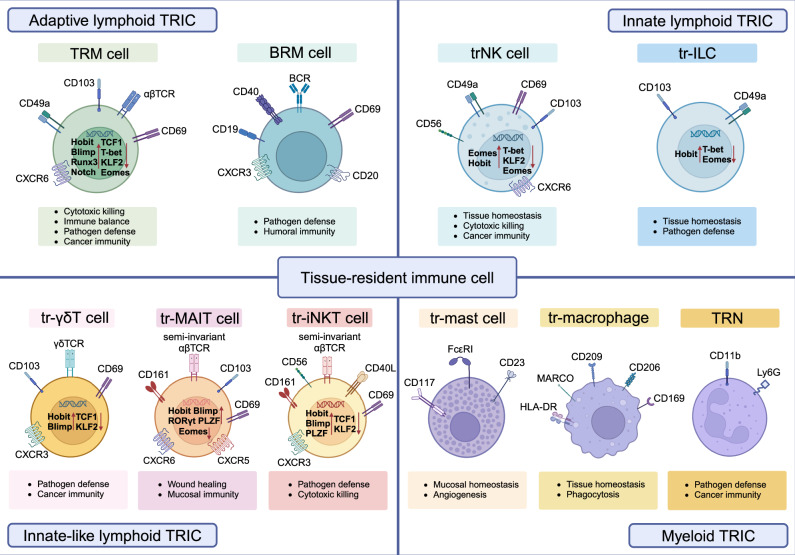
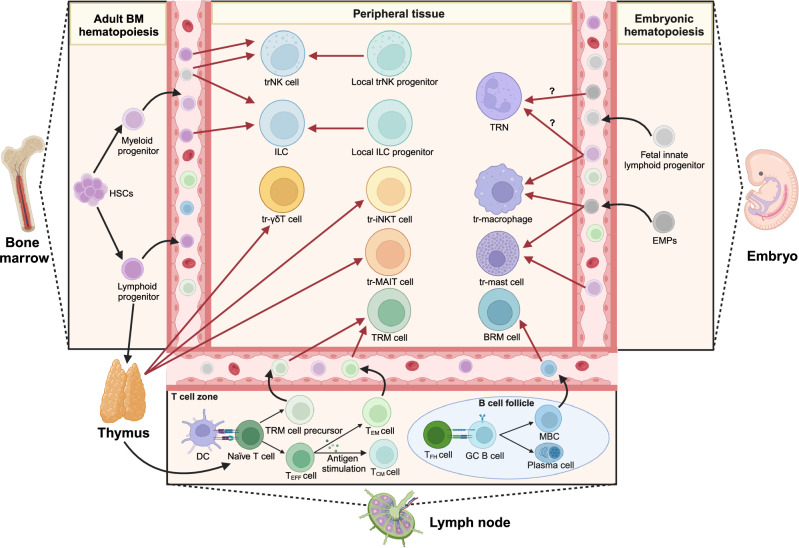
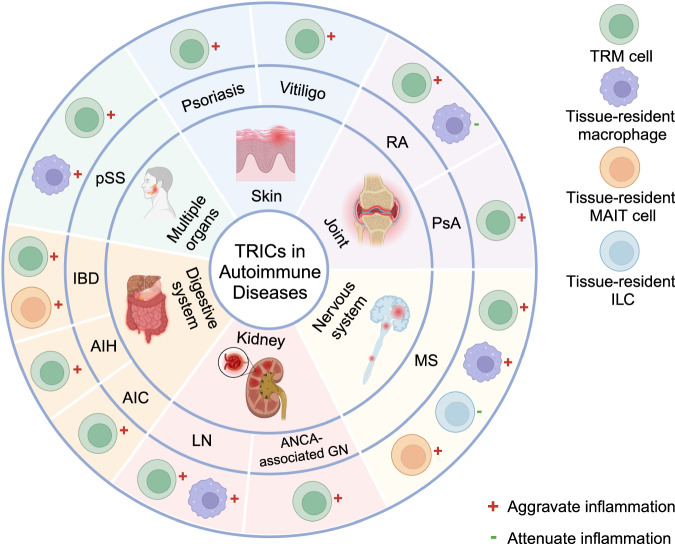
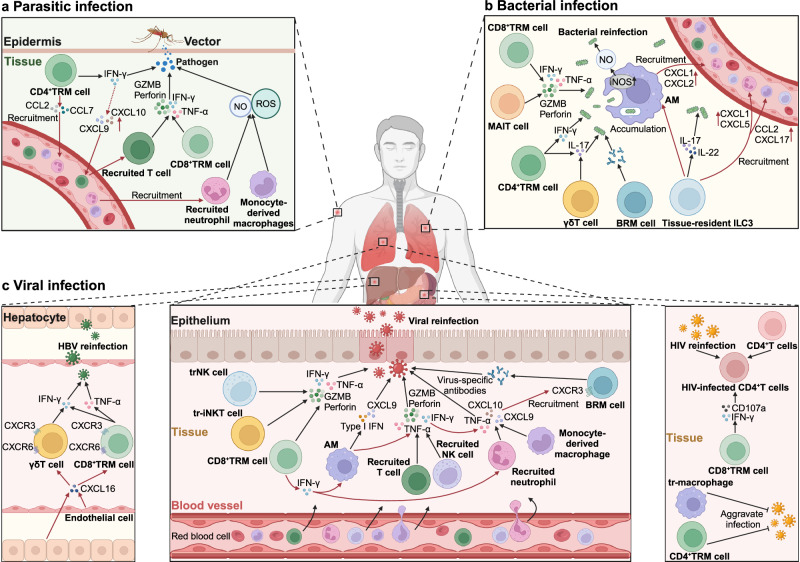
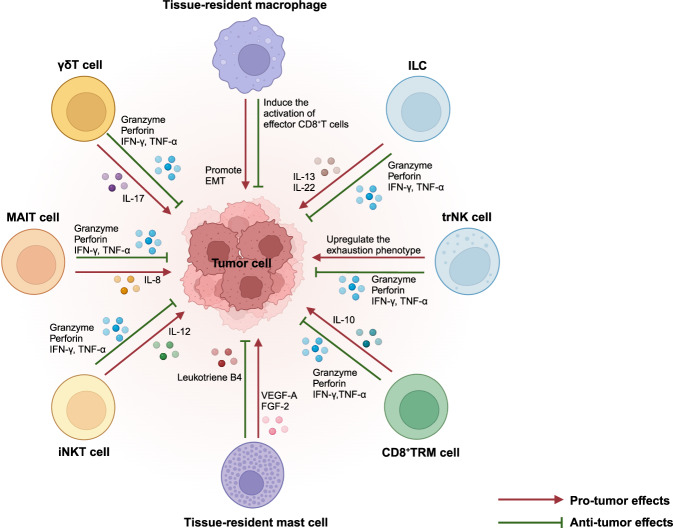
Tissue-resident immune cells (TRICs) are a highly heterogeneous and plastic subpopulation of immune cells that reside in lymphoid or peripheral tissues without recirculation. These cells are endowed with notably distinct capabilities, setting them apart from their circulating leukocyte counterparts. Many studies demonstrate their complex roles in both health and disease, involving the regulation of homeostasis, protection, and destruction. The advancement of tissue-resolution technologies, such as single-cell sequencing and spatiotemporal omics, provides deeper insights into the cell morphology, characteristic markers, and dynamic transcriptional profiles of TRICs. Currently, the reported TRIC population includes tissue-resident T cells, tissue-resident memory B (BRM) cells, tissue-resident innate lymphocytes, tissue-resident macrophages, tissue-resident neutrophils (TRNs), and tissue-resident mast cells, but unignorably the existence of TRNs is controversial. Previous studies focus on one of them in specific tissues or diseases, however, the origins, developmental trajectories, and intercellular cross-talks of every TRIC type are not fully summarized. In addition, a systemic overview of TRICs in disease progression and the development of parallel therapeutic strategies is lacking. Here, we describe the development and function characteristics of all TRIC types and their major roles in health and diseases. We shed light on how to harness TRICs to offer new therapeutic targets and present burning questions in this field.
组织驻留免疫细胞(TRICs)是一类高度异质性且具有可塑性的免疫细胞亚群,它们驻留在淋巴组织或外周组织中,不再循环。这些细胞具有显著不同的能力,使其有别于循环中的白细胞。许多研究表明它们在健康和疾病中都发挥着复杂的作用,涉及体内平衡的调节、保护和破坏。组织分辨率技术的进步,如单细胞测序和时空组学,为深入了解TRICs的细胞形态、特征标志物和动态转录谱提供了帮助。目前,已报道的TRIC群体包括组织驻留T细胞、组织驻留记忆B(BRM)细胞、组织驻留固有淋巴细胞、组织驻留巨噬细胞、组织驻留中性粒细胞(TRNs)和组织驻留肥大细胞,但不可忽视的是,TRNs的存在存在争议。以往的研究聚焦于特定组织或疾病中的某一种TRICs,然而,每种TRIC类型的起源、发育轨迹和细胞间相互作用尚未得到全面总结。此外,缺乏对疾病进展中TRICs的系统概述以及并行治疗策略的开发。在此,我们描述了所有TRIC类型的发育和功能特征及其在健康和疾病中的主要作用。我们阐明了如何利用TRICs提供新的治疗靶点,并提出了该领域亟待解决的问题。