State Key Laboratory for Conservation and Utilization of Subtropical Agro-bioresources, South China Agricultural University, Guangzhou 510642, China.
J Exp Bot. 2011 Aug;62(13):4433-45. doi: 10.1093/jxb/err098. Epub 2011 May 30.
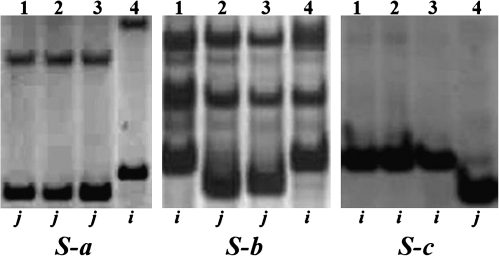
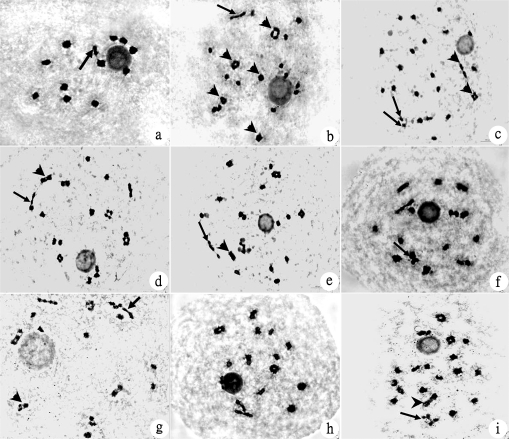
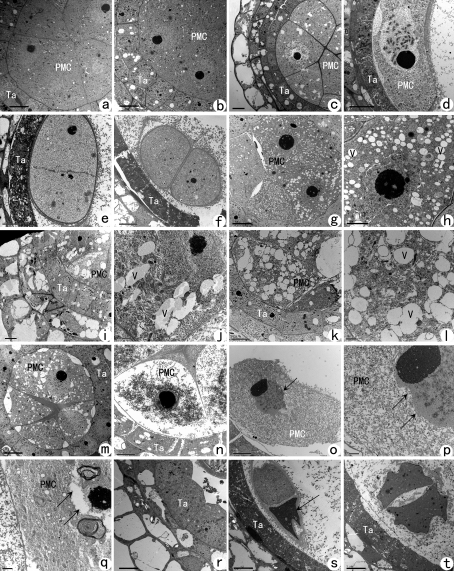
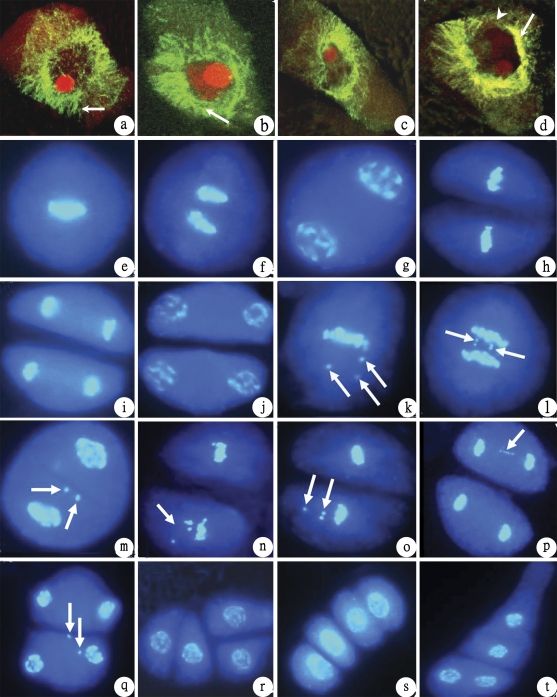
The intersubspecific hybrids of autotetraploid rice has many features that increase rice yield, but lower seed set is a major hindrance in its utilization. Pollen sterility is one of the most important factors which cause intersubspecific hybrid sterility. The hybrids with greater variation in seed set were used to study how the F(1) pollen sterile loci (S-a, S-b, and S-c) interact with each other and how abnormal chromosome behaviour and allelic interaction of F(1) sterility loci affect pollen fertility and seed set of intersubspecific autotetraploid rice hybrids. The results showed that interaction between pollen sterility loci have significant effects on the pollen fertility of autotetraploid hybrids, and pollen fertility further decreased with an increase in the allelic interaction of F(1) pollen sterility loci. Abnormal ultra-structure and microtubule distribution patterns during pollen mother cell (PMC) meiosis were found in the hybrids with low pollen fertility in interphase and leptotene, suggesting that the effect-time of pollen sterility loci interaction was very early. There were highly significant differences in the number of quadrivalents and bivalents, and in chromosome configuration among all the hybrids, and quadrivalents decreased with an increase in the seed set of autotetraploid hybrids. Many different kinds of chromosomal abnormalities, such as chromosome straggling, chromosome lagging, asynchrony of chromosome disjunction, and tri-fission were found during the various developmental stages of PMC meiosis. All these abnormalities were significantly higher in sterile hybrids than in fertile hybrids, suggesting that pollen sterility gene interactions tend to increase the chromosomal abnormalities which cause the partial abortion of male gametes and leads to the decline in the seed set of the autotetraploid rice hybrids.
同源四倍体水稻亚种间杂种具有许多增加水稻产量的特点,但结实率低是其利用的主要障碍。花粉不育是导致亚种间杂种不育的最重要因素之一。杂种的结实率差异较大,用于研究 F1 花粉不育基因座(S-a、S-b 和 S-c)之间如何相互作用,以及 F1 不育基因座的异常染色体行为和等位基因相互作用如何影响亚种间同源四倍体水稻杂种的花粉育性和结实率。结果表明,花粉不育基因座之间的相互作用对同源四倍体杂种的花粉育性有显著影响,随着 F1 花粉不育基因座等位基因相互作用的增加,花粉育性进一步降低。在间期和细线期花粉母细胞(PMC)减数分裂中发现花粉育性低的杂种存在异常超微结构和微管分布模式,表明花粉不育基因座相互作用的作用时间非常早。所有杂种之间的四价体和二价体数量以及染色体构型存在显著差异,并且随着同源四倍体杂种结实率的增加,四价体减少。在 PMC 减数分裂的各个发育阶段发现了许多不同类型的染色体异常,如染色体散逸、染色体滞后、染色体分离不同步和三分体。在不育杂种中发现的所有这些异常都显著高于可育杂种,表明花粉不育基因相互作用倾向于增加导致雄性配子部分败育的染色体异常,从而导致同源四倍体水稻杂种结实率下降。