Institute of Biology, Leiden University, Sylvius Laboratory, Leiden, The Netherlands.
PLoS One. 2011;6(5):e20037. doi: 10.1371/journal.pone.0020037. Epub 2011 May 19.
In humans, ethanol exposure during pregnancy causes a spectrum of developmental defects (fetal alcohol syndrome or FAS). Individuals vary in phenotypic expression. Zebrafish embryos develop FAS-like features after ethanol exposure. In this study, we ask whether stage-specific effects of ethanol can be identified in the zebrafish, and if so, whether they allow the pinpointing of sensitive developmental mechanisms. We have therefore conducted the first large-scale (>1500 embryos) analysis of acute, stage-specific drug effects on zebrafish development, with a large panel of readouts.
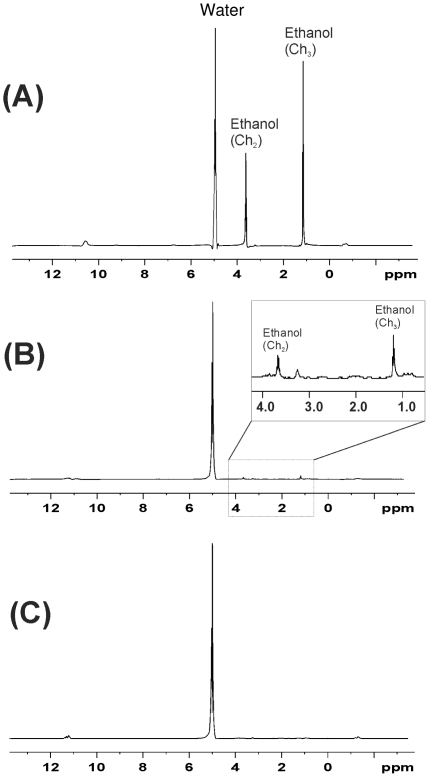
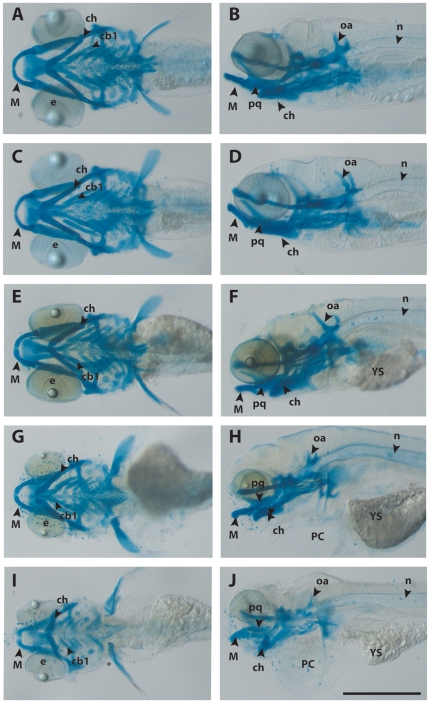
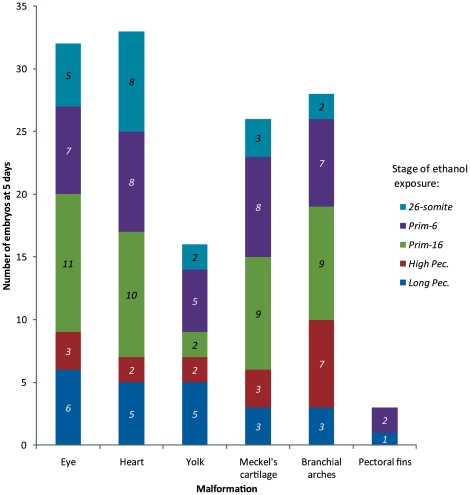
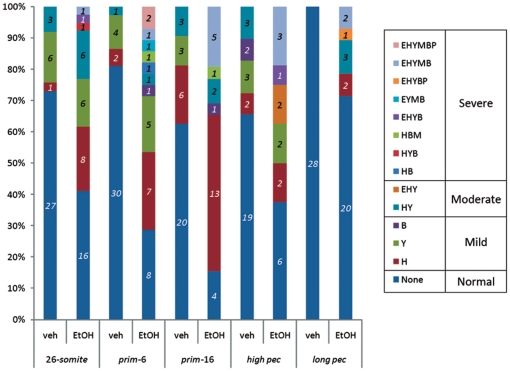
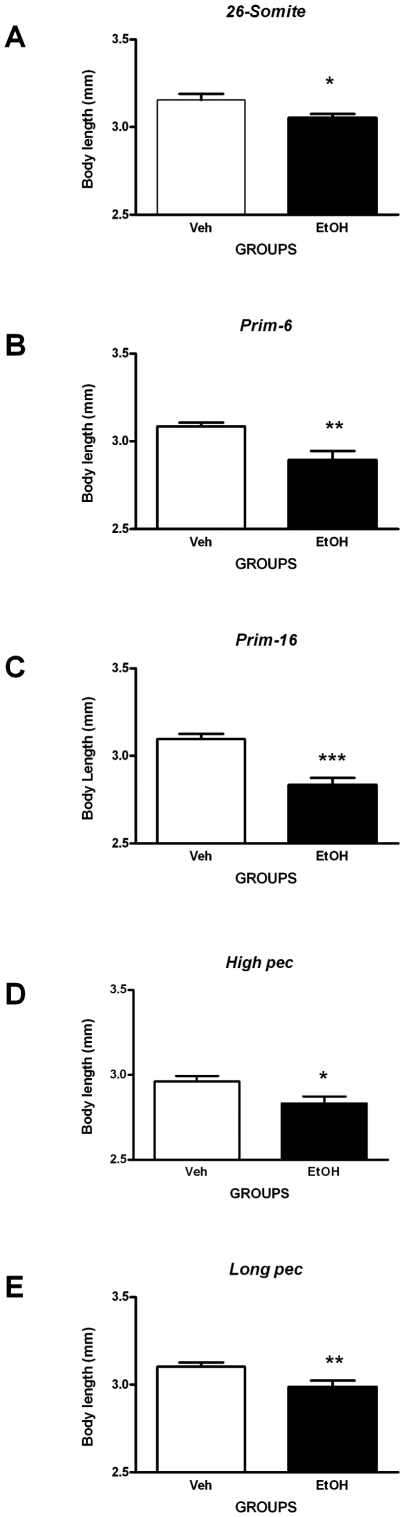
METHODOLOGY/PRINCIPAL FINDINGS: Zebrafish embryos were raised in 96-well plates. Range-finding indicated that 10% ethanol for 1 h was suitable for an acute exposure regime. High-resolution magic-angle spinning proton magnetic resonance spectroscopy showed that this produced a transient pulse of 0.86% concentration of ethanol in the embryo within the chorion. Survivors at 5 days postfertilisation were analysed. Phenotypes ranged from normal (resilient) to severely malformed. Ethanol exposure at early stages caused high mortality (≥88%). At later stages of exposure, mortality declined and malformations developed. Pharyngeal arch hypoplasia and behavioral impairment were most common after prim-6 and prim-16 exposure. By contrast, microphthalmia and growth retardation were stage-independent.
Our findings show that some ethanol effects are strongly stage-dependent. The phenotypes mimic key aspects of FAS including craniofacial abnormality, microphthalmia, growth retardation and behavioral impairment. We also identify a critical time window (prim-6 and prim-16) for ethanol sensitivity. Finally, our identification of a wide phenotypic spectrum is reminiscent of human FAS, and may provide a useful model for studying disease resilience.
在人类中,怀孕期间接触乙醇会导致一系列发育缺陷(胎儿酒精综合征或 FAS)。个体在表型表达上存在差异。斑马鱼胚胎在乙醇暴露后会发展出类似 FAS 的特征。在这项研究中,我们询问是否可以在斑马鱼中识别出乙醇的特定阶段效应,如果可以,它们是否可以精确定位敏感的发育机制。因此,我们进行了首次大规模(>1500 个胚胎)分析急性、特定阶段药物对斑马鱼发育的影响,并使用了大量的读数。
方法/主要发现:斑马鱼胚胎在 96 孔板中培养。范围发现表明,1 h 内 10%乙醇适用于急性暴露方案。高分辨率魔角旋转质子磁共振波谱显示,这会在卵壳内的胚胎中产生 0.86%浓度的乙醇瞬时脉冲。在受精后 5 天对存活者进行分析。表型范围从正常(有弹性)到严重畸形。早期暴露会导致高死亡率(≥88%)。在后期暴露时,死亡率下降,畸形发展。在 prim-6 和 prim-16 暴露后,咽弓发育不良和行为障碍最为常见。相比之下,小眼症和生长迟缓与阶段无关。
我们的发现表明,一些乙醇的影响强烈依赖于阶段。表型模拟了 FAS 的关键方面,包括颅面异常、小眼症、生长迟缓和行为障碍。我们还确定了一个关键的时间窗口(prim-6 和 prim-16)对乙醇敏感。最后,我们识别出的广泛表型谱类似于人类 FAS,可能为研究疾病的弹性提供了一个有用的模型。