Department of Anatomy and Cell Biology, Brody School of Medicine, East Carolina University, Greenville, NC 27834, USA.
Exp Cell Res. 2011 Aug 1;317(13):1935-46. doi: 10.1016/j.yexcr.2011.05.019. Epub 2011 May 27.
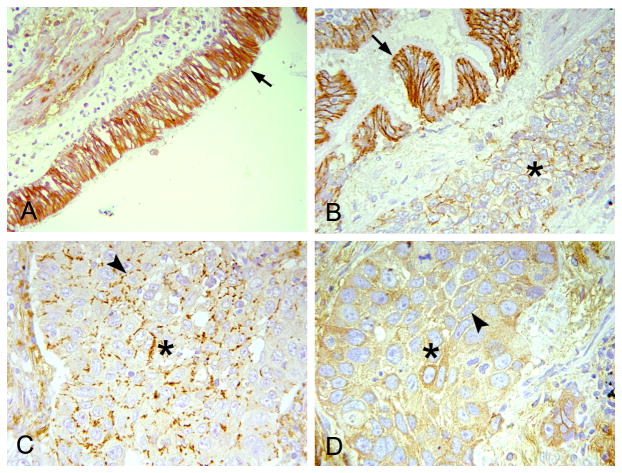
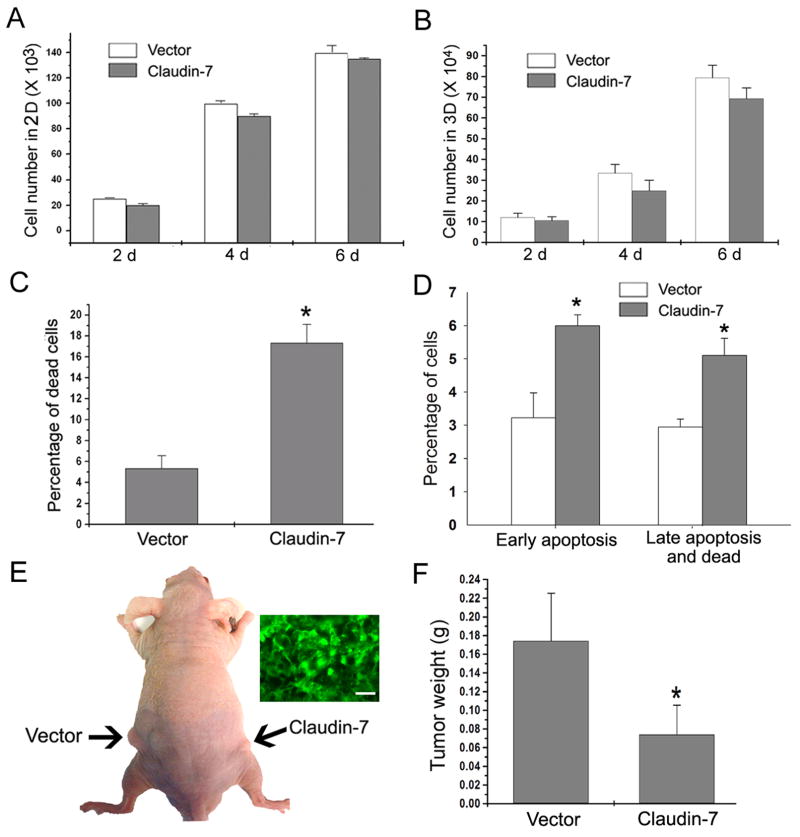
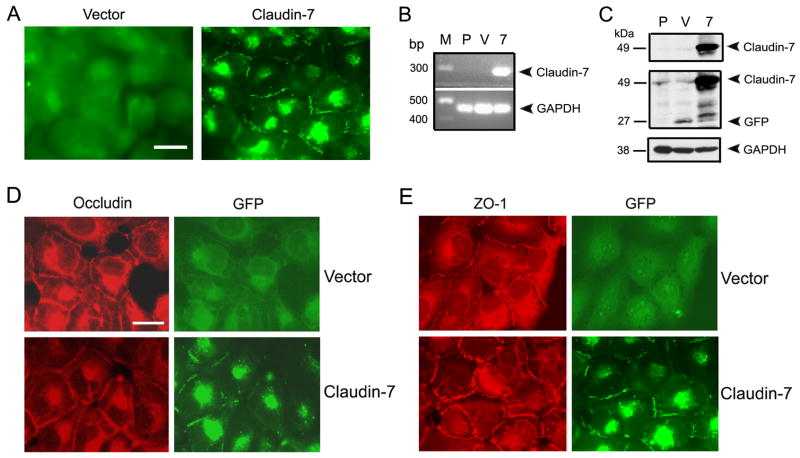
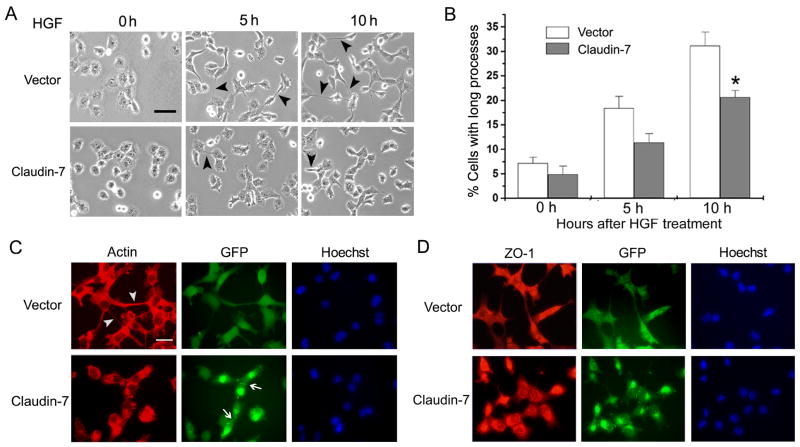
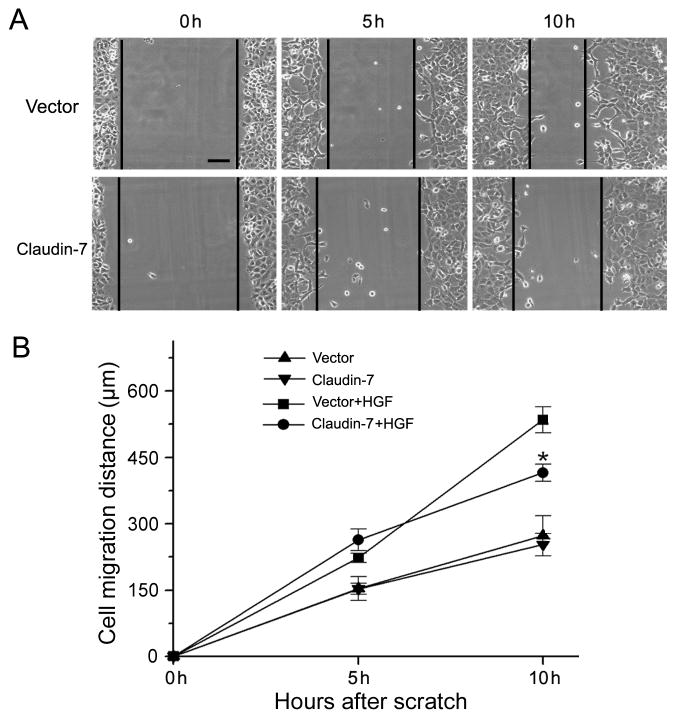
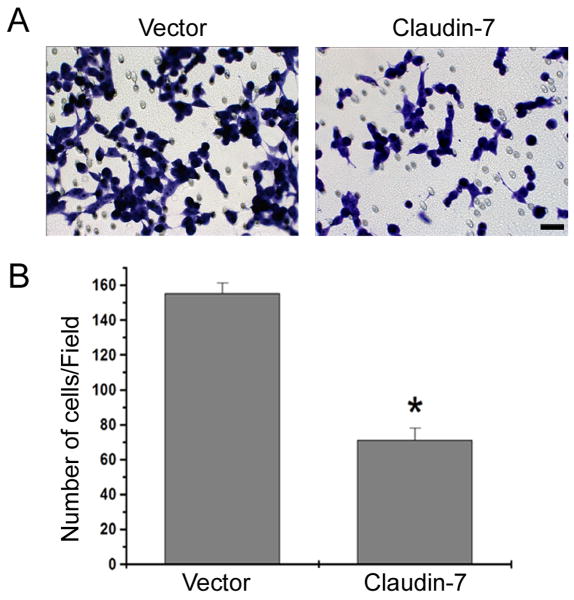
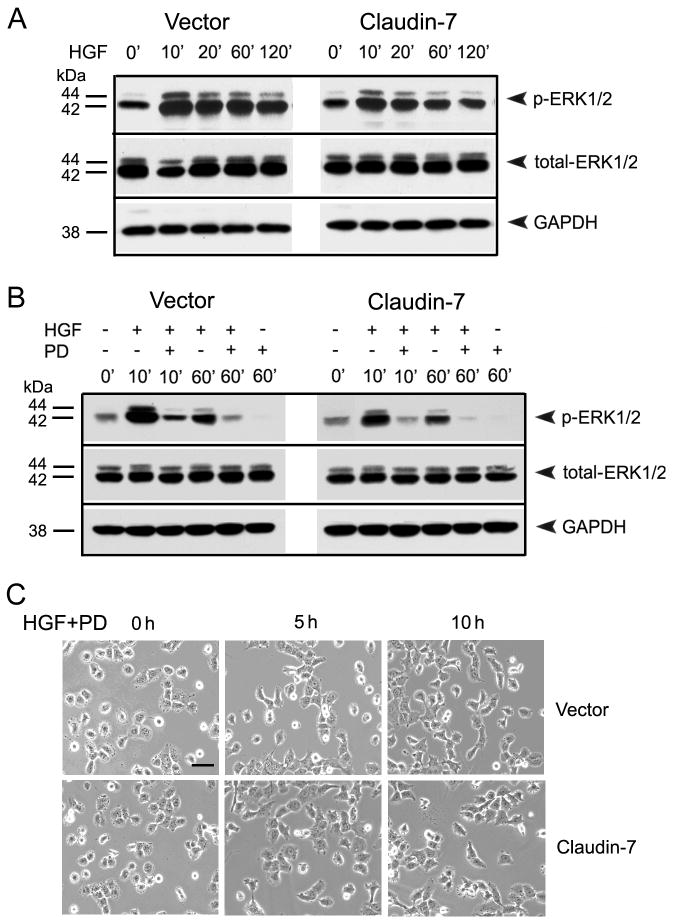
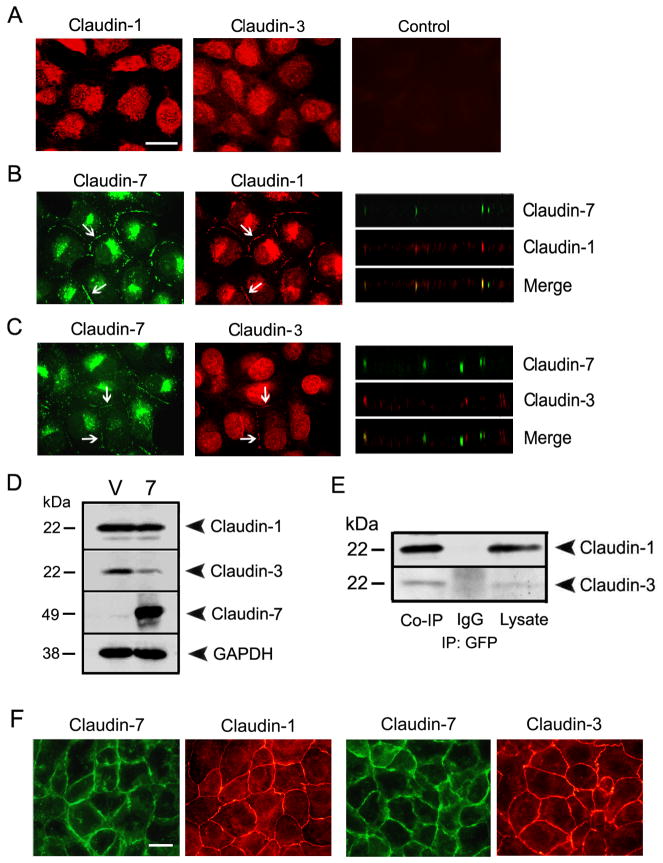
Tight junctions are the most apical component of the junctional complex critical for epithelial cell barrier and polarity functions. Although its disruption is well documented during cancer progression such as epithelial-mesenchymal transition, molecular mechanisms by which tight junction integral membrane protein claudins affect this process remain largely unknown. In this report, we found that claudin-7 was normally expressed in bronchial epithelial cells of human lungs but was either downregulated or disrupted in its distribution pattern in lung cancer. To investigate the function of claudin-7 in lung cancer cells, we transfected claudin-7 cDNA into NCI-H1299, a human lung carcinoma cell line that has no detectable claudin-7 expression. We found that claudin-7 expressing cells showed a reduced response to hepatocyte growth factor (HGF) treatment, were less motile, and formed fewer foot processes than the control cells did. In addition, cells transfected with claudin-7 dramatically decreased their invasive ability after HGF treatment. These effects were mediated through the MAPK signaling pathway since the phosphorylation level of ERK1/2 was significantly lower in claudin-7 transfected cells than in control cells. PD98059, a selective inhibitor of ERK/MAPK pathway, was able to block the motile effect. Claudin-7 formed stable complexes with claudin-1 and -3 and was able to recruit them to the cell-cell junction area in claudin-7 transfected cells. When control and claudin-7 transfected cells were inoculated into nude mice, claudin-7 expressing cells produced smaller tumors than the control cells. Taken together, our study demonstrates that claudin-7 inhibits cell migration and invasion through ERK/MAPK signaling pathway in response to growth factor stimulation in human lung cancer cells.
紧密连接是连接复合体的最顶端部分,对于上皮细胞的屏障和极性功能至关重要。尽管在癌症进展过程中(如上皮-间质转化)紧密连接的完整性已经得到了很好的证明,但其完整的膜蛋白紧密连接蛋白 Claudin 如何影响这一过程的分子机制在很大程度上仍是未知的。在本报告中,我们发现 Claudin-7 在人肺支气管上皮细胞中正常表达,但在肺癌中 Claudin-7 的表达水平下调或分布模式发生改变。为了研究 Claudin-7 在肺癌细胞中的功能,我们将 Claudin-7 cDNA 转染到 NCI-H1299 中,该细胞系没有检测到 Claudin-7 的表达。我们发现 Claudin-7 表达的细胞对肝细胞生长因子 (HGF) 的反应减弱,运动性降低,形成的足突比对照细胞少。此外,转染 Claudin-7 的细胞在 HGF 处理后侵袭能力显著降低。这些作用是通过 MAPK 信号通路介导的,因为 Claudin-7 转染细胞 ERK1/2 的磷酸化水平明显低于对照细胞。PD98059,一种 ERK/MAPK 通路的选择性抑制剂,能够阻断运动效应。Claudin-7 与 Claudin-1 和 Claudin-3 形成稳定的复合物,并能够将它们募集到 Claudin-7 转染细胞的细胞-细胞连接区域。当对照细胞和 Claudin-7 转染细胞接种到裸鼠体内时,Claudin-7 表达的细胞产生的肿瘤比对照细胞小。综上所述,我们的研究表明,Claudin-7 通过 ERK/MAPK 信号通路抑制人肺癌细胞在生长因子刺激下的迁移和侵袭。