Department of Biomedical Sciences and Cancer Biology Center, School of Pharmacy, Texas Tech University of Health Sciences Center, Amarillo, Texas, United States of America.
PLoS One. 2011;6(5):e20151. doi: 10.1371/journal.pone.0020151. Epub 2011 May 25.
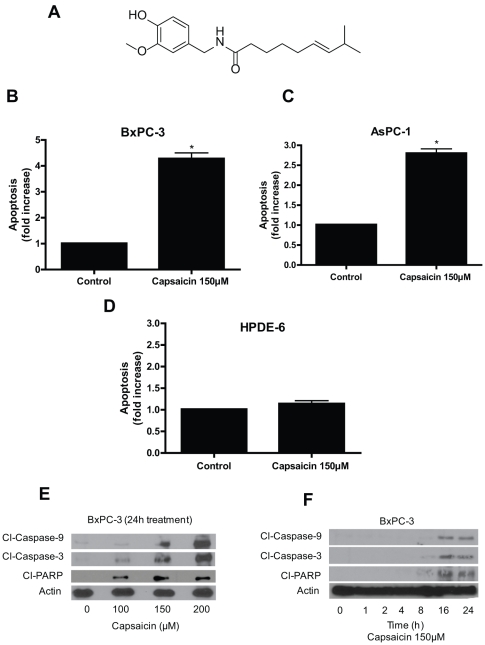
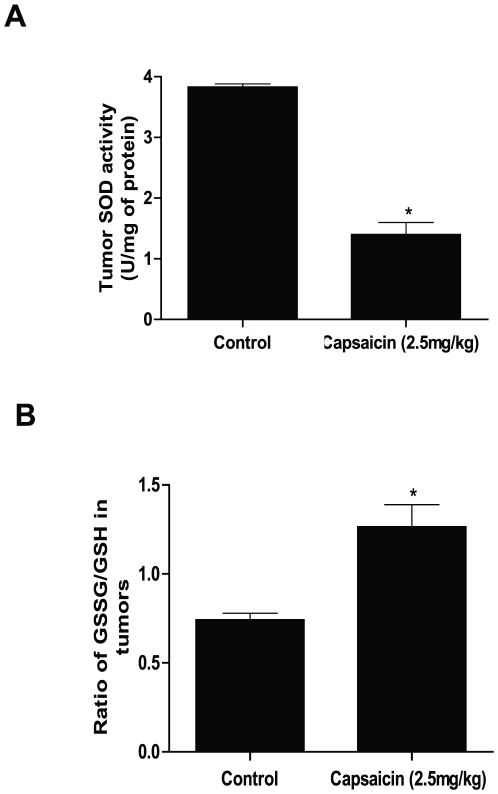
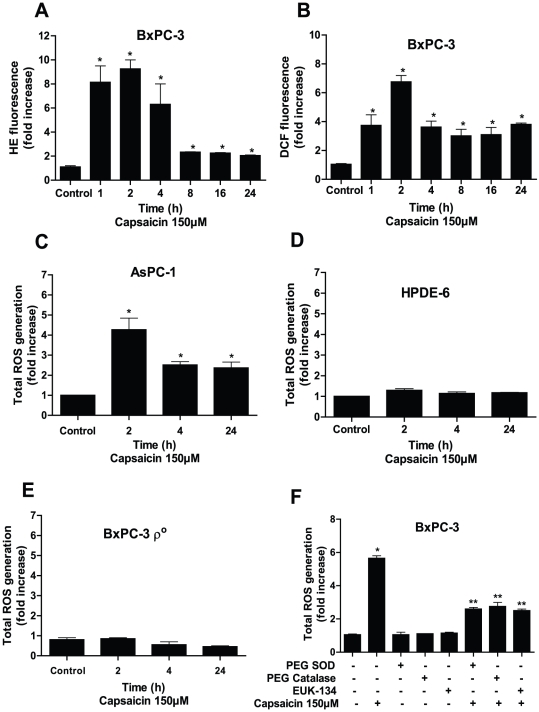
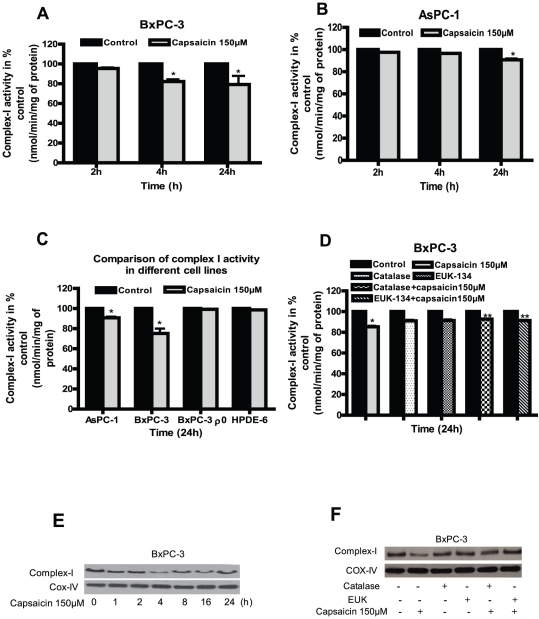
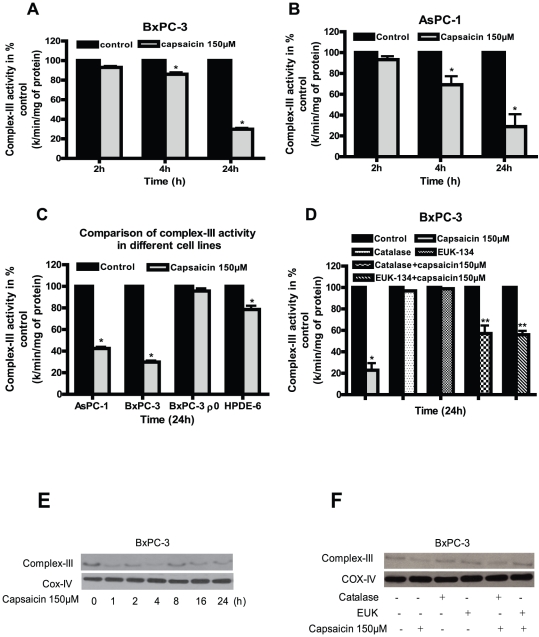
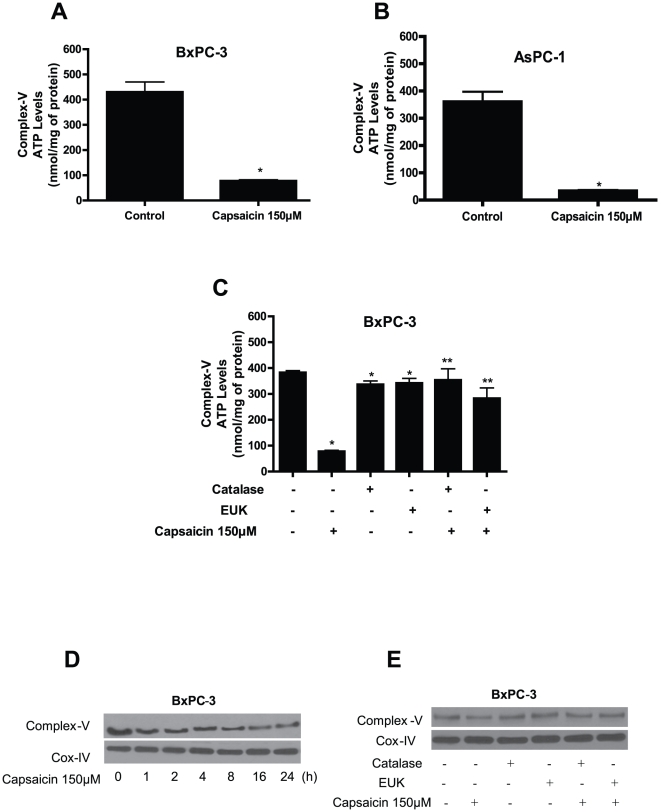
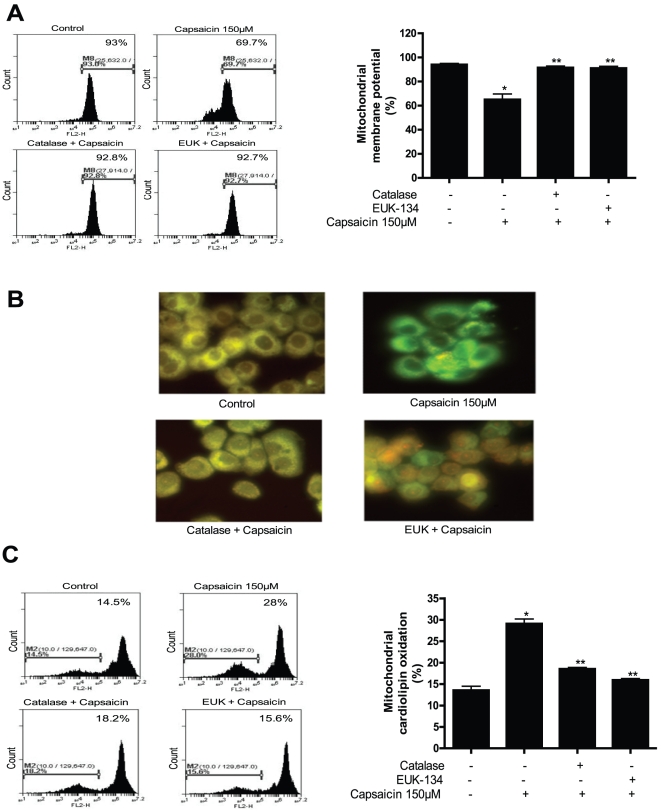
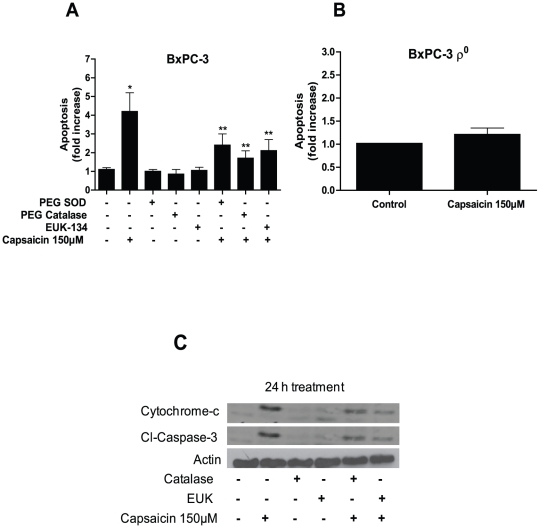
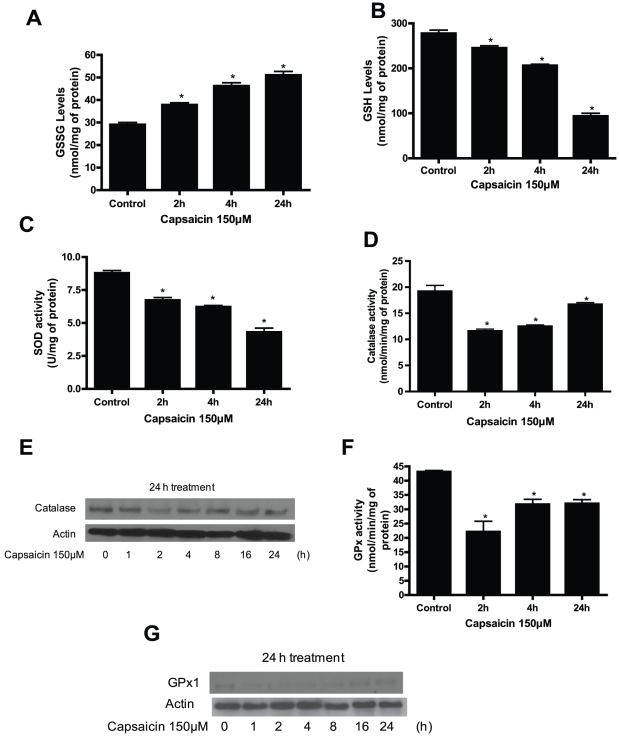
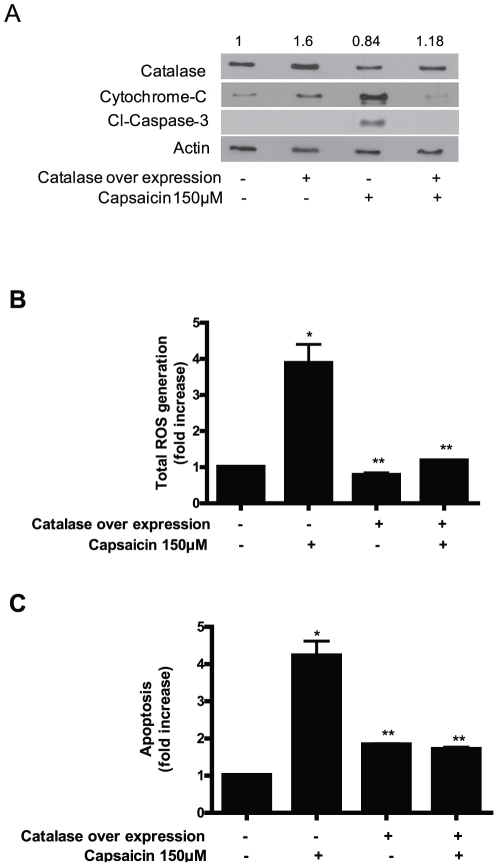
We evaluated the mechanism of capsaicin-mediated ROS generation in pancreatic cancer cells. The generation of ROS was about 4-6 fold more as compared to control and as early as 1 h after capsaicin treatment in BxPC-3 and AsPC-1 cells but not in normal HPDE-6 cells. The generation of ROS was inhibited by catalase and EUK-134. To delineate the mechanism of ROS generation, enzymatic activities of mitochondrial complex-I and complex-III were determined in the pure mitochondria. Our results shows that capsaicin inhibits about 2.5-9% and 5-20% of complex-I activity and 8-75% of complex-III activity in BxPC-3 and AsPC-1 cells respectively, which was attenuable by SOD, catalase and EUK-134. On the other hand, capsaicin treatment failed to inhibit complex-I or complex-III activities in normal HPDE-6 cells. The ATP levels were drastically suppressed by capsaicin treatment in both BxPC-3 and AsPC-1 cells and attenuated by catalase or EUK-134. Oxidation of mitochondria-specific cardiolipin was substantially higher in capsaicin treated cells. BxPC-3 derived ρ(0) cells, which lack mitochondrial DNA, were completely resistant to capsaicin mediated ROS generation and apoptosis. Our results reveal that the release of cytochrome c and cleavage of both caspase-9 and caspase-3 due to disruption of mitochondrial membrane potential were significantly blocked by catalase and EUK-134 in BxPC-3 cells. Our results further demonstrate that capsaicin treatment not only inhibit the enzymatic activity and expression of SOD, catalase and glutathione peroxidase but also reduce glutathione level. Over-expression of catalase by transient transfection protected the cells from capsaicin-mediated ROS generation and apoptosis. Furthermore, tumors from mice orally fed with 2.5 mg/kg capsaicin show decreased SOD activity and an increase in GSSG/GSH levels as compared to controls. Taken together, our results suggest the involvement of mitochondrial complex-I and III in capsaicin-mediated ROS generation and decrease in antioxidant levels resulting in severe mitochondrial damage leading to apoptosis in pancreatic cancer cells.
我们评估了辣椒素介导的胰腺癌细胞中 ROS 生成的机制。与对照相比,BxPC-3 和 AsPC-1 细胞中 ROS 的生成增加了约 4-6 倍,而在正常 HPDE-6 细胞中则没有。ROS 的生成被 CAT 和 EUK-134 抑制。为了阐明 ROS 生成的机制,在纯线粒体中测定了线粒体复合物-I 和复合物-III 的酶活性。我们的结果表明,辣椒素分别抑制 BxPC-3 和 AsPC-1 细胞中复合物-I 活性的 2.5-9%和 5-20%,以及复合物-III 活性的 8-75%,这些抑制作用可被 SOD、CAT 和 EUK-134 减弱。另一方面,辣椒素处理未能抑制正常 HPDE-6 细胞中的复合物-I 或复合物-III 活性。在 BxPC-3 和 AsPC-1 细胞中,辣椒素处理显著抑制了 ATP 水平,而 CAT 或 EUK-134 则减弱了这一作用。辣椒素处理后,线粒体特异性心磷脂的氧化明显升高。缺乏线粒体 DNA 的 BxPC-3 来源的 ρ(0)细胞对辣椒素介导的 ROS 生成和凋亡完全耐受。我们的结果表明,CAT 和 EUK-134 显著阻断了 BxPC-3 细胞中线粒体膜电位破坏导致的细胞色素 c 释放和 caspase-9 和 caspase-3 的裂解。我们的结果进一步表明,辣椒素处理不仅抑制 SOD、CAT 和谷胱甘肽过氧化物酶的酶活性和表达,还降低了谷胱甘肽水平。瞬时转染过表达 CAT 可保护细胞免受辣椒素介导的 ROS 生成和凋亡。此外,与对照组相比,口服给予 2.5mg/kg 辣椒素的小鼠肿瘤中的 SOD 活性降低,GSSG/GSH 水平升高。综上所述,我们的结果表明,线粒体复合物-I 和 III 参与了辣椒素介导的 ROS 生成,抗氧化剂水平降低导致严重的线粒体损伤,从而导致胰腺癌细胞凋亡。