Department of Chemistry and Chemical Biology, The University of New Mexico, MSC03 2060, 1 University of New Mexico, Albuquerque, New Mexico 87131-0001, USA.
J Am Chem Soc. 2011 Jun 29;133(25):9762-74. doi: 10.1021/ja109178q. Epub 2011 Jun 7.
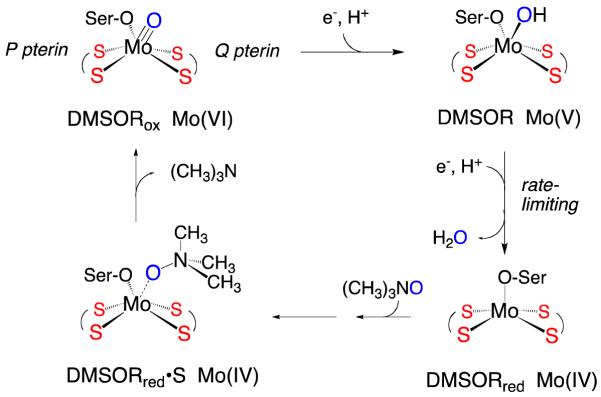
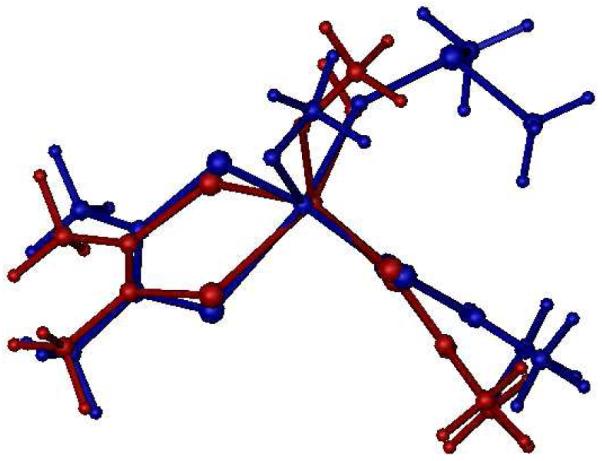
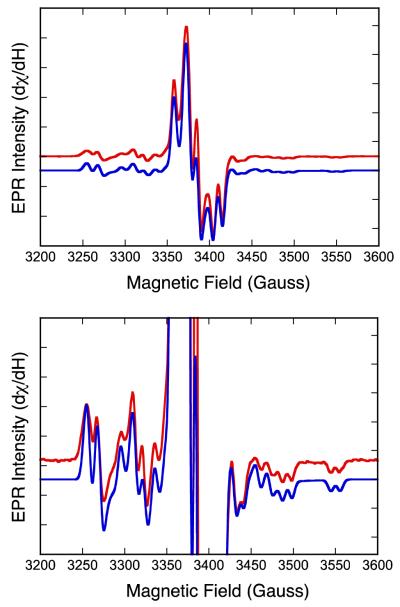
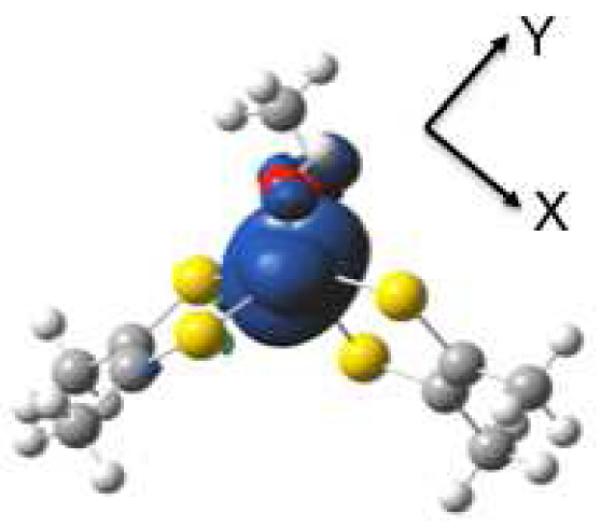
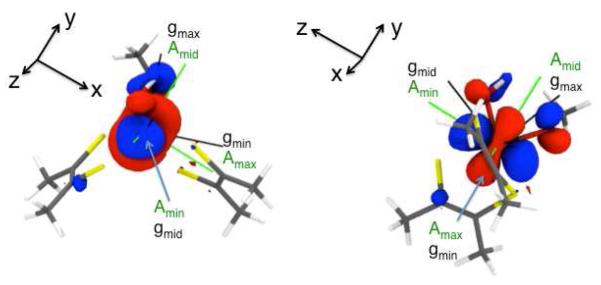
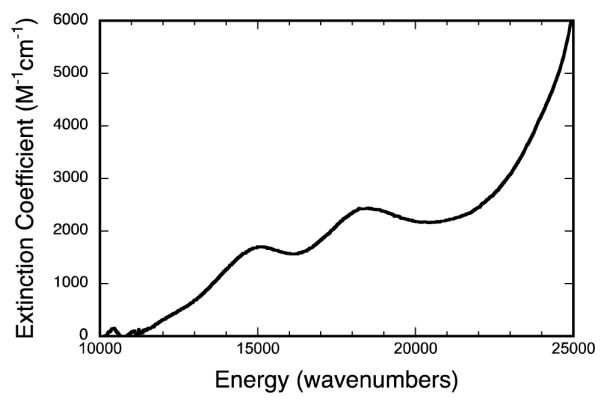
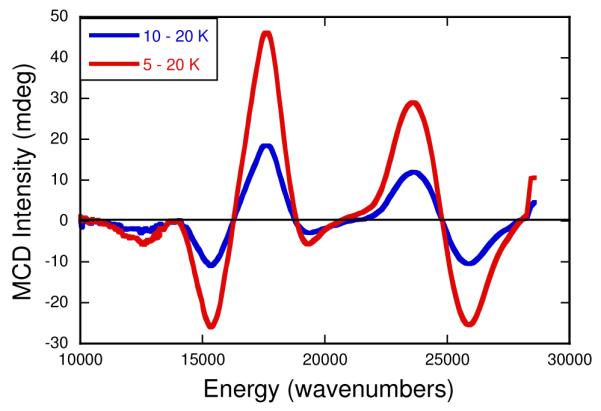
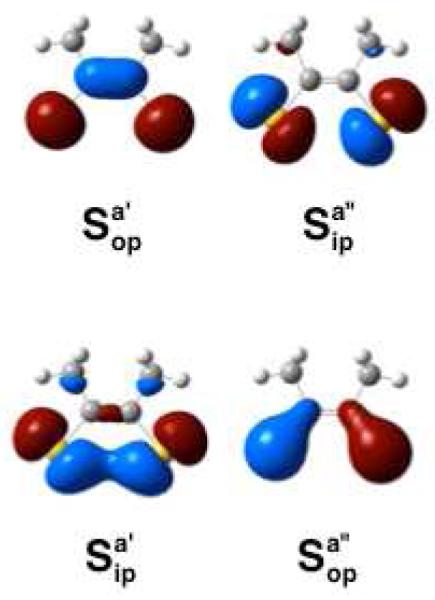
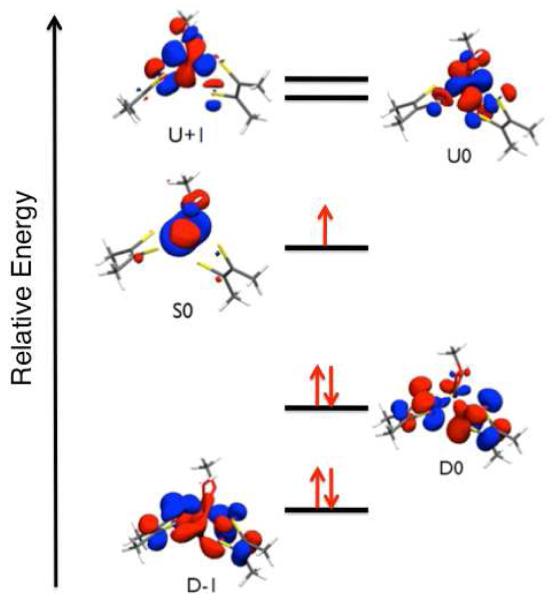
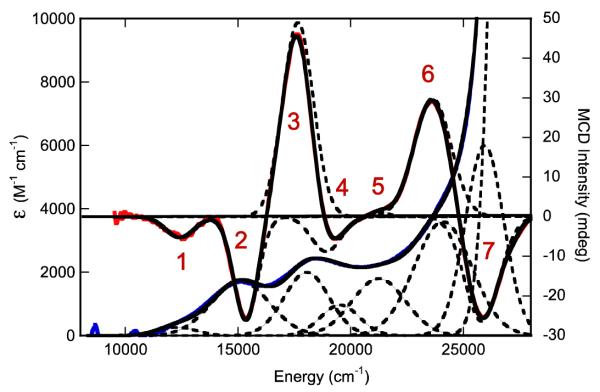
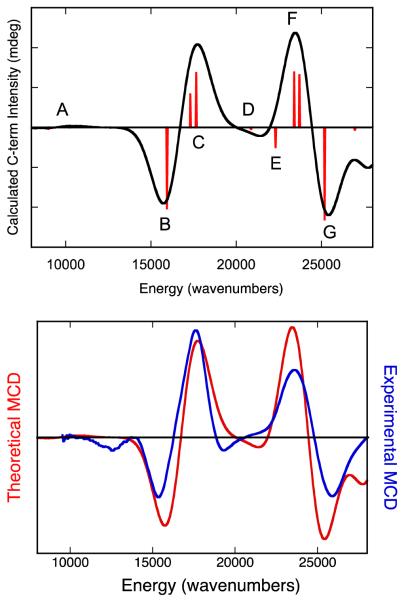
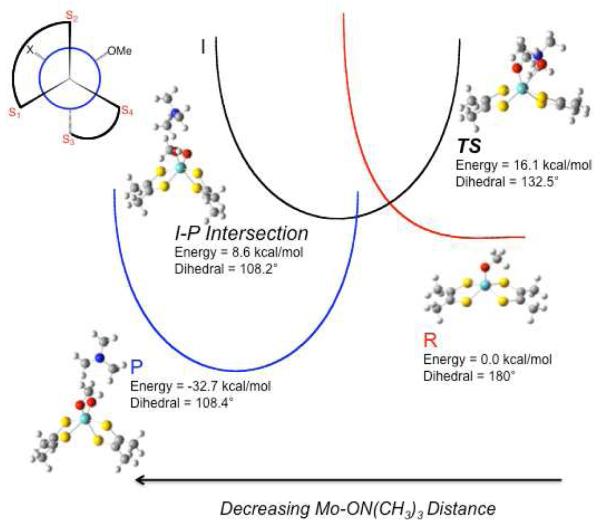
The electronic structure of a genuine paramagnetic des-oxo Mo(V) catalytic intermediate in the reaction of dimethyl sulfoxide reductase (DMSOR) with (CH(3))(3)NO has been probed by electron paramagnetic resonance (EPR), electronic absorption, and magnetic circular dichroism (MCD) spectroscopies. EPR spectroscopy reveals rhombic g- and A-tensors that indicate a low-symmetry geometry for this intermediate and a singly occupied molecular orbital that is dominantly metal centered. The excited-state spectroscopic data were interpreted in the context of electronic structure calculations, and this has resulted in a full assignment of the observed MCD and electronic absorption bands, a detailed understanding of the metal-ligand bonding scheme, and an evaluation of the Mo(V) coordination geometry and Mo(V)-S(dithiolene) covalency as it pertains to the stability of the intermediate and electron-transfer regeneration. Finally, the relationship between des-oxo Mo(V) and des-oxo Mo(IV) geometric and electronic structures is discussed relative to the reaction coordinate in members of the DMSOR enzyme family.
通过电子顺磁共振(EPR)、电子吸收和磁圆二色性(MCD)光谱学研究了二甲基亚砜还原酶(DMSOR)与(CH(3))(3)NO 反应中真正顺磁脱氧 Mo(V) 催化中间物的电子结构。EPR 光谱揭示了菱形 g- 和 A-张量,表明该中间物具有低对称性几何形状和主要以金属为中心的单占据分子轨道。根据电子结构计算对激发态光谱数据进行了解释,从而对观察到的 MCD 和电子吸收带进行了完整的分配,详细了解了金属-配体键合方案,并评估了 Mo(V) 配位几何形状和 Mo(V)-S(二硫烯)共价性,以确定中间物的稳定性和电子转移再生。最后,讨论了 DMSOR 酶家族成员中反应坐标中脱氧 Mo(V) 和脱氧 Mo(IV) 几何和电子结构之间的关系。