Ali Shahbaz, Riazuddin S Amer, Shahzadi Amber, Nasir Idrees A, Khan Shaheen N, Husnain Tayyab, Akram Javed, Sieving Paul A, Hejtmancik J Fielding, Riazuddin Sheikh
National Centre of Excellence in Molecular Biology, University of the Punjab, Lahore, Pakistan.
Mol Vis. 2011;17:1373-80. Epub 2011 May 25.
This study was designed to identify pathogenic mutations causing autosomal recessive retinitis pigmentosa (RP) in consanguineous Pakistani families.
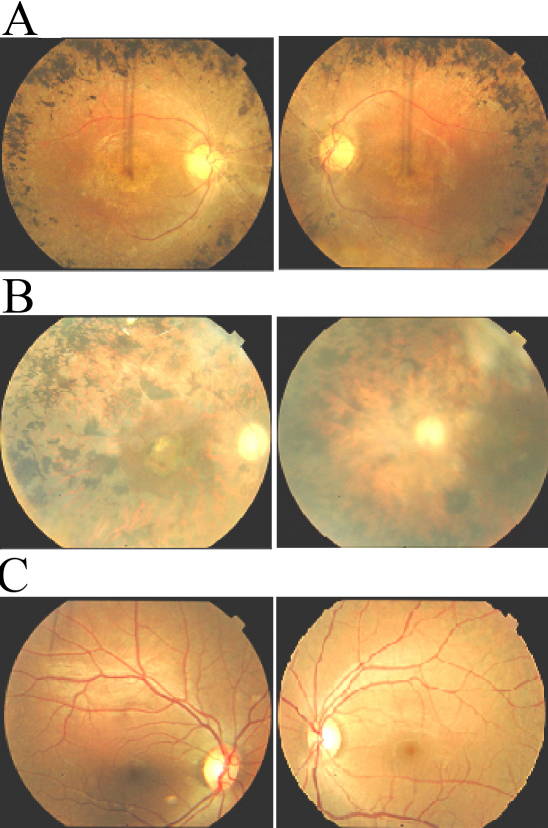
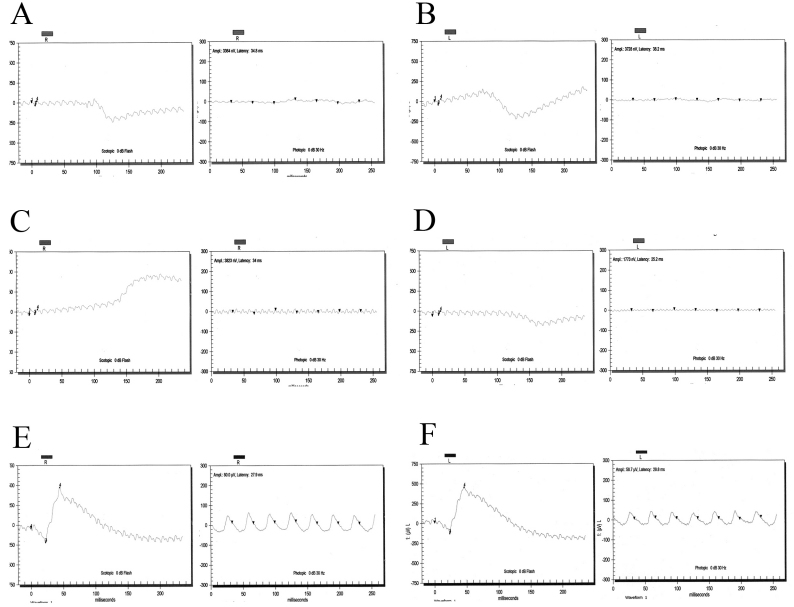
Two consanguineous families affected with autosomal recessive RP were identified from the Punjab Province of Pakistan. All affected individuals underwent a thorough ophthalmologic examination. Blood samples were collected, and genomic DNAs were extracted. Exclusion analysis was completed, and two-point LOD scores were calculated. Bidirectional sequencing of the β subunit of phosphodiesterase 6 (PDE6β) was completed.
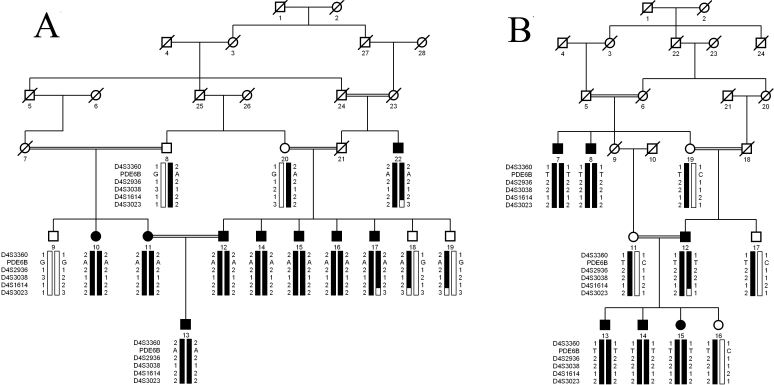
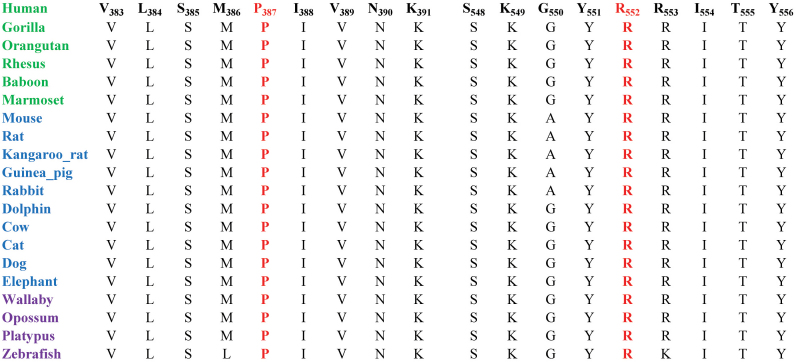
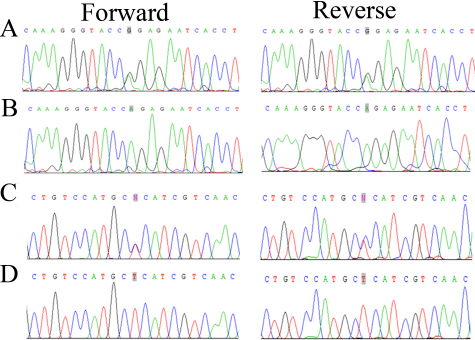
During exclusion analyses both families localized to chromosome 4p, harboring PDE6β, a gene previously associated with autosomal recessive RP. Sequencing of PDE6β identified missense mutations: c.1655G>A (p.R552Q) and c.1160C>T (p.P387L) in families PKRP161 and PKRP183, respectively. Bioinformatic analyses suggested that both mutations are deleterious for the native three-dimensional structure of the PDE6β protein.
These results strongly suggest that mutations in PDE6β are responsible for the disease phenotype in the consanguineous Pakistani families.
本研究旨在鉴定导致巴基斯坦近亲家庭中常染色体隐性遗传性视网膜色素变性(RP)的致病突变。
从巴基斯坦旁遮普省识别出两个患有常染色体隐性RP的近亲家庭。所有受影响个体均接受了全面的眼科检查。采集血样并提取基因组DNA。完成排除分析并计算两点连锁分析(LOD)分数。完成磷酸二酯酶6(PDE6β)β亚基的双向测序。
在排除分析过程中,两个家庭均定位于4号染色体短臂,该区域含有PDE6β基因,此基因先前已与常染色体隐性RP相关联。PDE6β测序分别在PKRP161和PKRP183家庭中鉴定出错义突变:c.1655G>A(p.R552Q)和c.1160C>T(p.P387L)。生物信息学分析表明,这两种突变对PDE6β蛋白的天然三维结构均有害。
这些结果有力地表明,PDE6β突变是导致巴基斯坦近亲家庭中疾病表型的原因。