Department of Mathematics, Purdue University, West Lafayette, Indiana 47906, USA.
AAPS J. 2011 Sep;13(3):427-37. doi: 10.1208/s12248-011-9284-7. Epub 2011 Jun 8.
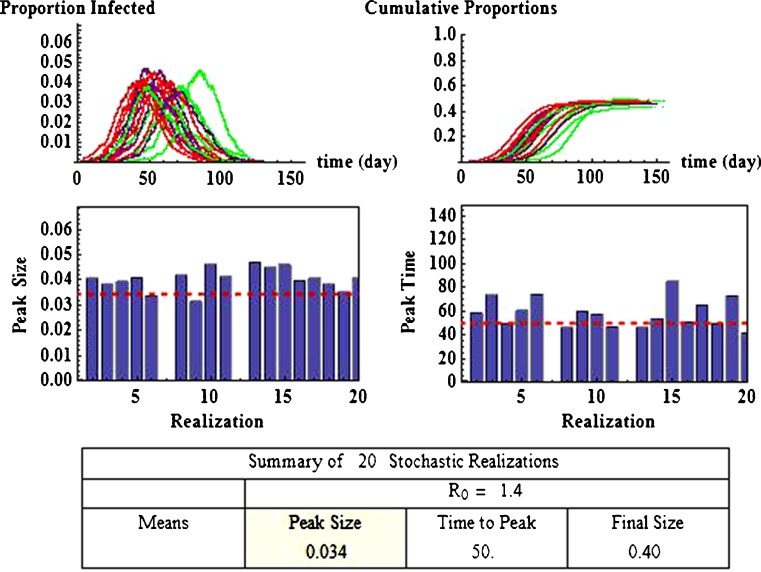
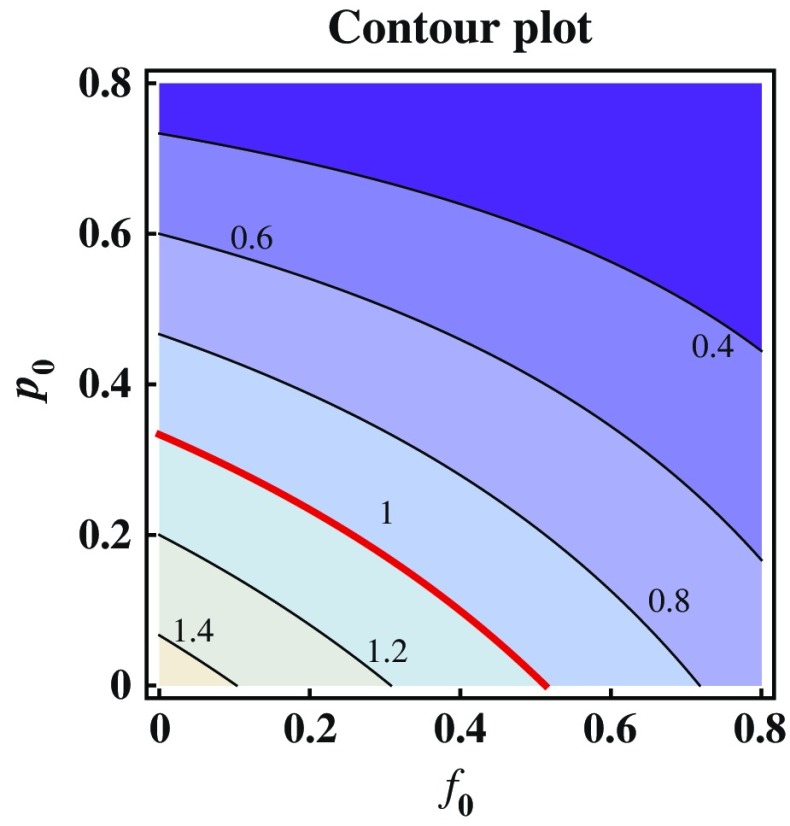
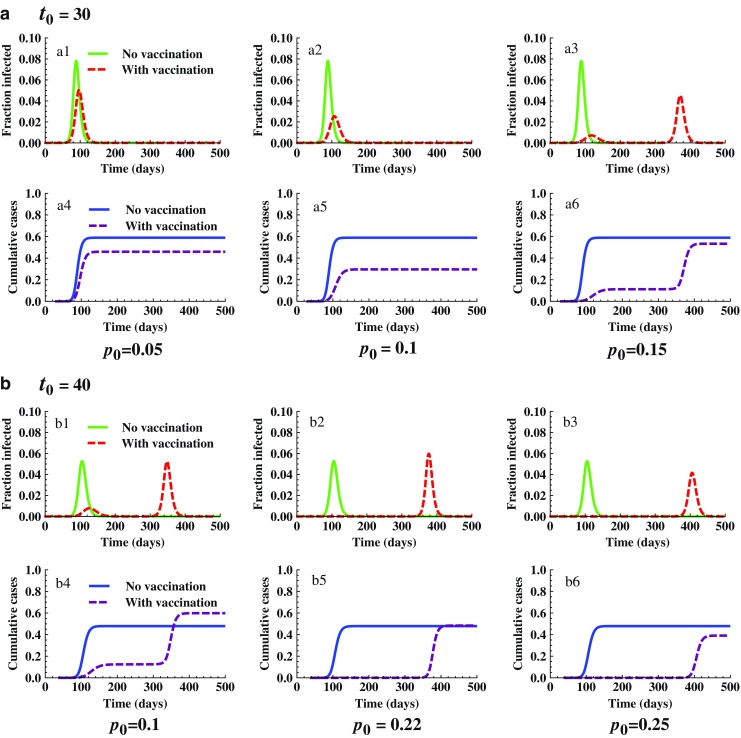
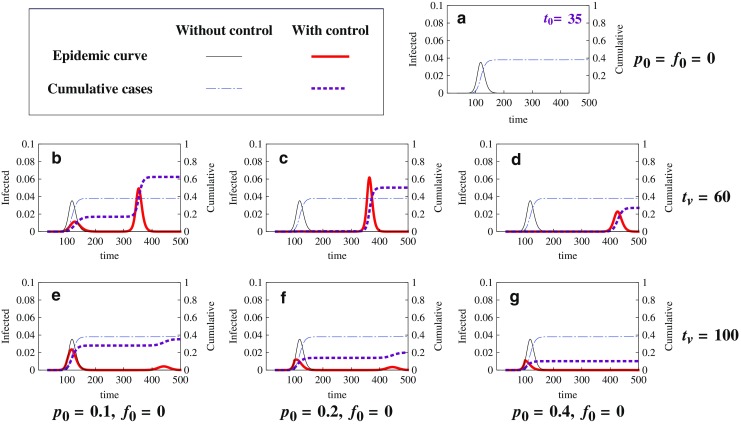
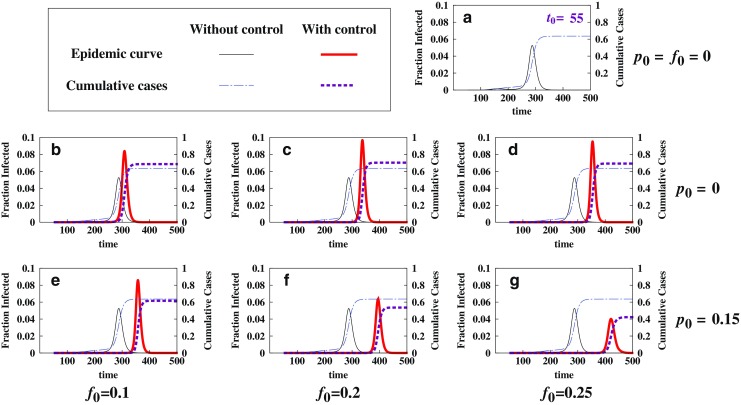
In this paper, we demonstrate the uses of some simple mathematical models for the study of disease dynamics in a pandemic situation with a focus on influenza. These models are employed to evaluate the effectiveness of various control programs via vaccination and antiviral treatment. We use susceptible-, infectious-, recovered-type epidemic models consisting of ordinary differential equations. These models allow us to derive threshold conditions that can be used to assess the effectiveness of vaccine and drug use and to determine disease outcomes. Simulations are helpful for examining the potential consequences of control options under different scenarios. Particularly, results from models with constant parameters and models with time-dependent parameter functions are compared, demonstrating the significant differences in model outcomes. Results suggest that the effectiveness of vaccination and drug treatment can be very sensitive to factors including the time of introduction of the pathogen into the population, the beginning time of control programs, and the levels of control measures. More importantly, in some cases, the benefits of vaccination and antiviral use might be significantly compromised if these control programs are not designed appropriately. Mathematical models can be very useful for understanding the effects of various factors on the spread and control of infectious diseases. Particularly, the models can help identify potential adverse effects of vaccination and drug treatment in the case of pandemic influenza.
在本文中,我们展示了一些简单的数学模型在大流行情况下研究疾病动态的用途,重点是流感。这些模型用于通过疫苗接种和抗病毒治疗来评估各种控制计划的有效性。我们使用由常微分方程组成的易感型、感染型、恢复型传染病模型。这些模型使我们能够推导出可以用来评估疫苗和药物使用效果以及确定疾病结果的阈值条件。模拟有助于检查不同情况下控制选项的潜在后果。特别是,比较了具有常数参数的模型和具有时变参数函数的模型的结果,表明模型结果存在显著差异。结果表明,疫苗接种和药物治疗的效果可能对包括病原体进入人群的时间、控制计划开始时间以及控制措施水平等因素非常敏感。更重要的是,如果这些控制计划设计不当,疫苗接种和抗病毒使用的益处可能会受到严重影响。数学模型对于理解各种因素对传染病传播和控制的影响非常有用。特别是,在大流行流感的情况下,模型可以帮助识别疫苗接种和药物治疗的潜在不利影响。