Department of Radiation Oncology, Washington University School of Medicine, 4921 Parkview Place, Saint Louis MO 63110, USA.
Radiat Oncol. 2011 Jun 9;6:69. doi: 10.1186/1748-717X-6-69.
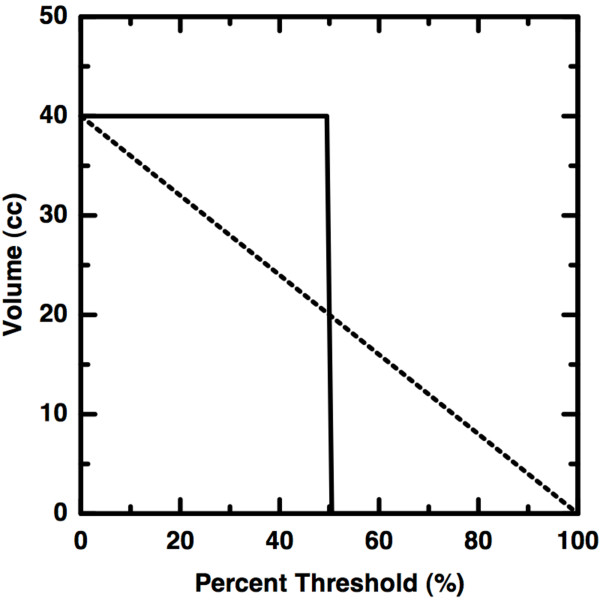
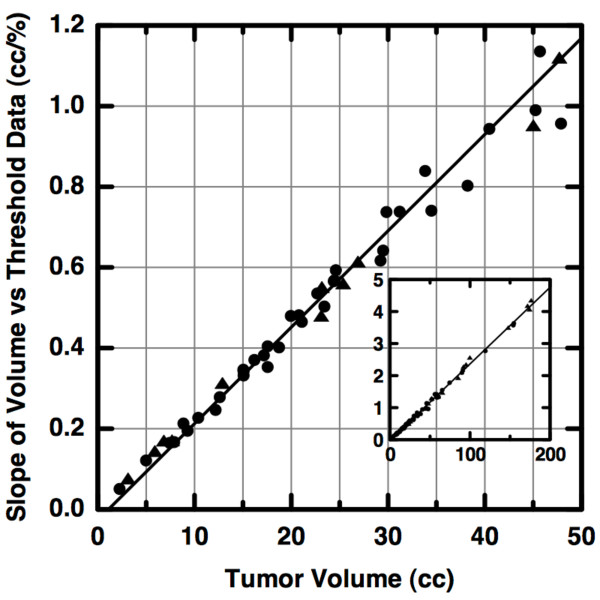
A previous study evaluated the intra-tumoral heterogeneity observed in the uptake of F-18 fluorodeoxyglucose (FDG) in pre-treatment positron emission tomography (PET) scans of cancers of the uterine cervix as an indicator of disease outcome. This was done via a novel statistic which ostensibly measured the spatial variations in intra-tumoral metabolic activity. In this work, we argue that statistic is intrinsically non-spatial, and that the apparent delineation between unsuccessfully- and successfully-treated patient groups via that statistic is spurious.
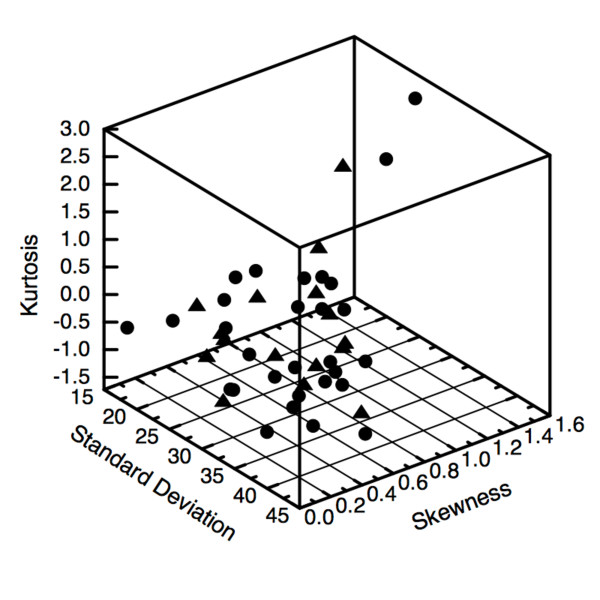
We first offer a straightforward mathematical demonstration of our argument. Next, we recapitulate an assiduous re-analysis of the originally published data which was derived from FDG-PET imagery. Finally, we present the results of a principal component analysis of FDG-PET images similar to those previously analyzed.
We find that the previously published measure of intra-tumoral heterogeneity is intrinsically non-spatial, and actually is only a surrogate for tumor volume. We also find that an optimized linear combination of more canonical heterogeneity quantifiers does not predict disease outcome.
Current measures of intra-tumoral metabolic activity are not predictive of disease outcome as has been claimed previously. The implications of this finding are: clinical categorization of patients based upon these statistics is invalid; more sophisticated, and perhaps innately-geometric, quantifications of metabolic activity are required for predicting disease outcome.
先前的一项研究评估了宫颈癌患者治疗前正电子发射断层扫描(PET)中 F-18 氟脱氧葡萄糖(FDG)摄取的肿瘤内异质性,作为疾病结果的一个指标。这是通过一种新的统计方法来实现的,该方法显然测量了肿瘤内代谢活性的空间变化。在这项工作中,我们认为该统计方法本质上是非空间的,并且通过该统计方法对治疗成功和不成功的患者组进行的明显划分是虚假的。
我们首先提供一个简单的数学证明来支持我们的论点。其次,我们对最初发表的数据进行了认真的重新分析,这些数据是从 FDG-PET 图像中得出的。最后,我们展示了类似于之前分析的 FDG-PET 图像的主成分分析结果。
我们发现,先前发表的肿瘤内异质性测量方法本质上是非空间的,实际上只是肿瘤体积的替代物。我们还发现,对更典型的异质性量化指标进行优化线性组合并不能预测疾病结果。
正如之前所声称的,目前测量肿瘤内代谢活性的方法并不能预测疾病结果。这一发现的意义在于:基于这些统计数据对患者进行临床分类是无效的;需要更复杂、可能是内在几何的代谢活性量化方法来预测疾病结果。