Department of Medical Oncology, Dana-Farber Cancer Institute, Boston, MA 02115, USA.
Leukemia. 2011 Oct;25(10):1610-9. doi: 10.1038/leu.2011.120. Epub 2011 Jun 10.
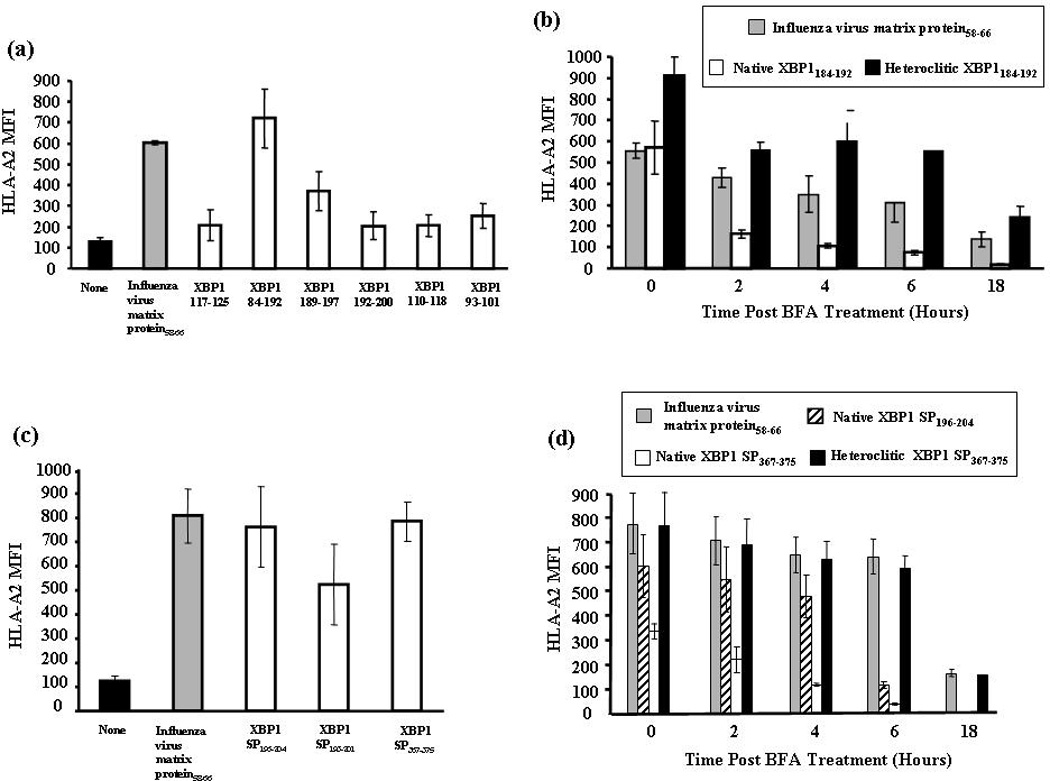
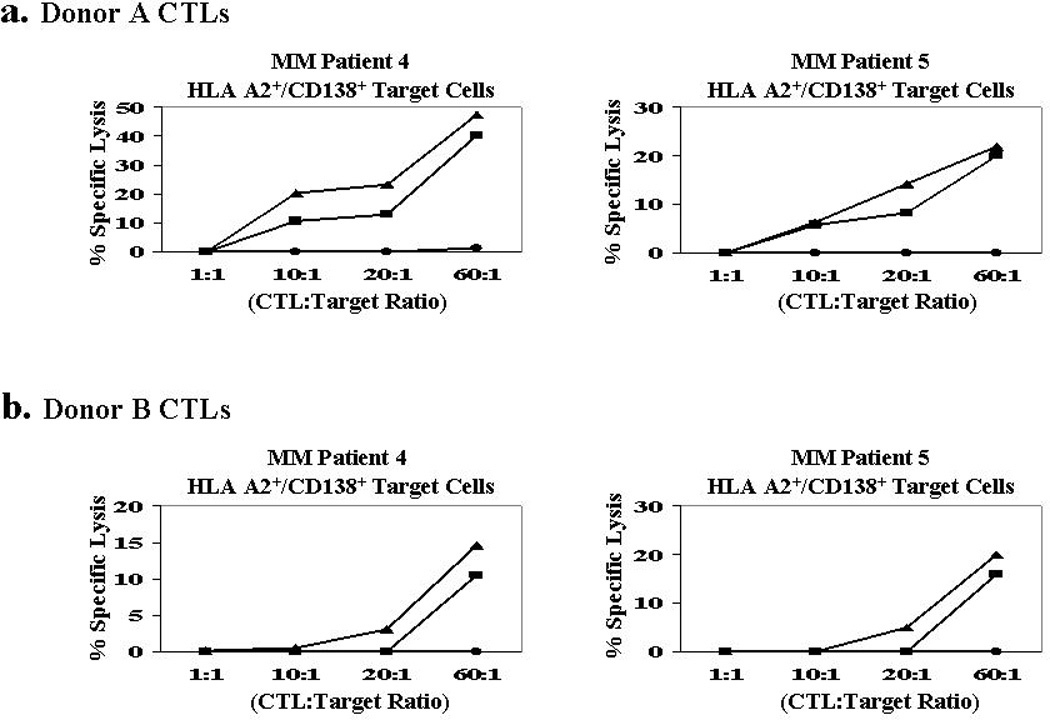
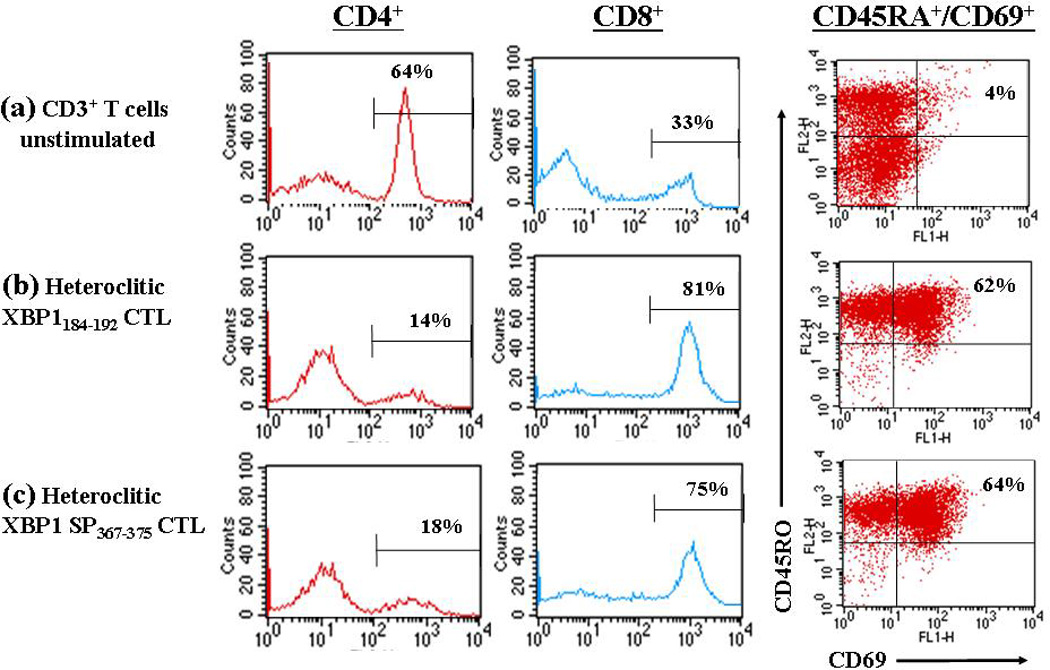
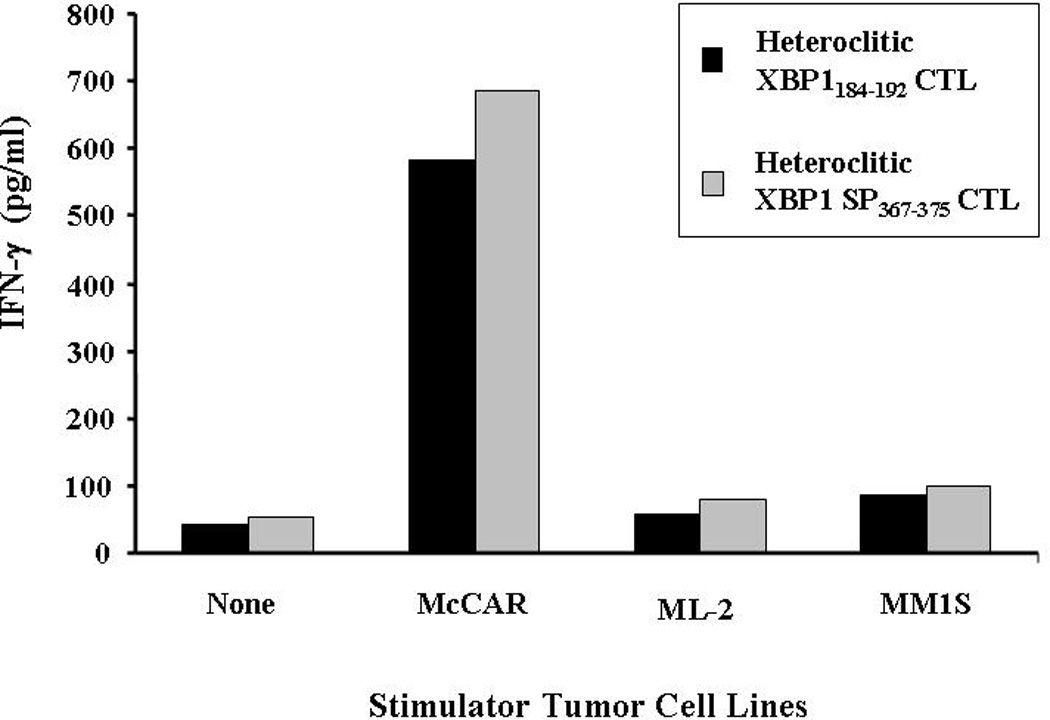
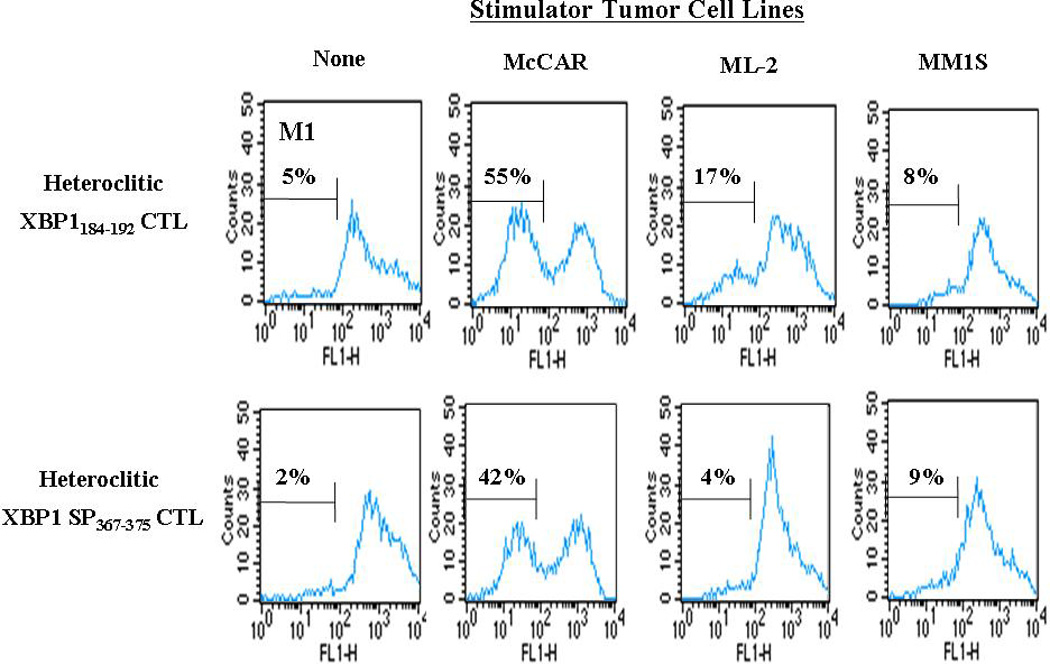
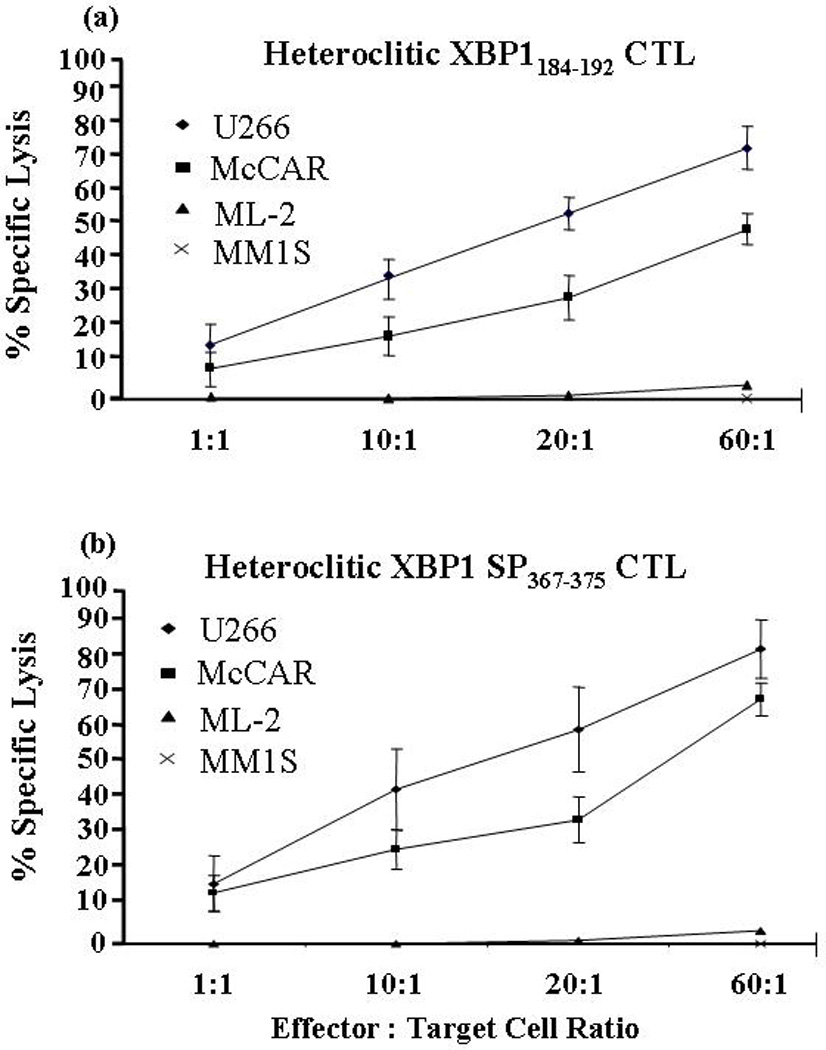
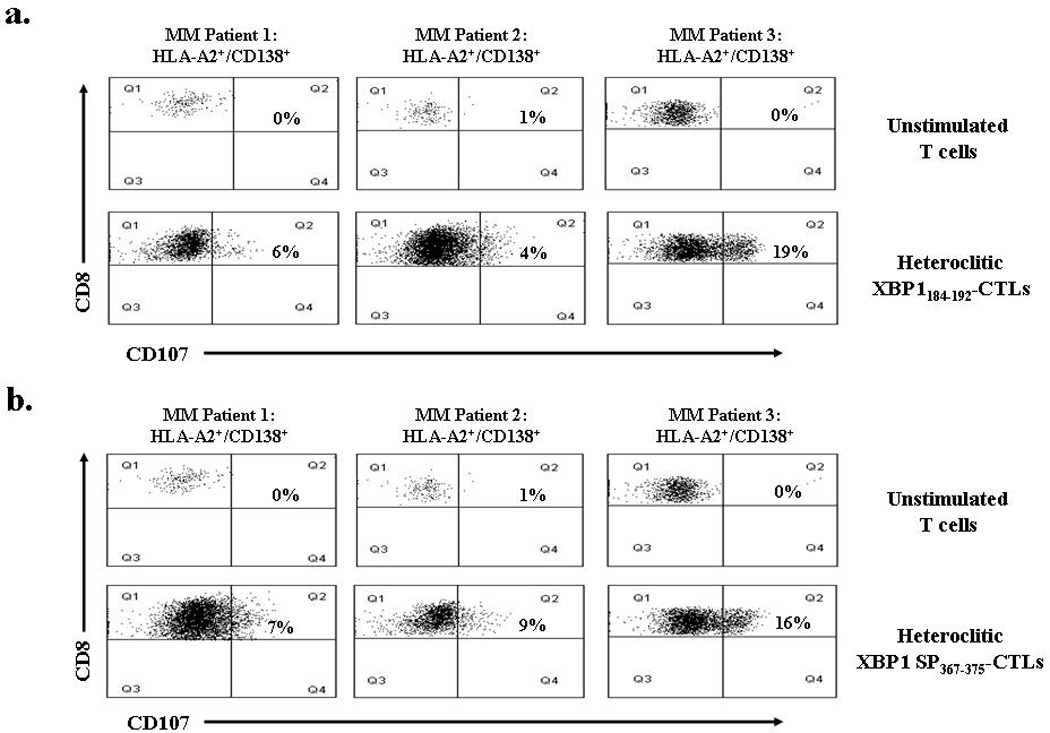
The purpose of these studies was to identify human leukocyte antigen (HLA)-A2(+) immunogenic peptides derived from XBP1 antigens to induce a multiple myeloma (MM)-specific immune response. Six native peptides from non-spliced XBP1 antigen and three native peptides from spliced XBP1 antigen were selected and evaluated for their HLA-A2 specificity. Among them, XBP1(184-192), XBP1 SP(196-204) and XBP1 SP(367-375) peptides showed the highest level of binding affinity, but not stability to HLA-A2 molecules. Novel heteroclitic XBP1 peptides, YISPWILAV or YLFPQLISV, demonstrated a significant improvement in HLA-A2 stability from their native XBP1(184-192) or XBP1 SP(367-375) peptide, respectively. Cytotoxic T lymphocytes generated by repeated stimulation of CD3(+) T cells with each HLA-A2-specific heteroclitic peptide showed an increased percentage of CD8(+) (cytotoxic) and CD69(+)/CD45RO(+) (activated memory) T cells and a lower percentage of CD4(+) (helper) and CD45RA(+)/CCR7(+) (naïve) T cells, which were distinct from the control T cells. Functionally, the cytotoxic T lymphocytes (CTL) demonstrated MM-specific and HLA-A2-restricted proliferation, interferon-γ secretion and cytotoxic activity in response to MM cell lines and importantly, cytotoxicity against primary MM cells. These data demonstrate the distinct immunogenic characteristics of unique heteroclitic XBP1 peptides, which induce MM-specific CTLs and highlights their potential application for immunotherapy to treat the patients with MM or its pre-malignant condition.
这些研究的目的是鉴定来自 XBP1 抗原的人类白细胞抗原 (HLA)-A2(+)免疫原性肽,以诱导多发性骨髓瘤 (MM) 特异性免疫反应。选择了来自非剪接 XBP1 抗原的 6 个天然肽和来自剪接 XBP1 抗原的 3 个天然肽,并评估它们对 HLA-A2 的特异性。其中,XBP1(184-192)、XBP1 SP(196-204)和 XBP1 SP(367-375)肽显示出最高水平的结合亲和力,但对 HLA-A2 分子的稳定性较低。新型杂合 XBP1 肽 YISPWILAV 或 YLFPQLISV,与它们的天然 XBP1(184-192)或 XBP1 SP(367-375)肽相比,显著提高了 HLA-A2 的稳定性。用每种 HLA-A2 特异性杂合肽重复刺激 CD3(+)T 细胞产生的细胞毒性 T 淋巴细胞显示出 CD8(+)(细胞毒性)和 CD69(+)/CD45RO(+)(激活的记忆)T 细胞的百分比增加,而 CD4(+)(辅助)和 CD45RA(+)/CCR7(+)(幼稚)T 细胞的百分比降低,与对照 T 细胞明显不同。功能上,细胞毒性 T 淋巴细胞(CTL)在针对 MM 细胞系时表现出 MM 特异性和 HLA-A2 限制性增殖、干扰素-γ分泌和细胞毒性活性,重要的是,对原发性 MM 细胞的细胞毒性。这些数据表明独特的杂合 XBP1 肽具有独特的免疫原性特征,可诱导 MM 特异性 CTL,并突出了它们在治疗 MM 或其前恶性疾病患者的免疫治疗中的潜在应用。