VanZomeren-Dohm Adrienne, Sarro Joseph, Flannery Ellen, Duman-Scheel Molly
Department of Medical and Molecular Genetics, Indiana University School of Medicine, Raclin-Carmichael Hall, 1234 Notre Dame Ave, South Bend, IN 46617, USA.
BMC Dev Biol. 2011 Jun 14;11:41. doi: 10.1186/1471-213X-11-41.
Loss of heterozygosity at 18q, which includes the Deleted in Colorectal Cancer (DCC) gene, has been linked to many human cancers. However, it is unclear if loss of DCC is the specific underlying cause of these cancers. The Drosophila imaginal discs are excellent systems in which to study DCC function, as it is possible to model human tumors through the generation of somatic clones of cells bearing multiple genetic lesions. Here, these attributes of the fly system were utilized to investigate the potential tumor suppressing functions of the Drosophila DCC homologue frazzled (fra) during eye-antennal disc development.
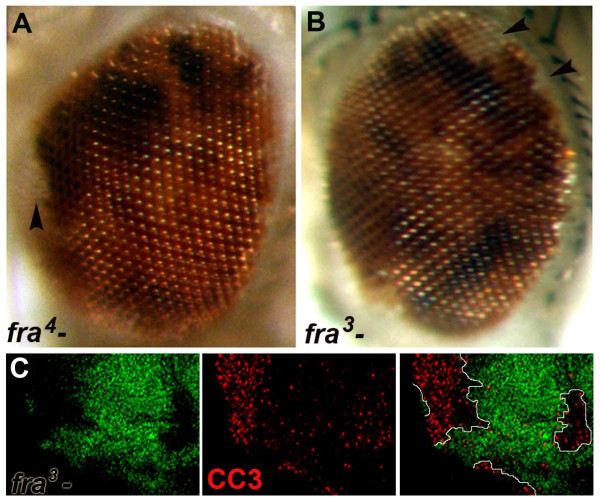
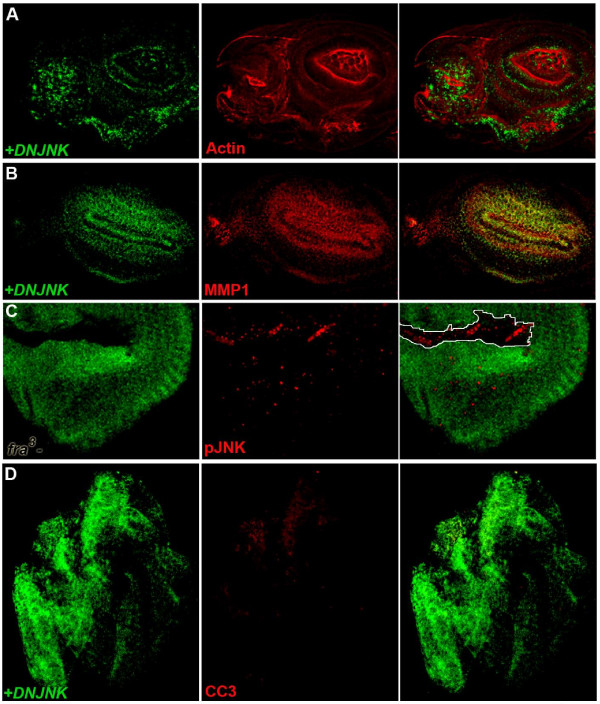
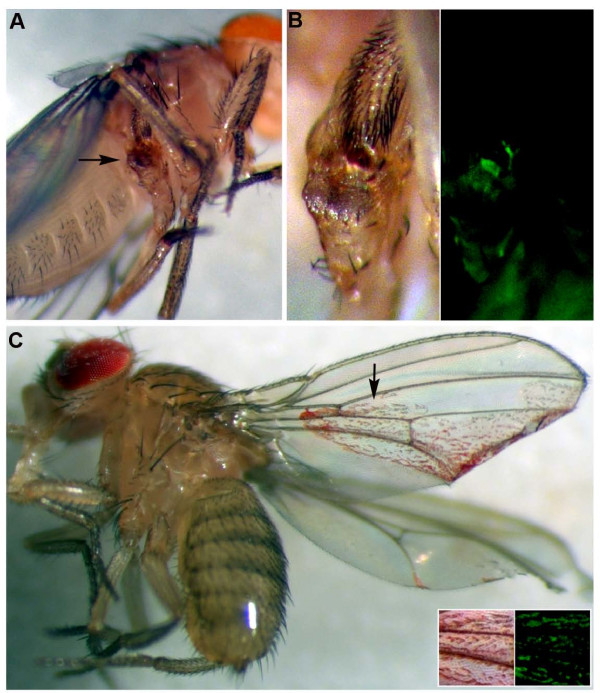
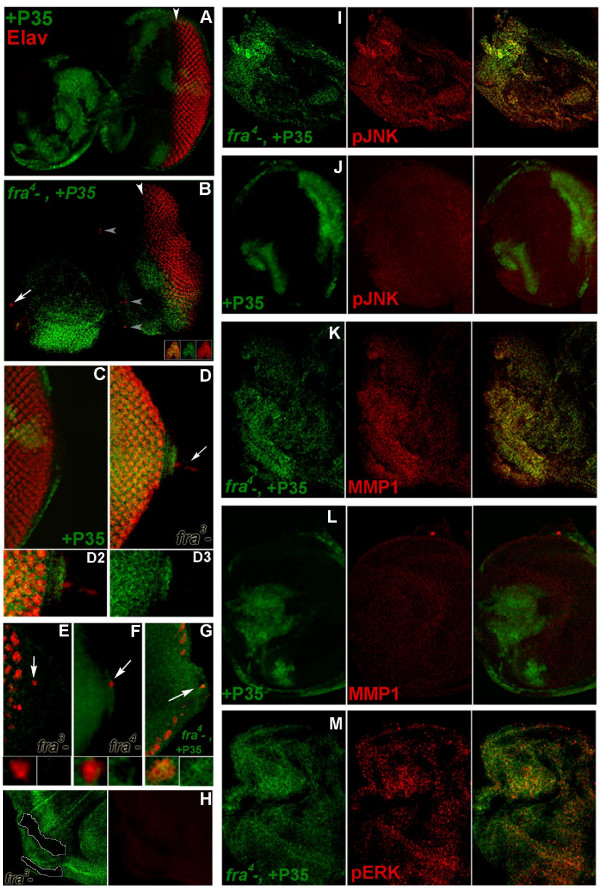
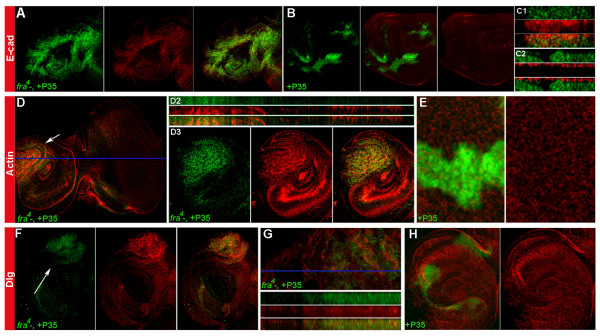
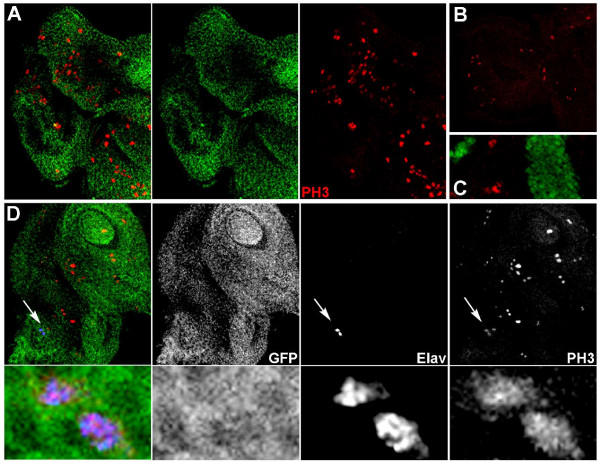
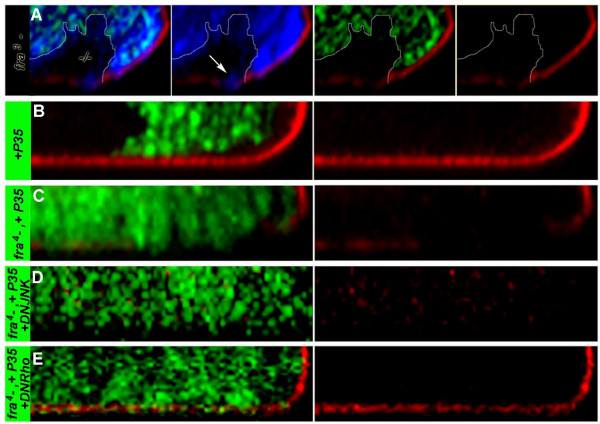
Most fra loss of function clones are eliminated during development. However, when mutant clone cells generated in the developing eye were rescued from death, partially differentiated eye cells were found outside of the normal eye field, and in extreme cases distant sites of the body. Characterization of these cells during development indicates that fra mutant cells display characteristics of invasive tumor cells, including increased levels of phospho-ERK, phospho-JNK, and Mmp-1, changes in cadherin expression, remodeling of the actin cytoskeleton, and loss of polarity. Mutation of fra promotes basement membrane degradation and invasion which are repressed by inhibition of Rho1 signaling. Although inhibition of JNK signaling blocks invasive phenotypes in some metastatic cancer models in flies, blocking JNK signaling inhibits fra mutant cell death, thereby enhancing the fra mutant phenotype.
The results of this investigation provide the first direct link between point mutations in fra/DCC and metastatic phenotypes in an animal model and suggest that Fra functions as an invasive tumor suppressor during Drosophila development.
18号染色体长臂杂合性缺失,其中包括结直肠癌缺失基因(DCC),与多种人类癌症相关。然而,尚不清楚DCC缺失是否是这些癌症的具体潜在病因。果蝇成虫盘是研究DCC功能的优秀系统,因为通过产生带有多种基因损伤的体细胞克隆可以模拟人类肿瘤。在此,利用果蝇系统的这些特性来研究果蝇DCC同源物frazzled(fra)在眼触角盘发育过程中的潜在肿瘤抑制功能。
大多数功能缺失的fra克隆在发育过程中被消除。然而,当发育中的眼睛中产生的突变克隆细胞从死亡中被挽救时,在正常眼区之外发现了部分分化的眼细胞,在极端情况下,在身体的远处部位也有发现。对这些细胞在发育过程中的特征分析表明,fra突变细胞表现出侵袭性肿瘤细胞的特征,包括磷酸化ERK、磷酸化JNK和Mmp-1水平升高、钙黏蛋白表达变化、肌动蛋白细胞骨架重塑和极性丧失。fra突变促进基底膜降解和侵袭,而Rho1信号通路的抑制可抑制这种作用。虽然在果蝇的一些转移性癌症模型中,JNK信号通路的抑制可阻断侵袭性表型,但阻断JNK信号通路可抑制fra突变细胞死亡,从而增强fra突变表型。
本研究结果首次在动物模型中建立了fra/DCC点突变与转移表型之间的直接联系,并表明Fra在果蝇发育过程中作为一种侵袭性肿瘤抑制因子发挥作用。