Danish Headache Center and Department of Neurology, Faculty of Health Sciences, Glostrup Hospital, University of Copenhagen, Ndr. Ringvej 67, Glostrup, Denmark.
J Headache Pain. 2011 Oct;12(5):551-9. doi: 10.1007/s10194-011-0358-9. Epub 2011 Jun 17.
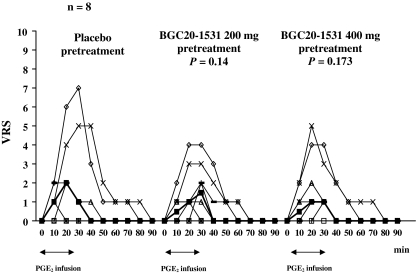
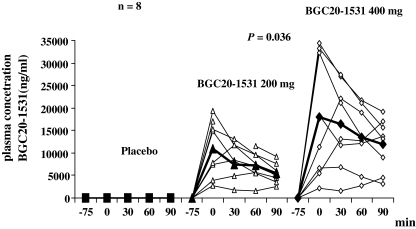
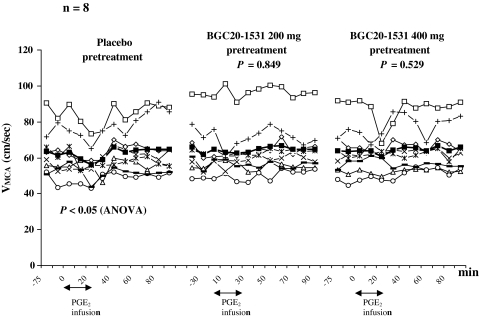
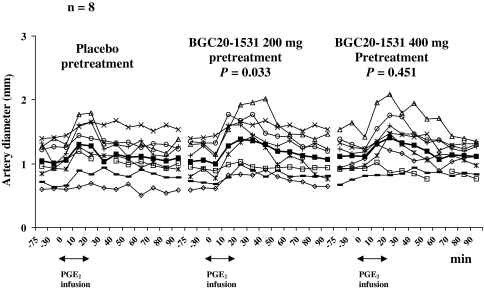
Using a human Prostaglandin E(2) (PGE(2)) model of headache, we examined whether a novel potent and selective EP(4) receptor antagonist, BGC20-1531, may prevent headache and dilatation of the middle cerebral (MCA) and superficial temporal artery (STA). In a three-way cross-over trial, eight healthy volunteers were randomly allocated to receive 200 and 400 mg BGC20-1531 and placebo, followed by a 25-min infusion of PGE(2). We recorded headache intensity on a verbal rating scale, MCA blood flow velocity and STA diameter. There was no difference in headache response or prevention of the dilation of the MCA or the STA (P > 0.05) with either dose of BGC20-1531 relative to placebo, although putative therapeutic exposures were not reached in all volunteers. In conclusion, these data suggest that the other EP receptors may be involved in PGE(2) induced headache and dilatation in normal subjects.
采用人类前列腺素 E2(PGE2)头痛模型,我们研究了新型强效和选择性 EP4 受体拮抗剂 BGC20-1531 是否可预防头痛和大脑中动脉(MCA)和颞浅动脉(STA)扩张。在三向交叉试验中,8 名健康志愿者随机分配接受 200 和 400mg BGC20-1531 和安慰剂,随后进行 PGE2 25 分钟输注。我们使用口头评分量表记录头痛强度,MCA 血流速度和 STA 直径。与安慰剂相比,两种剂量的 BGC20-1531 对头痛反应或 MCA 或 STA 扩张均无差异(P>0.05),尽管并非所有志愿者均达到潜在的治疗性暴露。总之,这些数据表明,其他 EP 受体可能参与了正常受试者中 PGE2 诱导的头痛和扩张。