School of Chemical and Biomedical Engineering, Nanyang Technological University, Singapore.
Biotechnol J. 2011 Jul;6(7):837-49. doi: 10.1002/biot.201100132. Epub 2011 Jun 16.
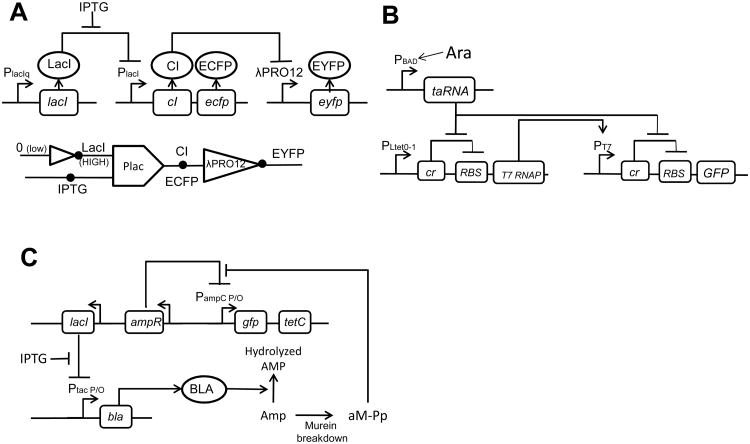
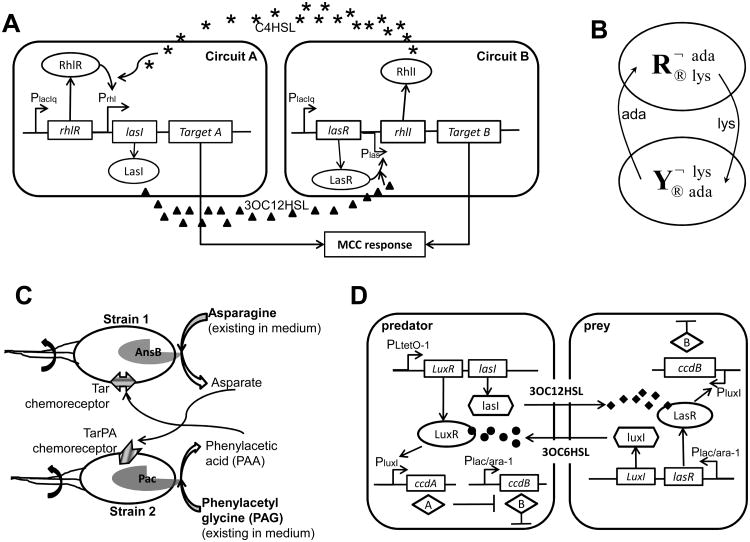
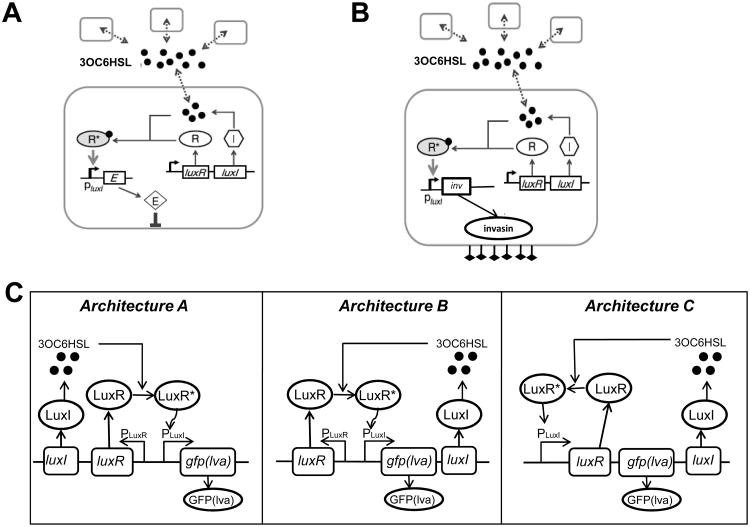
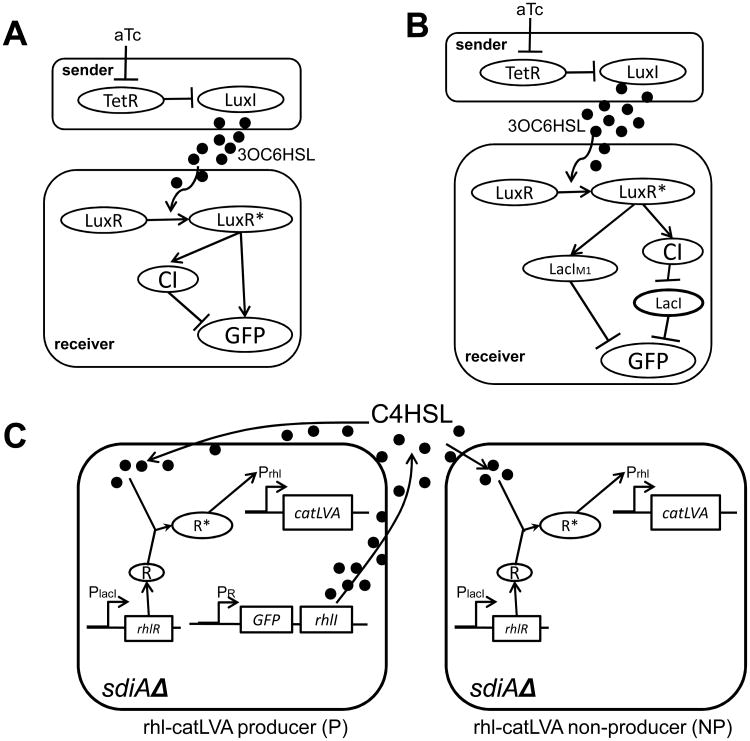
A major aim of synthetic biology is to program novel cellular behavior using engineered gene circuits. Early endeavors focused on building simple circuits that fulfill simple functions, such as logic gates, bistable toggle switches, and oscillators. These gene circuits have primarily focused on single-cell behaviors since they operate intracellularly. Thus, they are often susceptible to cell-cell variations due to stochastic gene expression. Cell-cell communication offers an efficient strategy to coordinate cellular behavior at the population level. To this end, we review recent advances in engineering cell-cell communication to achieve reliable population dynamics, spanning from communication within single species to multispecies, from one-way sender-receiver communication to two-way communication in synthetic microbial ecosystems. These engineered systems serve as well-defined model systems to better understand design principles of their naturally occurring counterparts and to facilitate novel biotechnology applications.
合成生物学的主要目标是使用工程基因电路来编程新型细胞行为。早期的努力集中在构建简单的电路,这些电路可以执行简单的功能,如逻辑门、双稳态切换开关和振荡器。这些基因电路主要关注单细胞行为,因为它们在细胞内起作用。因此,由于随机基因表达,它们经常容易受到细胞间变化的影响。细胞间通讯提供了一种在群体水平上协调细胞行为的有效策略。为此,我们综述了近年来在工程细胞间通讯方面的进展,以实现可靠的群体动力学,涵盖了从单一种群内的通讯到多物种、从单向发送器-接收器通讯到合成微生物生态系统中的双向通讯。这些工程系统作为定义明确的模型系统,有助于更好地理解其天然对应物的设计原则,并促进新的生物技术应用。