Department of Cellular Neurobiology, Graduate School of Medicine, University of Tokyo, Bunkyo-ku, Tokyo 113-0033, Japan.
Mol Brain. 2011 Jun 17;4:27. doi: 10.1186/1756-6606-4-27.
An episode of peripheral immune response may create long-lasting alterations in the neural network. Recent studies indicate a glial involvement in synaptic remodeling. Therefore it is postulated that both synaptic and glial changes could occur under the peripheral inflammation.
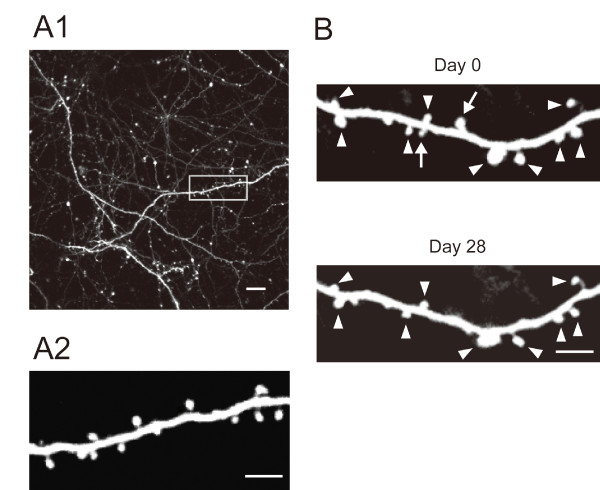
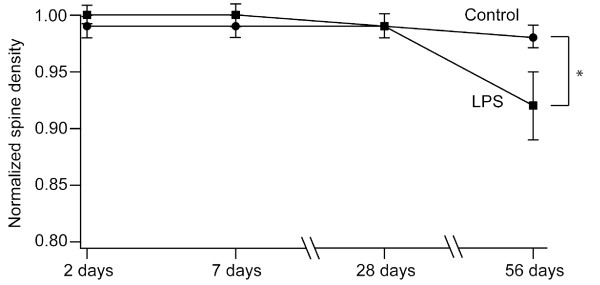
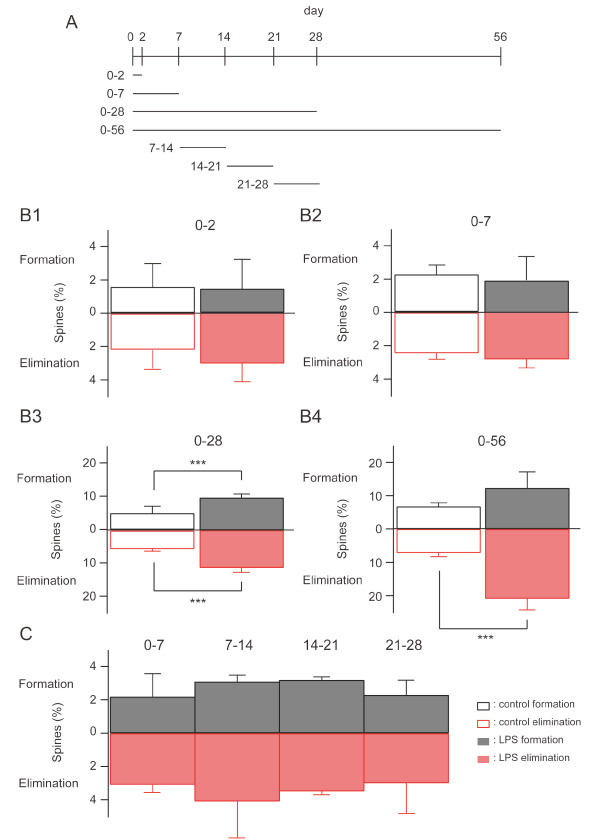
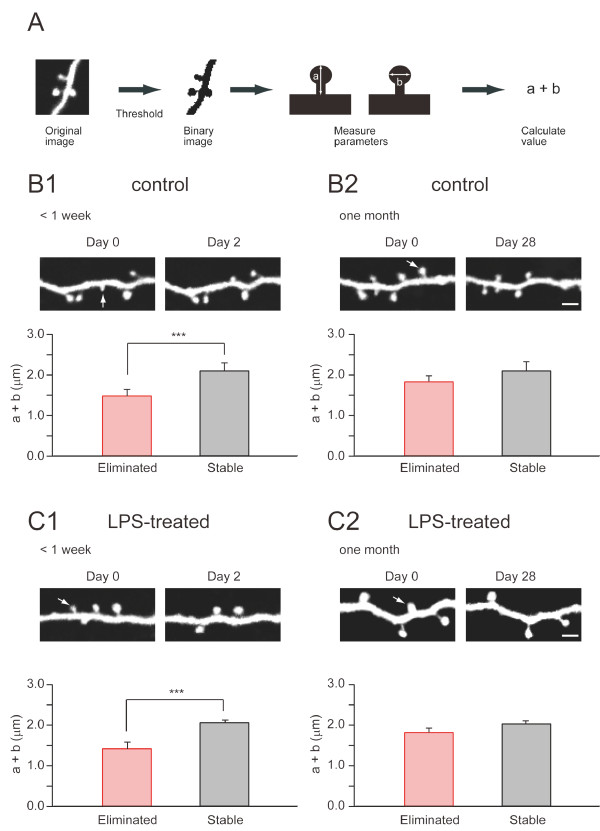
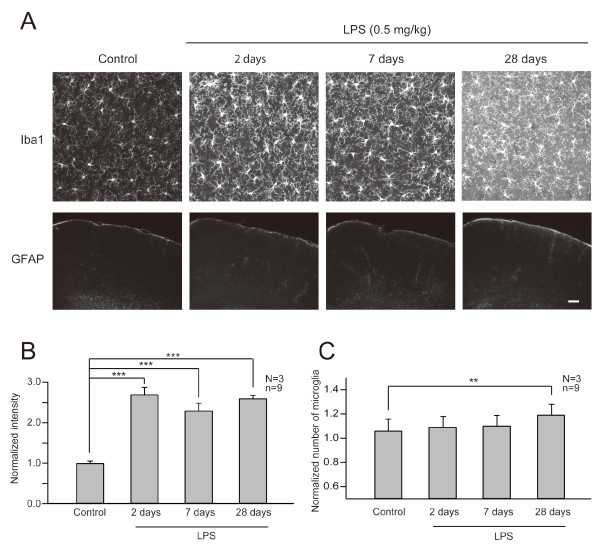
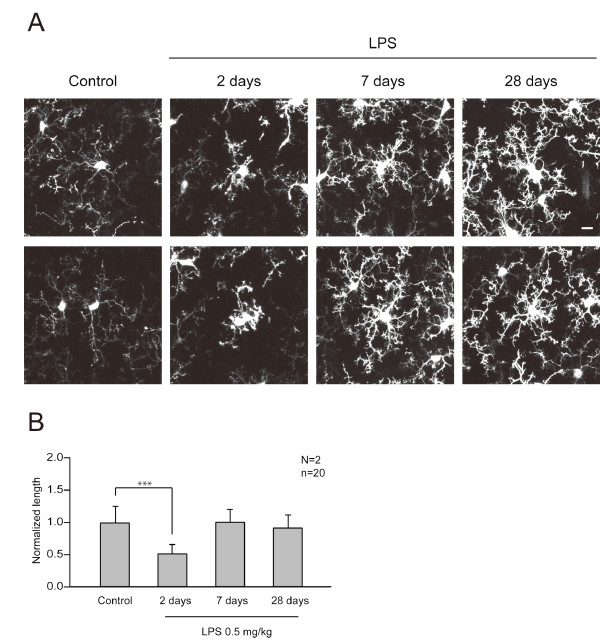
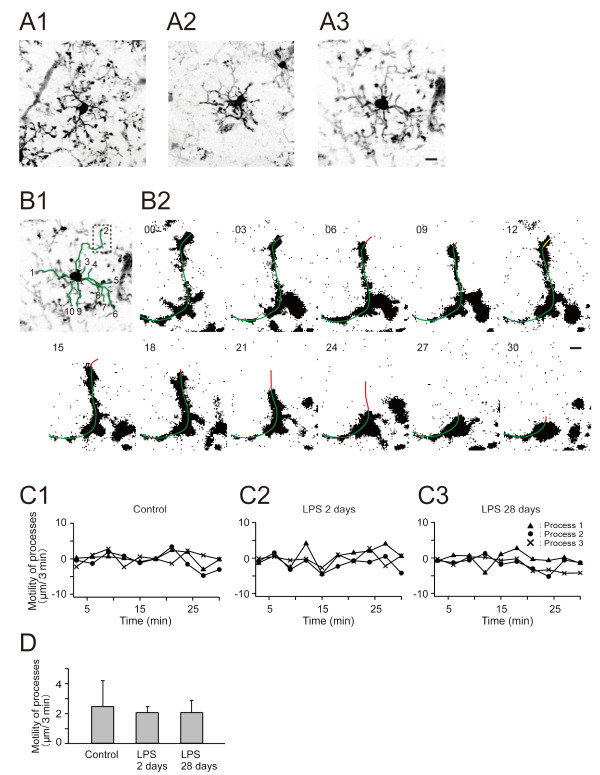
We tested this possibility by in vivo two-photon microscopy of dendritic spines after induction of a peripheral immune response by lipopolysaccharide (LPS) treatment of mice.We observed that the spines were less stable in LPS-treated mice. The accumulation of spine changes gradually progressed and remained low over a week after LPS treatment but became significantly larger at four weeks. Over eight weeks after LPS treatment, the fraction of eliminated spines amounted to 20% of the initial population and this persistent destabilization resulted in a reduction of the total spine density.We next evaluated glial activation by LPS administration. Activation of microglia was confirmed by a persistent increase of Iba1 immunoreactivity. Morphological changes in microglia were observed two days after LPS administration and were partially recovered within one week but sustained over a long time period.
These results indicate long-lasting aggravating effects of a single transient peripheral immune response on both spines and microglia. The parallel persistent alterations of both spine turnover and the state of microglia in vivo suggest the presence of a pathological mechanism that sustains the enhanced remodeling of neural networks weeks after peripheral immune responses. This pathological mechanism may also underlie long-lasting cognitive dysfunctions after septic encephalopathy in human patients.
外周免疫反应可能会在神经网络中产生持久的改变。最近的研究表明神经胶质细胞参与了突触重塑。因此,人们推测在周围炎症下可能会发生突触和神经胶质细胞的变化。
我们通过对 LPS 处理的小鼠进行活体双光子显微镜观察树突棘,测试了这种可能性。我们发现 LPS 处理的小鼠中的棘突稳定性较差。棘突变化的积累逐渐进展,并在 LPS 处理后一周内保持低水平,但在四周后显著增大。在 LPS 处理八周后,消除的棘突分数达到初始群体的 20%,这种持续的不稳定性导致总棘突密度降低。我们接下来评估了 LPS 给药后的神经胶质细胞激活。通过持续增加 Iba1 免疫反应性证实了小神经胶质细胞的激活。LPS 给药两天后观察到小神经胶质细胞的形态变化,并在一周内部分恢复,但持续时间较长。
这些结果表明,单次短暂外周免疫反应对棘突和小神经胶质细胞都有持久的加重作用。体内棘突周转率和小神经胶质细胞状态的平行持续改变表明,在周围免疫反应数周后,存在一种维持神经网络增强重塑的病理机制。这种病理机制也可能是人类患者脓毒症性脑病后长期认知功能障碍的基础。