Signaling Pathway Research Unit, Plant Science Center, RIKEN Yokohama Institute, Suehiro-cho, Tsurumi, Japan.
DNA Res. 2011 Aug;18(4):263-76. doi: 10.1093/dnares/dsr015. Epub 2011 Jun 18.
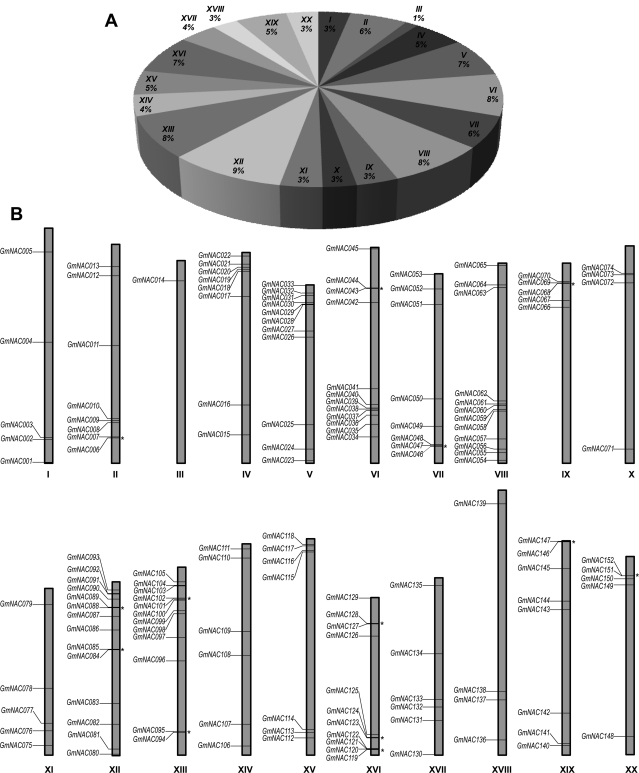
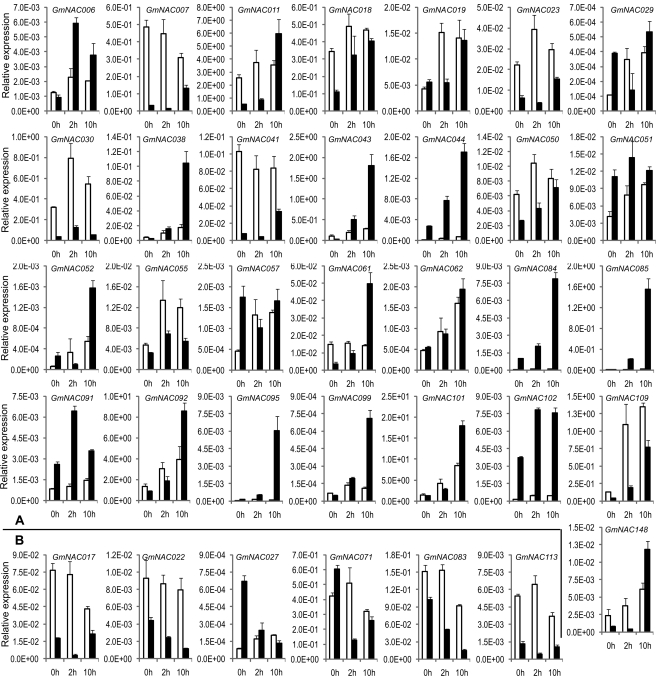
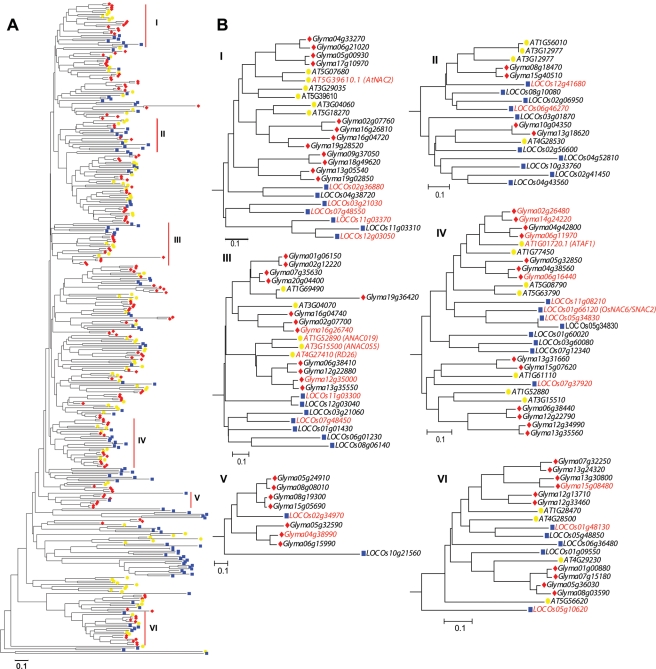
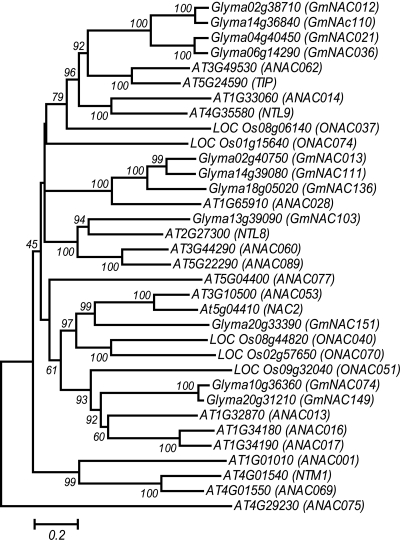
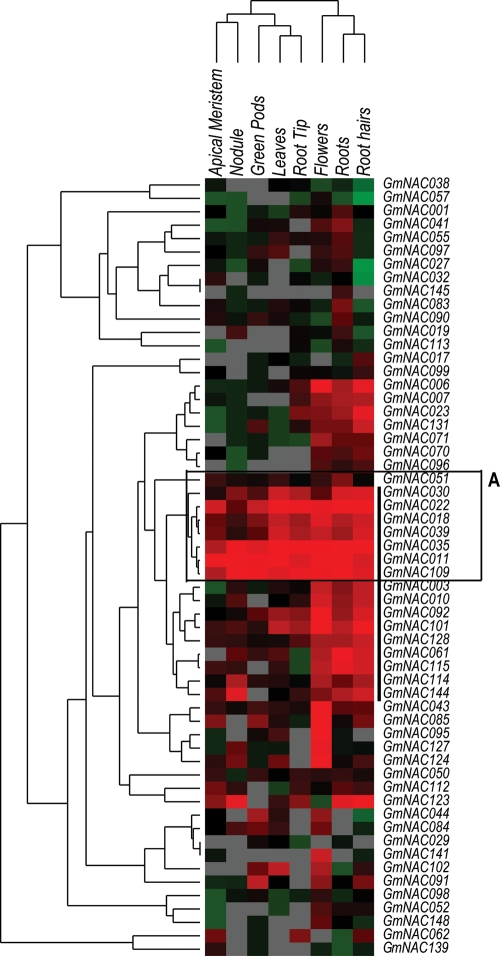
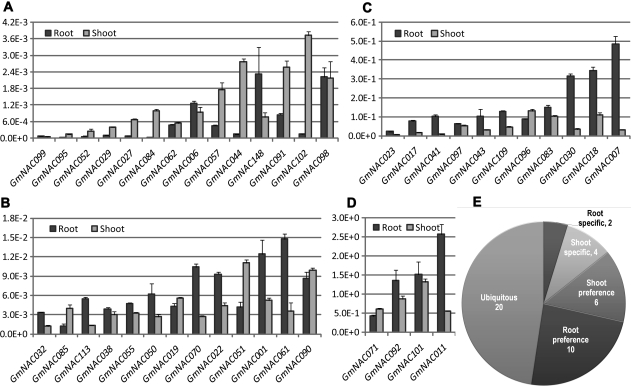
Plant-specific NAC transcription factors (TFs) play important roles in regulating diverse biological processes, including development, senescence, growth, cell division and responses to environmental stress stimuli. Within the soybean genome, we identified 152 full-length GmNAC TFs, including 11 membrane-bound members. In silico analysis of the GmNACs, together with their Arabidopsis and rice counterparts, revealed similar NAC architecture. Next, we explored the soybean Affymetrix array and Illumina transcriptome sequence data to analyse tissue-specific expression profiles of GmNAC genes. Phylogenetic analysis using stress-related NAC TFs from Arabidopsis and rice as seeding sequences identified 58 of the 152 GmNACs as putative stress-responsive genes, including eight previously reported dehydration-responsive GmNACs. We could design gene-specific primers for quantitative real-time PCR verification of 38 out of 50 newly predicted stress-related genes. Twenty-five and six GmNACs were found to be induced and repressed 2-fold or more, respectively, in soybean roots and/or shoots in response to dehydration. GmNAC085, whose amino acid sequence was 39%; identical to that of well-known SNAC1/ONAC2, was the most induced gene upon dehydration, showing 390-fold and 20-fold induction in shoots and roots, respectively. Our systematic analysis has identified excellent tissue-specific and/or dehydration-responsive candidate GmNAC genes for in-depth characterization and future development of improved drought-tolerant transgenic soybeans.
植物特异性 NAC 转录因子(TFs)在调节多种生物过程中发挥着重要作用,包括发育、衰老、生长、细胞分裂以及对环境胁迫刺激的响应。在大豆基因组中,我们鉴定了 152 个全长 GmNAC TF,包括 11 个膜结合成员。对 GmNAC 及其拟南芥和水稻同源物的计算机分析表明,它们具有相似的 NAC 结构。接下来,我们利用大豆 Affymetrix 芯片和 Illumina 转录组序列数据分析了 GmNAC 基因的组织特异性表达谱。利用拟南芥和水稻中与胁迫相关的 NAC TF 作为启动子序列的系统发育分析,鉴定出 152 个 GmNAC 中的 58 个为潜在的应激反应基因,其中包括 8 个先前报道的抗旱 GmNACs。我们可以设计基因特异性引物,对 50 个新预测的应激相关基因中的 38 个进行实时定量 PCR 验证。发现 25 个和 6 个 GmNACs在大豆根和/或地上部受到脱水胁迫时,分别有 2 倍或更多的诱导和抑制。其氨基酸序列与知名的 SNAC1/ONAC2 有 39%相同的 GmNAC085 是脱水诱导最明显的基因,在地上部和根部的诱导倍数分别达到 390 倍和 20 倍。我们的系统分析鉴定出了优异的组织特异性和/或脱水响应候选 GmNAC 基因,可用于深入表征和未来开发抗旱性改良的转基因大豆。