Kaye F J, Kratzke R A, Gerster J L, Horowitz J M
National Cancer Institute-Navy Medical Oncology Branch, Naval Hospital, Bethesda, MD 20814.
Proc Natl Acad Sci U S A. 1990 Sep;87(17):6922-6. doi: 10.1073/pnas.87.17.6922.
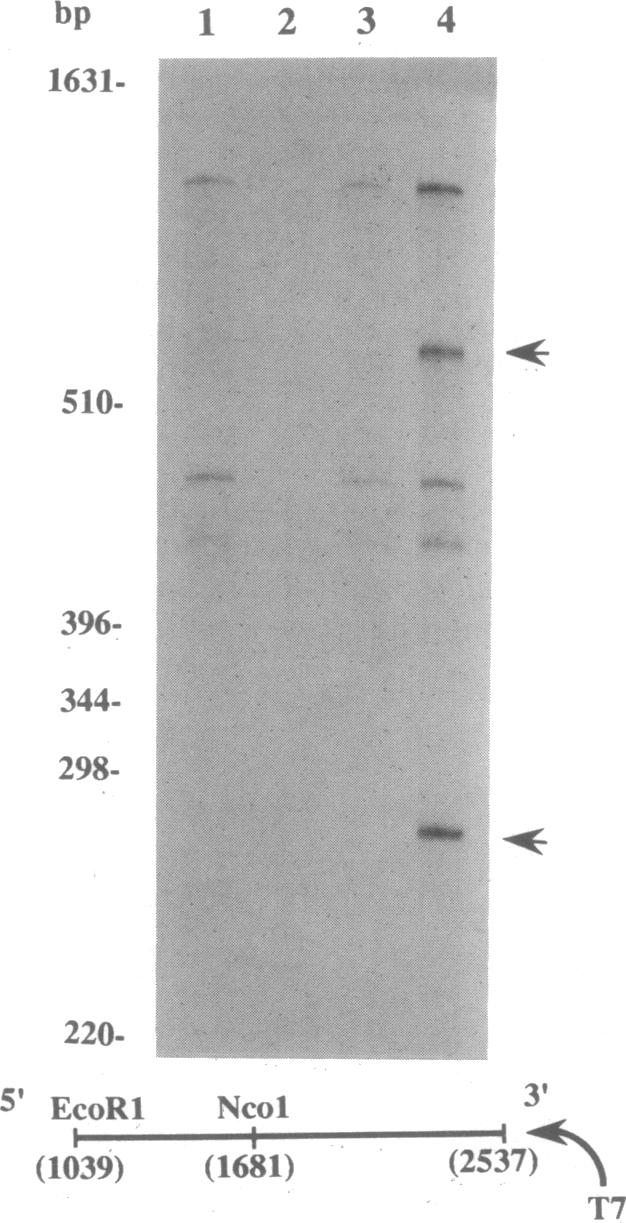
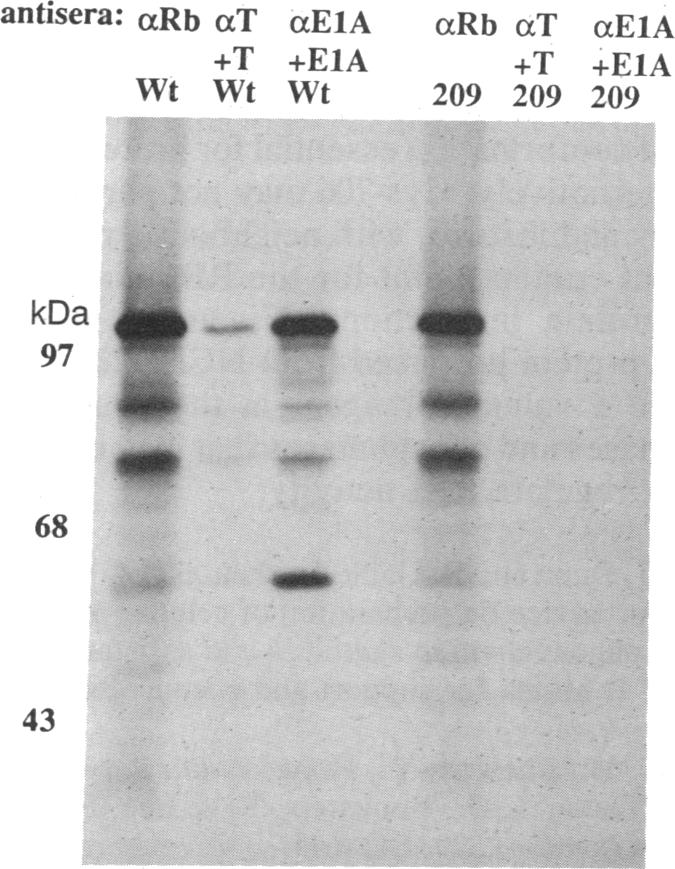
We have previously identified a small-cell lung cancer cell line (NCI-H209) that expresses an aberrant, underphosphorylated form of the retinoblastoma protein RB1. Molecular analysis of RB1 mRNA from this cell line revealed a single point mutation within exon 21 that resulted in a nonconservative amino acid substitution (cysteine to phenylalanine) at codon 706. Stable expression of this mutant RB1 cDNA in a human cell line lacking endogenous RB1 demonstrated that this amino acid change was sufficient to inhibit phosphorylation. In addition, this cysteine-to-phenylalanine substitution also resulted in loss of RB1 binding to the simian virus 40 large tumor and adenovirus E1A transforming proteins. These results confirm the importance of exon 21 coding sequences and suggest that the cysteine residue at codon 706 may play a role in achieving a specific protein conformation essential for protein-protein interactions.
我们之前鉴定出一种小细胞肺癌细胞系(NCI-H209),它表达一种异常的、低磷酸化形式的视网膜母细胞瘤蛋白RB1。对该细胞系中RB1 mRNA的分子分析显示,外显子21内有一个单点突变,导致密码子706处发生非保守氨基酸替换(半胱氨酸替换为苯丙氨酸)。在缺乏内源性RB1的人类细胞系中稳定表达这种突变的RB1 cDNA表明,这种氨基酸变化足以抑制磷酸化。此外,这种半胱氨酸到苯丙氨酸的替换还导致RB1与猿猴病毒40大T抗原和腺病毒E1A转化蛋白的结合丧失。这些结果证实了外显子21编码序列的重要性,并表明密码子706处的半胱氨酸残基可能在实现蛋白质-蛋白质相互作用所必需的特定蛋白质构象中发挥作用。