Patel Alka B, Tu Jack V, Waters Nigel M, Ko Dennis T, Eisenberg Mark J, Huynh Thao, Rinfret Stéphane, Knudtson Merril L, Ghali William A
Open Med. 2010;4(1):e13-21. Epub 2010 Feb 2.
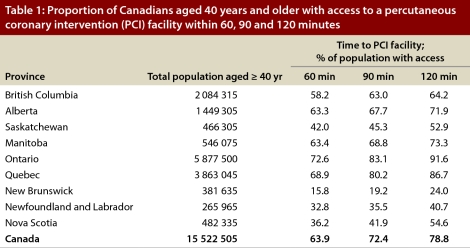
Primary percutaneous coronary intervention (PCI) is preferred over fibrinolysis for the treatment of ST-segment elevation myocardial infarction (STEMI). In the United States, nearly 80% of people aged 18 years and older have access to a PCI facility within 60 minutes. We conducted this study to evaluate the areas in Canada and the proportion of the population aged 40 years and older with access to a PCI facility within 60, 90 and 120 minutes.
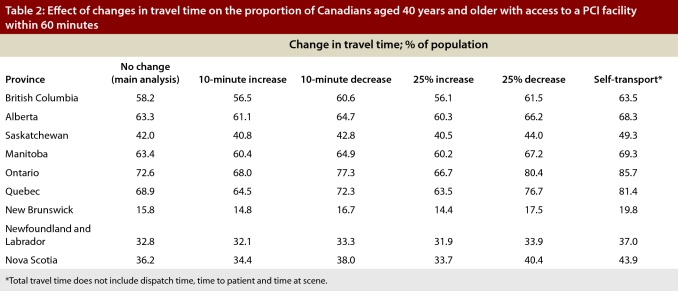
We used geographic information systems to estimate travel times by ground transport to PCI facilities across Canada. Time to dispatch, time to patient and time at the scene were considered in the overall access times. Using 2006 Canadian census data, we extracted the number of adults aged 40 years and older who lived in areas with access to a PCI facility within 60, 90 and 120 minutes. We also examined the effect on these estimates of the hypothetical addition of new PCI facilities in underserved areas.
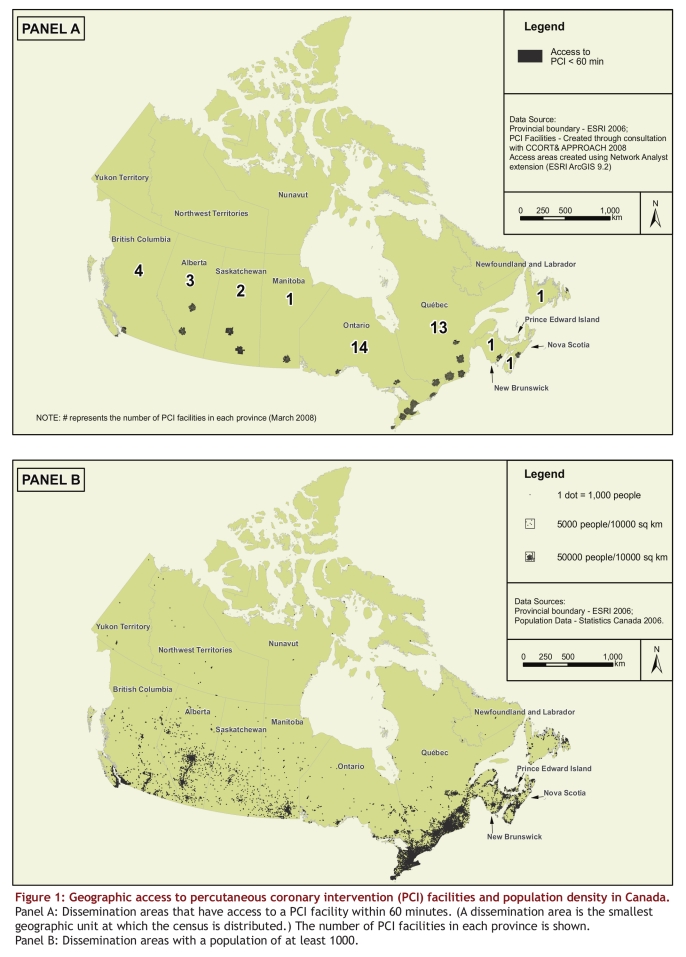
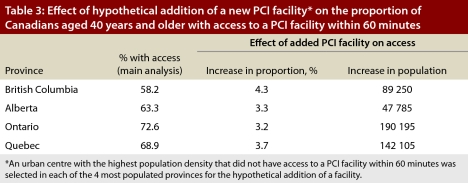
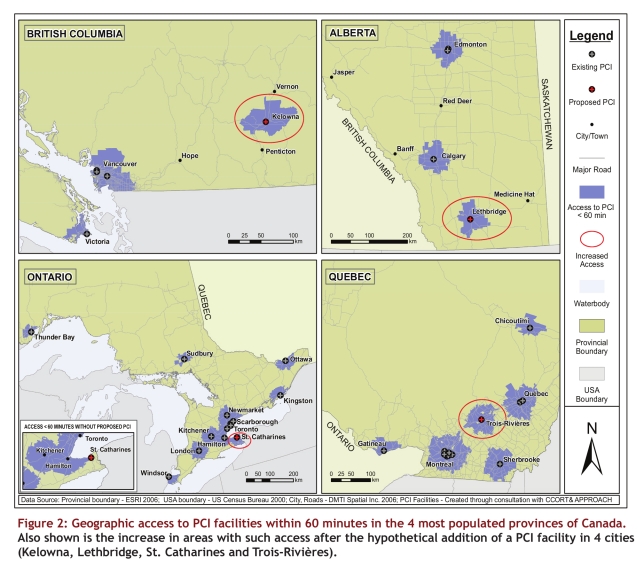
Only a small proportion of the country's geographic area was within 60 minutes of a PCI facility. Despite this, 63.9% of Canadians aged 40 and older had such access. This proportion varied widely across provinces, from a low of 15.8% in New Brunswick to a high of 72.6% in Ontario. The hypothetical addition of a single facility to each of 4 selected provinces could increase the proportion by 3.2% to 4.3%, depending on the province. About 470 000 adults would gain access in such a scenario of new facilities.
We found that nearly two-thirds of Canada's population aged 40 years and older had timely access to PCI facilities. The proportion varied widely across the country. Such information can inform the development of regionalized STEMI care models.
在治疗ST段抬高型心肌梗死(STEMI)时,直接经皮冠状动脉介入治疗(PCI)优于纤维蛋白溶解疗法。在美国,近80%的18岁及以上人群可在60分钟内抵达具备PCI治疗条件的医疗机构。我们开展此项研究,旨在评估加拿大境内能在60、90和120分钟内抵达具备PCI治疗条件医疗机构的地区,以及40岁及以上人群的比例。
我们运用地理信息系统估算加拿大各地通过地面交通前往具备PCI治疗条件医疗机构所需的时间。总就医时间包括调度时间、患者到达时间和现场停留时间。利用2006年加拿大人口普查数据,我们提取了居住在能在60、90和120分钟内抵达具备PCI治疗条件医疗机构地区的40岁及以上成年人数量。我们还研究了在服务欠缺地区假设新增PCI治疗设施对这些估算结果的影响。
该国仅有一小部分地理区域距离具备PCI治疗条件的医疗机构在60分钟以内。尽管如此,63.9%的40岁及以上加拿大人有此就医条件。这一比例在各省之间差异很大,从新不伦瑞克省的15.8%到安大略省的72.6%不等。在4个选定省份各新增一家医疗机构的假设情况下,这一比例可提高3.2%至4.3%,具体增幅取决于省份。在这种新增设施的情况下,约47万成年人将获得就医机会。
我们发现,加拿大近三分之二的40岁及以上人口能够及时获得PCI治疗服务。这一比例在全国范围内差异很大。此类信息可为制定区域化STEMI护理模式提供参考。