Infectious Diseases Program, Lovelace Respiratory Research Institute, Albuquerque, New Mexico, United States of America.
PLoS One. 2011;6(6):e20641. doi: 10.1371/journal.pone.0020641. Epub 2011 Jun 7.
Pre-pandemic development of an inactivated, split-virion avian influenza vaccine is challenged by the lack of pre-existing immunity and the reduced immunogenicity of some H5 hemagglutinins compared to that of seasonal influenza vaccines. Identification of an acceptable effective adjuvant is needed to improve immunogenicity of a split-virion avian influenza vaccine.
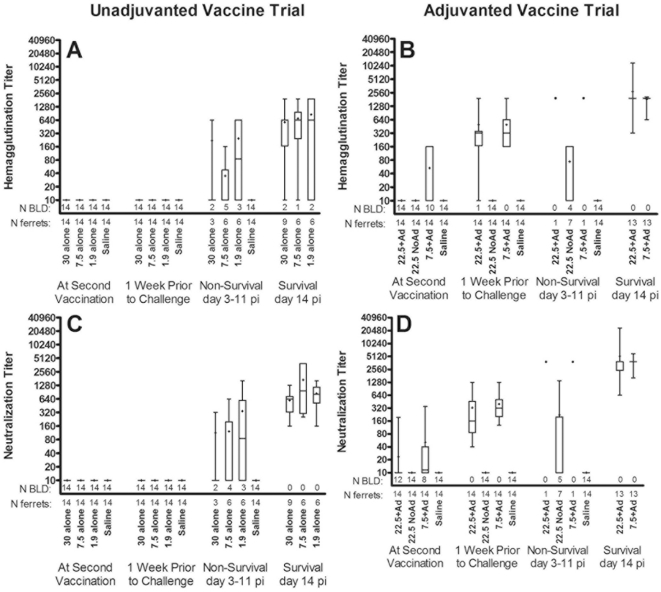
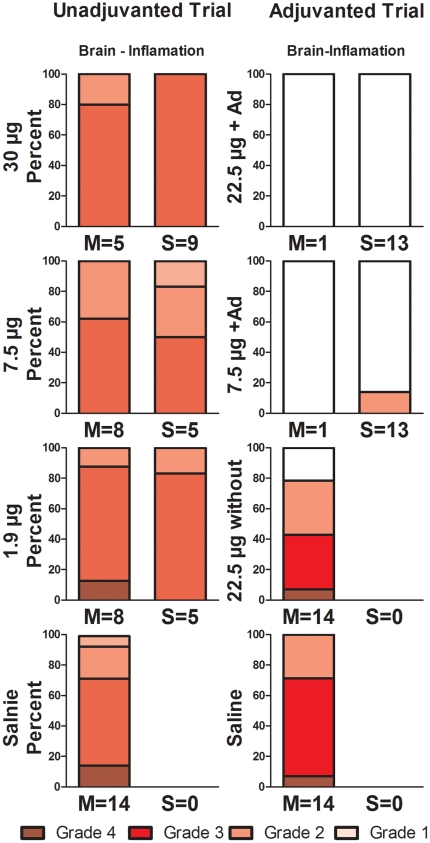
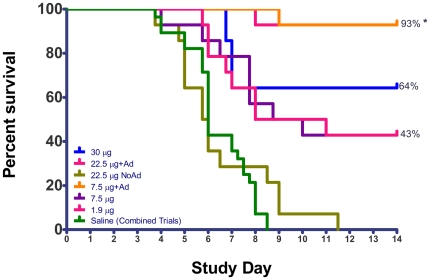
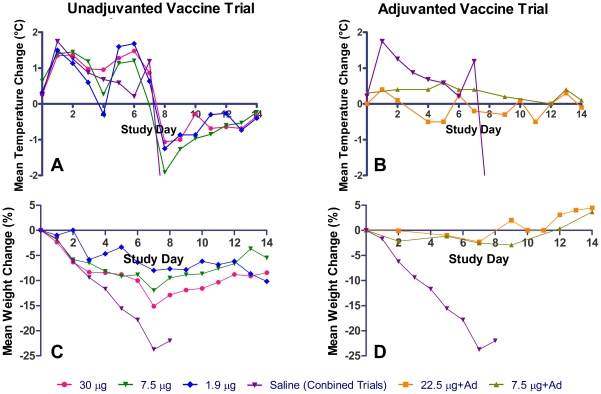
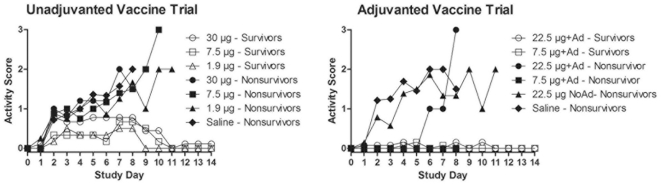
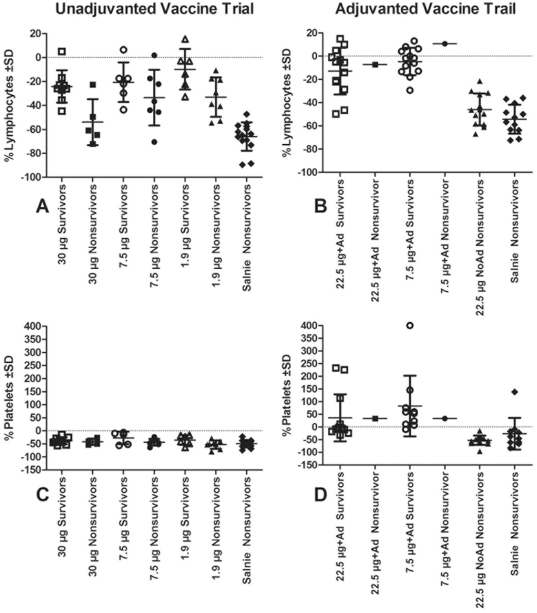
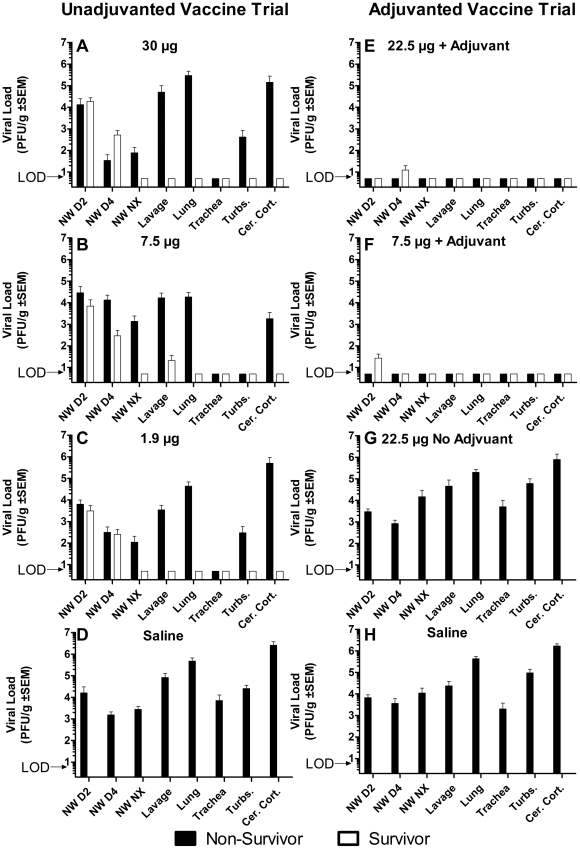
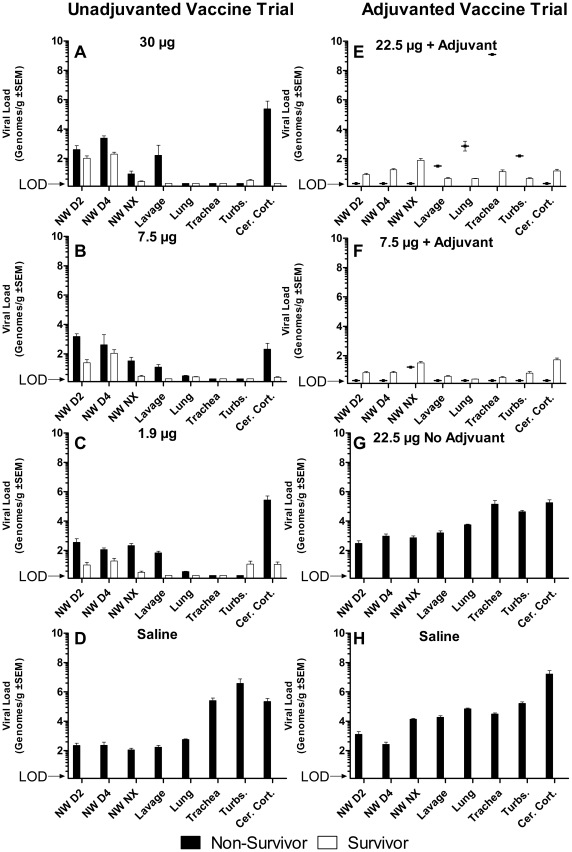
Ferrets (N = 118) were vaccinated twice with a split-virion vaccine preparation of A/Vietnam/1203/2004 or saline either 21 days apart (unadjuvanted: 1.9 µg, 7.5 µg, 30 µg, or saline), or 28 days apart (unadjuvanted: 22.5 µg, or alum-adjuvanted: 22.5 or 7.5 µg). Vaccinated animals were challenged intranasally 21 or 28 days later with 10(6) EID(50) of the homologous strain. Immunogenicity was measured by hemagglutination inhibition and neutralization assays. Morbidity was assessed by observed behavior, weight loss, temperature, cytopenias, histopathology, and viral load. No serum antibodies were detected after vaccination with unadjuvanted vaccine, whereas alum-adjuvanted vaccination induced a robust antibody response. Survival after unadjuvanted dose regimens of 30 µg, 7.5 µg and 1.9 µg (21-day intervals) was 64%, 43%, and 43%, respectively, yet survivors experienced weight loss, fever and thrombocytopenia. Survival after unadjuvanted dose regimen of 22.5 µg (28-day intervals) was 0%, suggesting important differences in intervals in this model. In contrast to unadjuvanted survivors, either dose of alum-adjuvanted vaccine resulted in 93% survival with minimal morbidity and without fever or weight loss. The rarity of brain inflammation in alum-adjuvanted survivors, compared to high levels in unadjuvanted vaccine survivors, suggested that improved protection associated with the alum adjuvant was due to markedly reduced early viral invasion of the ferret brain.
Alum adjuvant significantly improves efficacy of an H5N1 split-virion vaccine in the ferret model as measured by immunogenicity, mortality, morbidity, and brain invasion.
在大流行之前开发的灭活、分裂病毒流感疫苗受到缺乏预先存在的免疫和某些 H5 血凝素的免疫原性低于季节性流感疫苗的挑战。需要鉴定一种可接受的有效佐剂来提高分裂病毒流感疫苗的免疫原性。
118 只雪貂(N=118)用 A/Vietnam/1203/2004 的分裂病毒疫苗制剂或生理盐水,21 天(未佐剂:1.9μg、7.5μg、30μg 或生理盐水)或 28 天(未佐剂:22.5μg,或铝佐剂:22.5μg或 7.5μg)间隔两次接种疫苗。21 或 28 天后,用同源株 10(6)EID(50)经鼻内攻毒。通过血凝抑制和中和试验测量免疫原性。通过观察行为、体重减轻、温度、细胞减少、组织病理学和病毒载量评估发病率。用未佐剂疫苗接种后未检测到血清抗体,而铝佐剂疫苗接种诱导出强大的抗体反应。用 30μg、7.5μg 和 1.9μg(21 天间隔)的未佐剂剂量方案接种后,存活率分别为 64%、43%和 43%,但幸存者出现体重减轻、发热和血小板减少。用 22.5μg(28 天间隔)的未佐剂剂量方案接种后存活率为 0%,这表明在该模型中间隔存在重要差异。与未佐剂幸存者相比,铝佐剂疫苗的任一剂量都导致 93%的存活率,发病率最低,没有发热或体重减轻。与未佐剂疫苗幸存者相比,铝佐剂幸存者大脑炎症罕见,这表明与铝佐剂相关的保护作用显著降低了流感病毒对雪貂大脑的早期入侵。
在雪貂模型中,铝佐剂显著提高了 H5N1 分裂病毒疫苗的效力,这可以通过免疫原性、死亡率、发病率和脑侵袭来衡量。